Have you ever been stuck on something — homework, work tasks, emotional stress — and someone stepped in to help? That moment of relief you felt? That’s the heart of the word assist.
We hear it everywhere: customer service, sports, hospitals, classrooms, and even daily conversations.
But the assist meaning goes deeper than just “helping.” It’s about supporting without taking over, standing beside someone instead of standing in front of them.
Think about a time when someone didn’t solve your problem for you — they just gave you enough guidance to move forward. That’s powerful. And that’s what assist really represents.
In this article, we’ll break down what assist means in simple, human terms, how it’s used in real life, where it comes from, and why it matters more today than ever before.
You’ll also find examples, common misunderstandings, and FAQs — all written in a friendly, conversational style.
Let’s explore this word that quietly shapes how we work, learn, heal, and connect. 💛
What Does Assist Meaning Actually Mean?
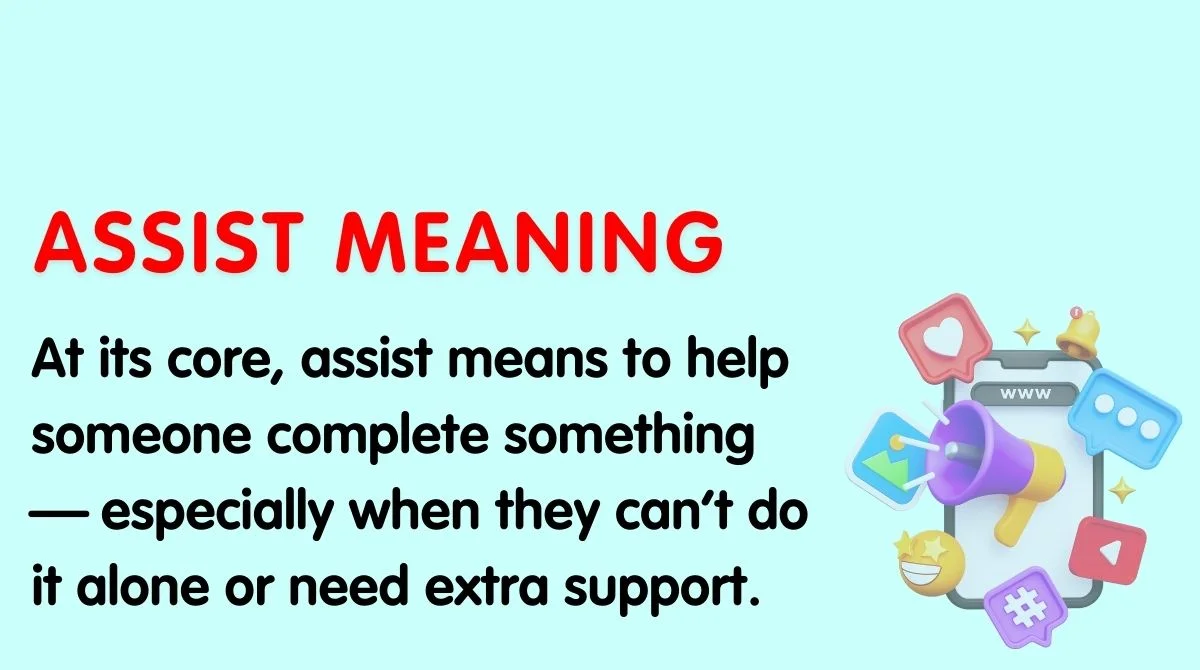
At its core, assist means to help someone complete something — especially when they can’t do it alone or need extra support.
But here’s the key difference:
To assist isn’t to replace someone. It’s to support them while they stay involved.
Let’s make it real:
- A teacher assists a student by explaining a tough concept, not by doing the homework for them.
- A nurse assists a doctor during surgery, helping the process flow smoothly.
- A friend assists you emotionally when life feels heavy — by listening, not fixing everything.
So the assist meaning isn’t just about action. It’s about partnership, cooperation, and care.
Origin and Background of the Term
The word assist comes from the Latin word “assistere”, which means “to stand by” or “to take a stand near.”
And honestly? That origin says everything.
Imagine ancient Roman soldiers standing beside each other in battle — not leading, not replacing, but supporting. That’s where the emotional soul of this word lives: being present when someone needs you.
Over time, the word moved into Old French (assister) and later into English, where it kept its supportive meaning. Today, we use it everywhere — from medical fields to sports, tech, and daily life — but the core idea remains the same:
👉 Standing with someone, not over them.
That’s what makes this word so human.
How Assist Is Used in Daily Life
You might not realize how often you use the word assist — or live it — every single day.
Here are some everyday examples:
- A coworker assists you by explaining a new system at work.
- A parent assists their child with homework without doing it for them.
- A customer support agent assists users with technical issues.
- A nurse assists patients with mobility or recovery.
- A teammate assists another in sports by setting them up to score.
- A stranger assists someone struggling with heavy groceries.
In every case, the pattern is the same:
Someone helps without replacing, supports without controlling.
That’s the real beauty of the word.
Emotional or Practical Meaning of Assist
Beyond definitions, the assist meaning carries emotional weight.
When someone assists you, you feel:
- Seen
- Supported
- Less alone
- More capable
And when you assist someone else, you feel:
- Useful
- Connected
- Purpose-driven
- Human
In today’s world — fast-paced, digital, sometimes isolating — assistance isn’t just practical. It’s emotional medicine.
Think about:
- A mental health counselor assisting someone through grief.
- A volunteer assisting disaster victims.
- A friend assisting you during burnout.
These aren’t small acts. They’re life-shaping moments.
Assist isn’t weakness — it’s strength shared.
Similar or Related Terms
Here are words closely related to assist, along with how they differ:
- Help — General support, often informal.
- Support — Emotional, financial, or physical backing.
- Aid — Often formal or emergency-related help.
- Guide — Showing direction rather than doing.
- Serve — Helping in a duty-based or professional role.
- Facilitate — Making a process easier to complete.
While these overlap, assist stands out because it implies active cooperation, not just contribution.
Common Misunderstandings About Assist
Let’s clear up some common myths:
❌ 1. Assist means doing everything for someone
Nope. Assisting means helping without replacing effort.
❌ 2. Assist shows weakness
Actually, asking for assistance shows self-awareness and strength.
❌ 3. Assist is only professional
Not true. We assist friends, family, strangers — every day.
❌ 4. Assist is formal language only
It works in casual conversation too:
“Can you assist me with this?”
❌ 5. Assist always involves tools or money
Many times, it’s just time, presence, or listening.
❌ 6. Assist and help are identical
They’re similar, but assist often implies structured or cooperative support.
Understanding these differences helps you use the word more confidently and accurately.
Examples of Assist in Sentences
Here are natural, everyday examples:
- “Can you assist me with this project? I’m stuck.”
- “The nurse assisted the patient in standing up.”
- “She assisted her friend emotionally during a hard breakup.”
- “Customer support assisted me with resetting my account.”
- “He assisted the elderly woman across the street.”
- “The coach assisted the team in developing better strategies.”
- “I really appreciate you assisting me today.”
- “The app is designed to assist users with daily tasks.”
Simple. Natural. Human.
Why Understanding Assist Meaning Matters Today
In today’s world, people are overwhelmed — mentally, emotionally, and professionally. Burnout is rising. Loneliness is real. Stress is constant.
That’s why understanding the assist meaning matters more than ever.
Here’s how:
🧠 In Education
Students don’t need answers — they need guidance. Teachers who assist, rather than lecture, create real learning.
💼 In Workplaces
Leaders who assist employees instead of micromanaging build trust, loyalty, and growth.
🏥 In Healthcare
Healing isn’t just medicine — it’s emotional assistance, reassurance, dignity.
❤️ In Relationships
Partners who assist each other emotionally survive stress, conflict, and change.
🌍 In Society
Communities grow stronger when people assist — not judge — one another.
In short, assist creates connection. And connection creates progress.
Frequently Asked Questions
What does assist mean in simple words?
Assist means helping someone do something, especially when they need support — without taking over completely.
Is assist positive or negative?
It’s overwhelmingly positive. It reflects kindness, cooperation, teamwork, and care.
Where is assist commonly used?
In healthcare, education, customer service, workplaces, sports, and everyday conversations.
Is assist formal or informal?
It works in both.
Formal: “The technician assisted the client.”
Casual: “Can you assist me real quick?”
Why do people search for assist meaning?
Because it’s commonly used in work, school, tech, and legal contexts — and people want clarity on how to use it correctly.
Conclusion
The word assist may seem simple — but its meaning runs deep.
It’s not about fixing someone’s life.
It’s about standing beside them while they fix it themselves.
Whether it’s helping a coworker, supporting a loved one, or guiding a stranger — assistance is one of the most powerful human actions.
It builds trust. It restores confidence. It reminds people they’re not alone.
And honestly? In a world that often feels rushed and disconnected, assisting someone might be the most meaningful thing you do today.
So next time someone struggles — don’t take over.
Just stand beside them. That’s real help. 💙