Have you ever heard someone say, “That company has total dominion over the market” or “He wants dominion over his fears” and wondered what they really meant?
The word dominion might sound old-fashioned or dramatic, but it actually shows up in our lives more often than we realize.
In simple terms, dominion meaning refers to power, control, or authority over something — whether that’s land, people, emotions, or even situations.
But here’s the thing: dominion isn’t always about ruling or dominating others.
Sometimes, it’s about self-control, responsibility, or leadership.
Understanding this word matters because language shapes how we see the world.
When we truly grasp what dominion means, we start noticing how power, influence, and responsibility play roles in our personal lives, workplaces, relationships, and even society.
In this guide, we’ll explore the true meaning of dominion, where it comes from, how it’s used today, and why it still matters in modern life — all in a friendly, easy-to-understand way.
What Does Dominion Meaning Actually Mean?
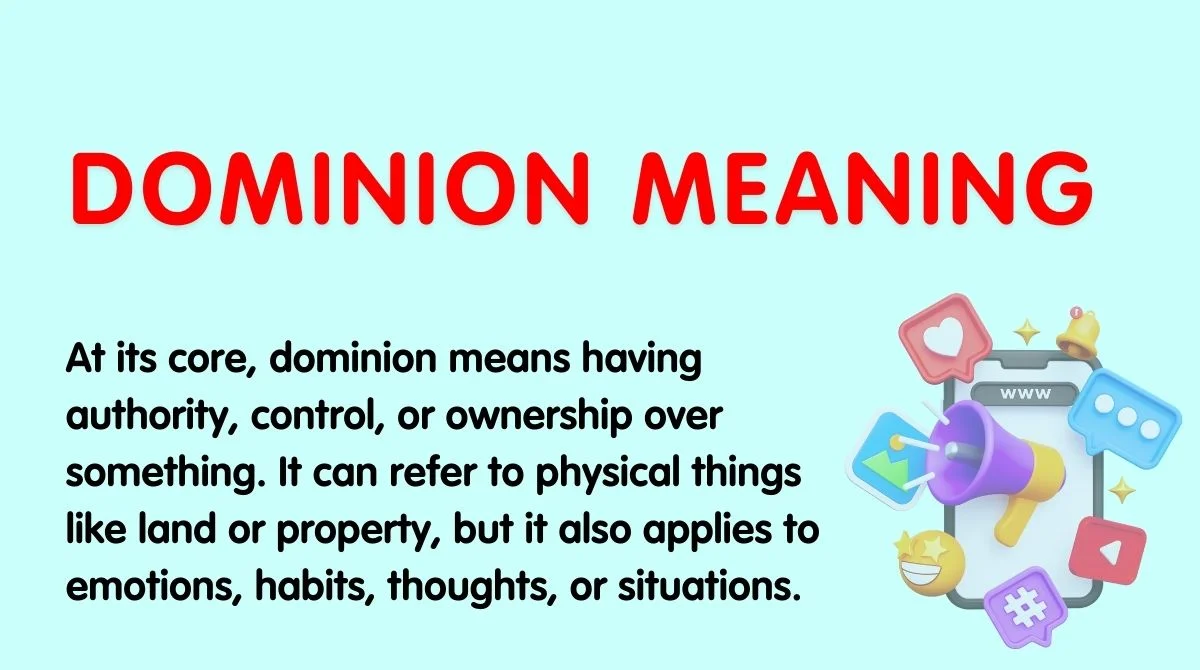
At its core, dominion means having authority, control, or ownership over something. It can refer to physical things like land or property, but it also applies to emotions, habits, thoughts, or situations.
Instead of sounding like a dictionary definition, think of it like this:
👉 Dominion is when someone has the power to decide, guide, or manage something responsibly.
Real-Life Examples
- A country exercising dominion over its territory means it governs and protects its land.
- A teacher has dominion over their classroom, guiding students and setting rules.
- Someone who gains dominion over their anger learns how to control their reactions.
Notice how dominion isn’t always about force — it’s often about leadership, responsibility, and balance.
Origin and Background of the Term
The word dominion comes from the Latin word dominium, which means ownership, lordship, or control. In ancient Rome, dominus referred to the master of a household — someone responsible for the people and property under their care.
Later, the word made its way into English through Old French during the Middle Ages. Back then, dominion was commonly used to describe kings, queens, and rulers who governed lands and people. You’ll often see it in historical texts like:
“The king extended his dominion across the seas.”
But here’s where it gets interesting.
Over time, the meaning expanded. Dominion stopped being only about political power and started reflecting personal control, emotional strength, and even spiritual responsibility. Many religious texts use dominion to describe humanity’s responsibility toward nature — not ownership in a greedy sense, but stewardship and care.
So today, dominion carries both historical authority and modern personal growth meanings, which makes it a powerful and versatile word.
How Dominion Is Used in Daily Life
You might not say “dominion” every day, but the idea behind it shows up constantly. Let’s look at how people use it naturally.
- Workplace leadership
A manager who has dominion over their department is responsible for guiding the team, not controlling them harshly. - Self-control
“She finally gained dominion over her anxiety.”
This means emotional mastery, not dominance. - Politics and governance
Countries exercise dominion over their borders and laws. - Spiritual conversations
People talk about having dominion over their actions, thoughts, or temptations. - Business and economics
A corporation with dominion over a market controls most of its industry share. - Personal development
Coaches often say, “Take dominion over your life,” meaning own your choices and direction.
In everyday language, dominion blends authority with responsibility, not just power for power’s sake.
Emotional and Practical Meaning of Dominion
Here’s where dominion becomes more than just a word.
Emotionally, dominion represents strength, self-respect, and confidence. When someone gains dominion over fear, habits, or doubt, they’re reclaiming control over their inner world.
Practically, dominion reflects leadership, structure, and responsibility. Whether you’re running a business, leading a family, or managing yourself, dominion is about making wise decisions that serve both you and others.
Think of it like this:
A young entrepreneur starts a small online store. At first, chaos runs the show — late deliveries, stress, mistakes. Over time, they build systems, manage their emotions, and gain dominion over their business. Suddenly, things feel calmer, clearer, and more stable.
Dominion isn’t about overpowering — it’s about mastery, balance, and accountability.
And honestly? That’s something every modern reader can relate to.
Similar or Related Terms
Here are some words closely connected to dominion meaning, along with how they differ:
- Authority – The right to make decisions or command.
- Control – The power to influence outcomes or actions.
- Sovereignty – Supreme political power of a state.
- Rule – Governing or managing people or systems.
- Dominance – Often implies force or superiority.
- Power – The ability to influence or act effectively.
💡 Dominion is broader than most of these — it blends authority, responsibility, and stewardship into one concept.
Common Misunderstandings About Dominion
Let’s clear up some myths that confuse people about this word.
- Dominion always means oppression
❌ Not true. Dominion can mean responsible leadership or self-control, not tyranny. - It’s only a religious word
❌ While common in religious texts, dominion is widely used in business, psychology, and politics too. - Dominion equals dominance
❌ Dominance implies force; dominion implies authority with responsibility. - Only rulers or leaders have dominion
❌ Everyone can gain dominion over habits, emotions, and life choices. - It’s outdated language
❌ Dominion is still relevant — especially in leadership, self-development, and ethics. - Dominion means ownership, not care
❌ Historically, dominion often implied stewardship and responsibility, not exploitation.
Understanding these clarifies why dominion is such a deep and meaningful concept, not just a power word.
Examples of Dominion in Sentences
Here are natural, everyday ways the word appears:
- She worked hard to gain dominion over her fear of public speaking.
- The nation defended its dominion over the disputed territory.
- He wanted dominion over his life instead of letting circumstances control him.
- The company slowly gained dominion in the tech market.
- Parents have dominion over their household, but that comes with responsibility.
- Meditation helped her regain dominion over her thoughts.
- History books describe how empires expanded their dominion.
- True leadership isn’t about dominance — it’s about wise dominion.
Why Understanding Dominion Meaning Matters Today
In today’s world, power gets a bad reputation — and for good reason sometimes. But dominion isn’t about bullying, manipulation, or control over others. It’s about ownership of responsibility, whether that’s personal, social, or professional.
We live in a time where:
- People want control over their lives, not chaos.
- Leaders are expected to rule with integrity, not fear.
- Mental health conversations focus on gaining dominion over stress, anxiety, and habits.
- Businesses succeed by managing influence ethically.
Understanding dominion helps us rethink power — not as something to abuse, but something to use wisely.
When you take dominion over your time, emotions, work, or goals, you’re not dominating life — you’re designing it.
And honestly? That shift in mindset can change everything.
Frequently Asked Questions
What does dominion mean in simple words?
Dominion means having control, authority, or responsibility over something — whether it’s land, people, emotions, or situations. It’s about leadership and management, not force.
Is dominion positive or negative?
Dominion itself is neutral. It becomes positive when used with responsibility, care, and fairness — and negative when used selfishly or abusively.
Where is dominion commonly used?
You’ll find dominion in politics, religion, leadership, business, psychology, and everyday conversations — especially when talking about control, authority, or responsibility.
Is dominion formal or informal?
Dominion leans toward formal or semi-formal language, but it’s still perfectly natural in thoughtful conversations, writing, and discussions about leadership or personal growth.
Why do people search for dominion meaning?
People search for dominion meaning because they encounter the word in books, speeches, religious texts, contracts, or leadership content and want a clearer, human-friendly explanation — especially as its usage evolves with time.
Conclusion
At first glance, dominion might sound like a word from ancient kings or old books.
But when you really understand its meaning, you realize it’s deeply connected to modern life, leadership, self-control, and responsibility.
Whether it’s gaining dominion over fear, managing a business, leading a family, or shaping your future, this word reminds us that true power isn’t about control — it’s about wisdom, balance, and accountability.
And maybe that’s the most beautiful part:
When you gain dominion over yourself, you don’t just change your life — you empower your future.

Thomas Reed helps learners master English words through simple explanations and real-life usage.