Have you ever caught yourself saying, “I don’t want to complain, but…” — and then doing exactly that? 😄
That little moment of frustration, annoyance, or dissatisfaction often has a perfect word behind it: gripe.
We all gripe sometimes. About slow internet. About cold coffee.
About being stuck in traffic when we’re already late.
These small, everyday complaints may seem harmless, but they reveal something deeper about how we communicate discomfort or unmet expectations.
In simple terms, gripe meaning refers to a complaint — often minor, sometimes repeated, and usually rooted in frustration. It’s not always angry. It’s not always loud.
But it’s real, relatable, and very human.
Understanding this word helps you express emotions more clearly, communicate better, and even recognize patterns in your own thinking. Plus,
it’s one of those everyday English words that feels casual but carries emotional weight.
Let’s explore what gripe really means, where it comes from, how people use it today, and why it still matters — especially in modern conversations.
What Does Gripe Mean?
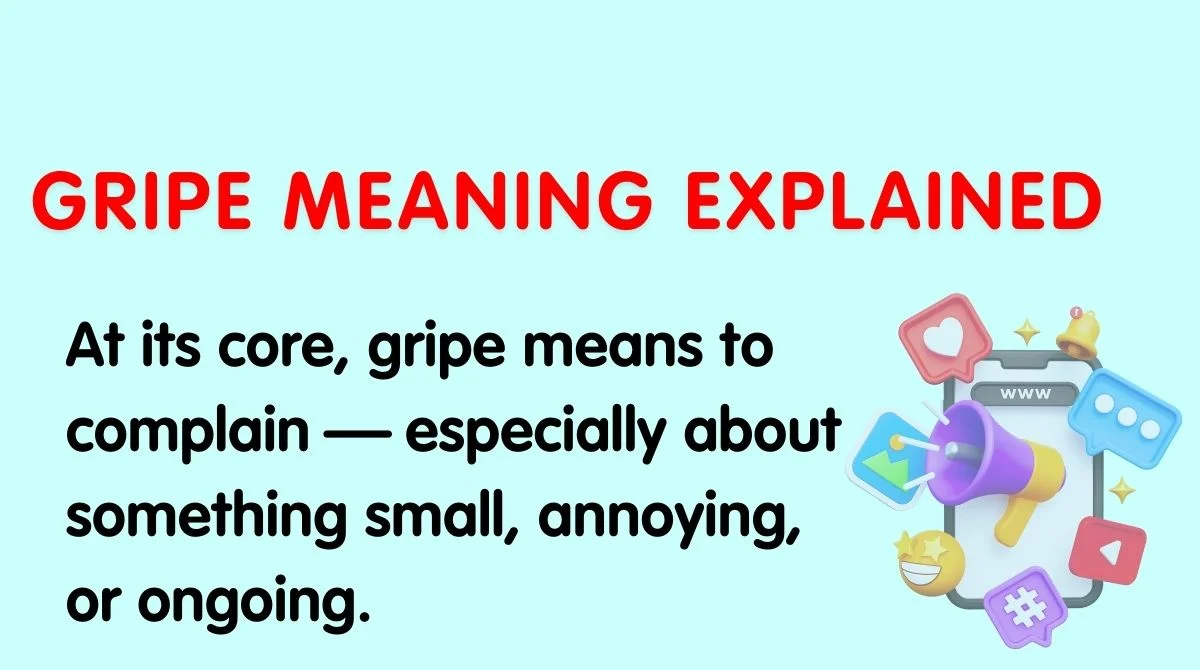
At its core, gripe means to complain — especially about something small, annoying, or ongoing.
It’s not usually about huge life problems. Instead, it’s about those little things that bug us over time. Think of it as low-level frustration with a voice.
Here are a few real-life examples:
- You gripe about your phone battery dying too fast.
- A coworker keeps griping about the office temperature.
- A student gripes about too much homework on weekends.
Notice something? A gripe isn’t always dramatic. It’s often casual, repeated, and emotionally honest. It’s how people vent without turning something into a big argument.
So when someone says, “My only gripe is the slow service,” they’re saying, “Everything’s fine — except this one annoying thing.”
That’s the heart of gripe meaning.
Origin and Background of the Term
The word gripe has a surprisingly physical origin.
It traces back to Old English and Old Norse words meaning “to grip” or “seize tightly.” In the past, “gripe” was often used to describe stomach pain — the kind that grips your gut and won’t let go. That’s why you’ll still hear phrases like “griping pain” in older medical contexts.
Over time, the meaning shifted.
Instead of your stomach gripping, now it was your emotions — frustration, irritation, dissatisfaction — that felt tight, uncomfortable, and hard to ignore. So people began using “gripe” to describe emotional discomfort rather than physical pain.
And honestly? That metaphor still works beautifully.
A gripe is like a mental cramp. Not unbearable, but annoying enough that you just want relief — usually by talking about it.
That evolution makes the word feel human, emotional, and relatable, which is why it stuck around.
How Gripe Is Used in Daily Life
You’ll hear the word gripe everywhere — in conversations, reviews, offices, homes, and even social media.
Here’s how people naturally use it:
- At work:
“My only gripe with this job is the long commute.” - In relationships:
“She doesn’t have many complaints — just one small gripe.” - In reviews:
“Great phone, but my main gripe is the battery life.” - In friendships:
“I don’t want to gripe, but you’re always late.” - In parenting:
“His biggest gripe is bedtime.” - Online:
“Everyone’s griping about the new app update.”
Notice how casual it sounds? That’s because gripe is conversational, not aggressive. It often signals mild annoyance rather than deep anger.
And sometimes, griping is just a way of bonding — complaining together about something harmless can actually bring people closer.
Funny how that works, right? 😅
Emotional or Practical Meaning of Gripe
Beyond its dictionary definition, gripe carries emotional meaning.
It reflects:
- Frustration
- Disappointment
- Unmet expectations
- Minor dissatisfaction
But unlike harsh criticism, griping usually comes from a place of wanting things to improve — not from hostility.
Think about this:
When someone gripes about slow customer service, they’re not attacking the staff. They’re expressing a wish for smoother experience. When a student gripes about exams, they’re not rejecting education — they’re expressing stress.
In modern culture, griping has become a social habit. People gripe on social media. They gripe in reviews. They gripe in group chats. It’s how we release pressure.
Used wisely, griping can be healthy. It helps people:
- Vent emotions
- Feel heard
- Identify problems
- Improve systems
But when griping becomes constant, it can drain energy and relationships. That’s why understanding gripe meaning isn’t just about vocabulary — it’s about emotional awareness too.
Similar or Related Terms
Here are words closely related to gripe, along with how they differ:
- Complaint – A general expression of dissatisfaction, more formal.
- Grumble – A quieter, often annoyed complaint.
- Moan – Emotional or dramatic complaining, common in British English.
- Whine – High-pitched, repetitive, often childish complaining.
- Criticism – More analytical or judgmental than emotional.
- Vent – Releasing emotions, often without expecting change.
💡 Key difference:
A gripe is usually mild, repeated, and informal, not harsh or aggressive.
Common Misunderstandings About Gripe
Let’s clear up some confusion around this word.
❌ 1. “Gripe means serious anger.”
Not really. A gripe is usually mild irritation, not rage.
❌ 2. “Only negative people gripe.”
Nope. Everyone gripes sometimes — it’s human.
❌ 3. “Gripe and complaint mean the same thing.”
Close, but not exact. A gripe is more casual and emotional.
❌ 4. “Griping is always bad.”
Actually, healthy griping can improve communication and relationships.
❌ 5. “Gripe is outdated.”
Not at all. It’s still widely used in modern English.
❌ 6. “Only spoken English uses gripe.”
It’s common in writing too — blogs, reviews, articles, and media.
Understanding these differences helps you use the word accurately and naturally.
Examples of Gripe in Sentences
Here are everyday, natural examples:
- My only gripe about the restaurant was the slow service.
- She always gripes about waking up early for work.
- I don’t usually complain, but this heat is my biggest gripe.
- His main gripe with the movie was the confusing ending.
- They kept griping about the noisy neighbors.
- If I had one gripe, it’d be the long waiting time.
- Stop griping and help me fix this already!
- Everyone has a gripe — it’s part of being human.
See how relaxed and conversational it feels? That’s exactly how gripe works in real life.
Why Understanding Gripe Meaning Matters Today
In today’s fast-paced, hyper-connected world, people express dissatisfaction more openly than ever — especially online.
Reviews. Tweets. Comments. Stories. Forums.
We’re constantly sharing what we love… and what we don’t.
Understanding gripe meaning helps you:
- Communicate clearly without sounding aggressive
- Interpret others’ emotions more accurately
- Write better content — blogs, reviews, stories, scripts
- Improve relationships by recognizing small frustrations before they grow
Imagine this:
Your coworker says, “My only gripe is the meeting schedule.”
That’s not conflict — that’s feedback.
Your friend says, “I don’t want to gripe, but I felt ignored.”
That’s not drama — that’s honesty.
Language shapes relationships. When you understand words like gripe, you become a better listener, speaker, and communicator.
And honestly? That skill matters more today than ever.
Frequently Asked Questions
What does gripe mean in simple words?
A gripe means a small complaint or annoyance — something that bothers you enough to mention, but isn’t a major problem.
Is gripe positive or negative?
It’s usually mildly negative, but not harsh. A gripe often sounds casual and honest rather than angry or aggressive.
Where is gripe commonly used?
You’ll hear it in everyday conversations, work settings, reviews, social media, and casual writing — especially in American and British English.
Is gripe formal or informal?
It’s mostly informal and conversational, though it’s perfectly acceptable in professional writing like blogs, articles, and reviews.
Why do people search for gripe meaning?
Because it’s commonly used in speech and writing, but many people want to understand its exact tone, emotion, and proper usage — especially in English learning or professional communication.
Conclusion
So now you know — gripe meaning isn’t just about complaining.
It’s about expressing small frustrations in a human, relatable way.
We all gripe sometimes. About weather. About work. About Wi-Fi. About life. And honestly?
That’s okay. It means you care enough to notice when something feels off — and brave enough to say it out loud.
Language gives us tools to express emotions without hurting others.
And words like gripe help us communicate discomfort gently, honestly, and constructively.
Next time you catch yourself saying, “I don’t want to complain, but…” — smile. You’re not being negative. You’re being human. ❤️
Because sometimes, voicing a small gripe is the first step toward a better day.