Have you ever read something, paused for a moment, and thought, “Wait… I don’t just understand this — I feel it now”? That’s the exact moment when you grok something.
The word grok meaning goes far beyond basic understanding.
It describes that deep, almost emotional connection with an idea — the kind where everything suddenly clicks. Not just in your head, but in your gut too.
In today’s fast-moving world, where we skim headlines and scroll endlessly, truly understanding something is rare. That’s why this word feels so powerful.
It reminds us that knowledge isn’t just about information — it’s about connection, insight, and awareness.
In this guide, we’ll explore what “grok” really means, where it came from, how people use it today, and why it still matters in modern conversations.
Whether you’re a student, writer, tech enthusiast, or simply curious about language, by the end of this article, you won’t just understand the word — you’ll grok it. 😊
What Does Grok Meaning Mean?
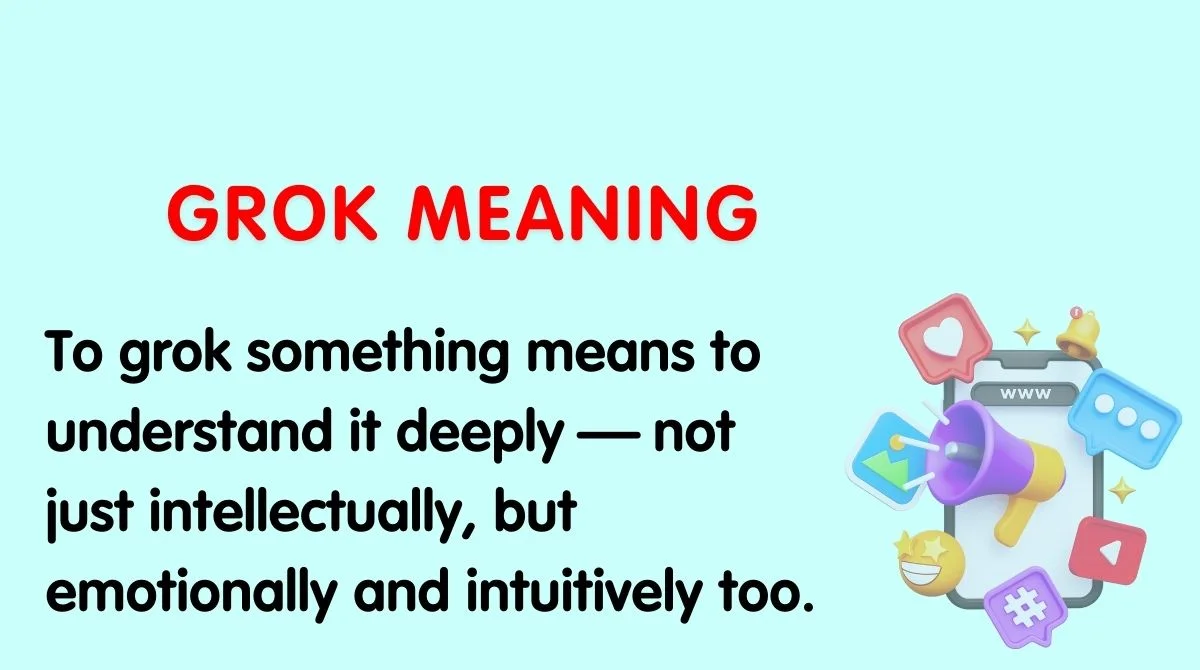
To grok something means to understand it deeply — not just intellectually, but emotionally and intuitively too.
It’s the difference between:
- Knowing how a bicycle works
- And actually riding one without thinking
When you grok something, it becomes part of you. You don’t need to overthink it anymore — you get it.
Real-life examples:
- You don’t just learn grammar rules — one day, you grok how sentences flow naturally.
- A math formula finally makes sense after weeks of confusion — that’s grokking.
- You understand someone’s feelings without them explaining — emotional grokking.
So, grok meaning isn’t about surface knowledge. It’s about deep comprehension, emotional clarity, and internalization.
Origin and Background of the Term
The word grok isn’t ancient Latin or old English. Surprisingly, it was born in science fiction.
In 1961, American author Robert A. Heinlein used the word grok in his novel Stranger in a Strange Land. In the book, a human raised on Mars uses the word to describe understanding something so completely that you become one with it.
Instead of saying:
“I understand you.”
The character would say:
“I grok you.”
And that single word captured something English didn’t quite have — total, immersive understanding.
Over time, tech communities, programmers, and internet culture embraced the word. It became popular in Silicon Valley, open-source circles, and later, everyday language.
What started as fiction slowly became real-world vocabulary, and today, people across the globe casually say, “Yeah, I grok that.”
Language evolves — and this word proves how storytelling shapes how we express thought.
How Grok Is Used in Daily Life
You might not hear “grok” in every conversation, but when people use it, they usually mean something stronger than “understand.”
Here are some real-world examples:
- “I didn’t grok the lesson at first, but now it makes total sense.”
- “Once you grok how emotions work, relationships become easier.”
- “He doesn’t just follow the rules — he groks the system.”
- “I read the instructions twice before I finally grokked it.”
- “She groks people really well — she just gets them.”
- “After working in the field, you start to grok the reality of the job.”
Notice how the word carries a tone of depth and insight, not surface knowledge.
It’s often used in:
- Tech conversations
- Psychology discussions
- Learning environments
- Emotional intelligence contexts
And yes — sometimes just casually between friends.
Emotional or Practical Meaning of Grok
What makes grok meaning special isn’t just comprehension — it’s connection.
When you grok something:
- You feel confident about it
- You internalize it
- You no longer need step-by-step instructions
- You move from knowledge to wisdom
Emotionally, grokking often brings relief:
“Ohhh… now I get it.”
That moment of clarity can feel empowering. It boosts confidence, reduces anxiety, and deepens learning.
Practically, grokking helps you:
- Learn faster
- Solve problems more intuitively
- Communicate better
- Make wiser decisions
In modern life — where misinformation spreads quickly — true understanding matters more than ever. Grokking encourages depth over noise, clarity over confusion.
It’s not just about knowing things. It’s about living them.
Similar or Related Terms
Here are words often confused with or related to grok — and how they differ:
- Understand — Basic comprehension, surface-level
- Comprehend — Formal version of understand
- Grasp — Quick mental understanding
- Realize — Awareness of truth or fact
- Internalize — Make something part of yourself
- Perceive — Become aware of something
- Get — Casual understanding
👉 Grok, however, combines:
Understanding + Emotional Connection + Deep Insight
That’s what makes it unique.
Common Misunderstandings About Grok
Let’s clear up some myths around the grok meaning.
❌ 1. Grok just means “understand”
Not exactly. It means deep, intuitive understanding, not surface knowledge.
❌ 2. It’s only a tech word
While popular in tech circles, anyone can use it in daily life.
❌ 3. It’s slang or incorrect English
It’s informal, yes — but it’s widely accepted and used.
❌ 4. You can grok instantly
Usually, grokking takes time, experience, and reflection.
❌ 5. It’s outdated
Actually, it’s becoming more popular thanks to online culture.
❌ 6. It’s just for intellectual topics
You can grok emotions, people, relationships, art — anything.
Understanding these clears confusion and helps you use the word confidently.
Examples of Grok in Sentences
Here are some natural, everyday examples:
- “It took me a while, but now I finally grok how this system works.”
- “She groks human emotions better than most people.”
- “I didn’t just read the book — I grok its message.”
- “Once you grok budgeting, money stress drops fast.”
- “He explained it in a way that made me instantly grok it.”
- “You don’t really grok parenting until you become one.”
- “I grok why she reacted that way now.”
- “After years of practice, he finally grokked the craft.”
Notice how natural it feels when used right? 😊
Why Understanding Grok Meaning Matters Today
In today’s world, we’re overloaded with information but starving for true understanding.
We:
- Read headlines but miss context
- Watch tutorials but don’t apply them
- Hear opinions but don’t reflect
That’s where grokking changes everything.
When you grok something:
- You stop memorizing and start thinking
- You stop reacting and start understanding
- You move from surface learning to real growth
In education, grokking improves retention.
In relationships, it builds empathy.
In careers, it builds mastery.
In life, it builds wisdom.
Modern success isn’t about knowing more — it’s about understanding better.
And grok gives us the perfect word for that deeper connection.
Frequently Asked Questions
What does grok meaning mean in simple words?
Grok means to deeply understand something, not just mentally but emotionally and intuitively too.
Is grok positive or negative?
It’s mostly positive. It implies clarity, insight, and deep comprehension.
Where is grok commonly used?
It’s popular in tech culture, education, psychology, and casual conversations — especially online.
Is grok formal or informal?
It’s informal, but widely accepted in modern English.
Why do people search for grok meaning?
Because it’s a unique word that goes beyond “understand,” and people want to know its deeper sense and usage.
Conclusion
Understanding the grok meaning isn’t just about learning a word — it’s about embracing a mindset.
It reminds us that real knowledge isn’t memorized — it’s felt.
It’s not repeated — it’s lived.
And it’s not shallow — it’s deep.
In a world rushing toward shortcuts, grok teaches us to slow down and truly understand.
Whether it’s a subject, a person, or even yourself — when you grok something, life feels clearer, calmer, and more meaningful.
So next time something finally clicks, smile and say:
“Yeah… I grok that now.”
Because real understanding isn’t just power — it’s freedom. 💛