Have you ever been scrolling through the news or social media and seen the word “hijack” pop up — and suddenly felt uneasy? You’re not alone.
It’s one of those words that instantly grabs attention because it sounds serious, urgent, and sometimes even scary.
But here’s the thing — the hijack meaning isn’t always about crime or danger. In everyday language, people use it casually too, like when someone says, “Sorry to hijack the conversation.”
That’s a very different tone from what you hear in headlines.
Understanding this word helps you avoid confusion, miscommunication, and unnecessary fear.
Plus, knowing how and when to use it properly makes your communication clearer and more confident — whether you’re chatting with friends, writing online, or following the news.
In this article, we’ll break down the true meaning of hijack, where it came from, how it’s used today, and why it still matters in modern life. No jargon. No dictionary tone.
Just simple, human explanations — the way language should be understood.
Let’s dive in.
What Does Hijack Meaning Really Mean?
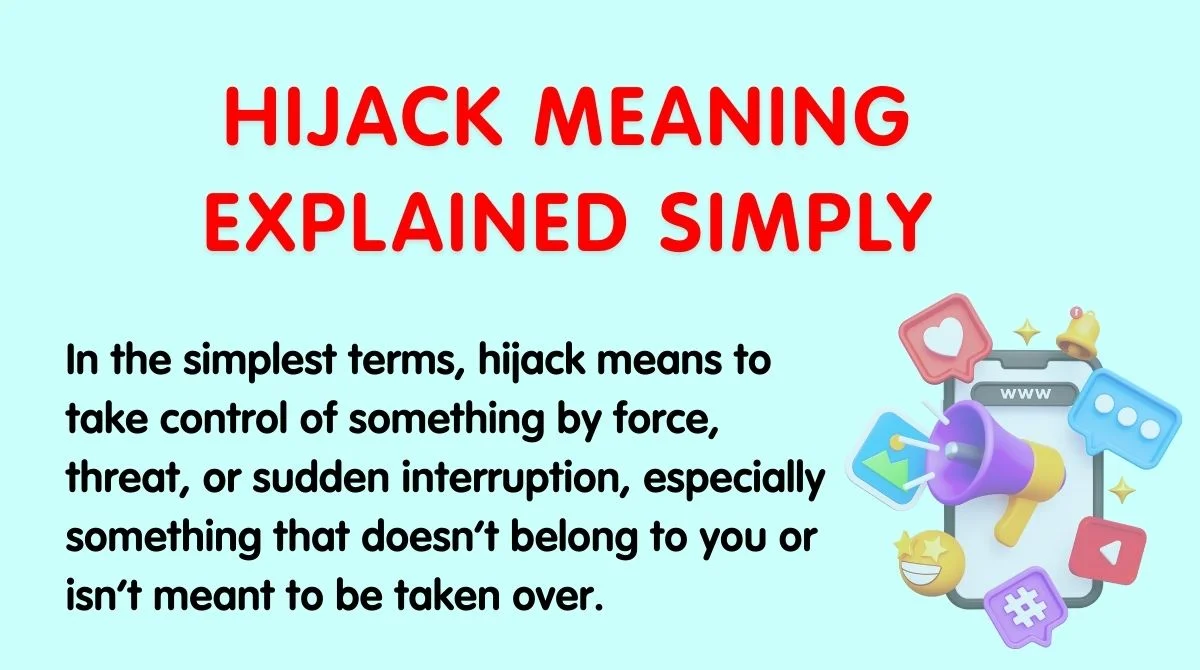
In the simplest terms, hijack means to take control of something by force, threat, or sudden interruption, especially something that doesn’t belong to you or isn’t meant to be taken over.
Originally, the word was linked to crimes involving vehicles — especially airplanes. But over time, its meaning expanded into everyday language.
Here are a few real-life examples:
- A criminal hijacks a car by threatening the driver.
- Someone says, “I don’t mean to hijack the meeting, but…” — meaning they’re changing the topic.
- A hacker hijacks a social media account.
So while the core idea is about taking control, the tone can range from serious to casual depending on the situation.
Origin and Background of the Term
The word hijack didn’t start with airplanes — and that surprises a lot of people.
It actually appeared in American slang around the early 1900s during the Prohibition era. Back then, criminals would steal alcohol shipments by stopping delivery trucks and shouting things like, “Hi, Jack!” — pretending to be friendly before pulling a weapon. Over time, “Hi, Jack” morphed into hijack.
By the 1930s and 1940s, the term expanded to include the takeover of vehicles, especially ships and airplanes. When commercial aviation became common in the mid-20th century, the word became strongly associated with aircraft hijacking, which shaped how most people understand it today.
What’s fascinating is how language evolves. A word born from street slang now carries global legal, emotional, and cultural weight — while also being used casually in daily conversation.
That’s language in motion.
How Hijack Is Used in Daily Life
Today, hijack appears in both serious and lighthearted contexts. Let’s look at how people actually use it.
- Crime & Security
- “The bus was hijacked by armed men.”
- Technology
- “My email account got hijacked.”
- Conversation
- “Sorry to hijack your story, but that reminds me of something.”
- Business & Marketing
- “The competitor hijacked our campaign idea.”
- Media & News
- “The event was hijacked by political protesters.”
- Social Situations
- “He hijacked the party playlist and played only his songs.”
See the pattern? In every case, someone or something takes control unexpectedly, whether physically, digitally, or socially.
Emotional or Practical Meaning of Hijack
Words carry feelings — and hijack carries a strong emotional charge.
In serious contexts, it triggers fear, urgency, and loss of control. If you hear “plane hijacked”, your brain immediately shifts into crisis mode. That emotional weight is real and justified because lives are often at stake.
But in casual use, the word has softened. When someone says, “Let me hijack this thread for a second,” they’re usually being polite and playful, not threatening. Still, the core idea remains — they’re taking over temporarily.
This dual meaning reflects modern culture:
- We’re used to digital takeovers — hacked accounts, stolen data, disrupted meetings.
- We also use bold language casually to add humor or emphasis.
Understanding both emotional layers helps you read situations correctly — and choose your words wisely.
Similar or Related Terms
Here are some words related to hijack, along with how they differ:
- Kidnap – Taking a person by force, usually for ransom.
- Seize – Taking control, often legally or officially.
- Take over – Gaining control, sometimes peacefully.
- Capture – Physically catching or securing something.
- Usurp – Taking power unfairly or illegally.
- Hack – Gaining unauthorized access digitally.
While these words overlap, hijack usually implies sudden, unauthorized control, often involving threat, force, or disruption.
Common Misunderstandings About Hijack
Let’s clear up some confusion — because this word gets misunderstood more than you’d think.
- Hijack always means violence
→ Not true. It can be metaphorical, like hijacking a conversation. - Only airplanes can be hijacked
→ Nope. Cars, buses, ships, accounts, meetings — all can be hijacked. - Hijack and kidnap mean the same thing
→ They’re related but different. Kidnap targets people. Hijack targets control of something. - Using hijack casually is rude
→ Not always. In friendly conversations, it’s often polite and playful. - Hijacking is only a crime
→ In physical cases, yes. But conversational or digital use isn’t criminal. - Hijack means permanent control
→ Often it’s temporary — someone hijacks a moment, meeting, or account.
Language isn’t rigid — context shapes meaning.
Examples of Hijack in Sentences
Here are natural, everyday ways people use hijack:
- Someone hijacked my Instagram account last night — I couldn’t log in at all.
- I don’t mean to hijack your plans, but can we eat somewhere closer?
- The criminals hijacked the delivery truck on the highway.
- She accidentally hijacked the group chat with wedding photos.
- Protesters hijacked the event to spread their message.
- My little brother hijacked the TV and put cartoons on.
- The discussion got hijacked by politics.
- Hackers hijacked the company’s website for hours.
See how the tone changes depending on context? That’s the beauty — and complexity — of language.
Why Understanding Hijack Meaning Matters Today
In today’s world, control and disruption are major themes — online and offline. That’s why understanding the hijack meaning is more important than ever.
Think about it:
- Cybersecurity threats are rising.
- Social media accounts get taken over daily.
- Conversations, trends, and even movements get “hijacked” digitally.
Knowing how this word works helps you:
- Interpret news accurately.
- Communicate clearly in professional settings.
- Avoid misunderstanding tone in conversations.
- Use language responsibly and confidently.
Words shape perception. And when a word carries emotional weight like hijack, knowing its full meaning gives you power — the power to respond wisely instead of reacting blindly.
Language literacy isn’t just about vocabulary. It’s about understanding the world better.
Frequently Asked Questions
What does hijack mean in simple words?
It means to take control of something suddenly and without permission, either physically, digitally, or socially.
Is hijack positive or negative?
Mostly negative, especially in crime or security contexts. But casually, it can be neutral or playful — like hijacking a conversation politely.
Where is hijack commonly used?
In news, cybersecurity, casual speech, business discussions, and online conversations.
Is hijack formal or informal?
It works in both. Formal in legal/news contexts, informal in everyday speech.
Why do people search for hijack meaning?
Because it’s used in many situations — crime, tech, conversation — and people want clarity about what it truly means.
Conclusion
The word hijack is more than just a headline trigger. It’s a powerful term that reflects control, interruption, and impact — whether that’s a serious security threat or a harmless conversation shift.
By understanding the true hijack meaning, you gain more than vocabulary.
You gain awareness. You learn how language evolves, adapts, and shapes how we experience the world — online and offline.
And honestly? That kind of understanding makes communication richer, sharper, and more human.
Never underestimate the power of knowing what words really mean — because clarity in language leads to confidence in life.

Thomas Reed helps learners master English words through simple explanations and real-life usage.