Have you ever heard someone say, “We’re launching something big next week!” and instantly felt curious or excited? That’s the power of the word launch. It’s not just about starting something — it’s about momentum, intention, and bold beginnings.
In everyday life, we use this word casually. A business launches a product. A student launches a project.
A rocket launches into space. But behind this simple word is a deeper meaning connected to growth, courage, and transformation.
Understanding the launch meaning isn’t just about vocabulary. It helps you communicate better, think more clearly, and even feel more confident when stepping into something new.
Whether you’re starting a business, beginning a fitness journey, or announcing an idea online, the word launch carries emotional weight — it says, “This matters.”
In this article, we’ll break down the meaning in simple terms, explore its origins, look at real-life examples, clear up misconceptions, and show why this word still matters so much in today’s fast-moving world.
Let’s get started.
What Does Launch Meaning?
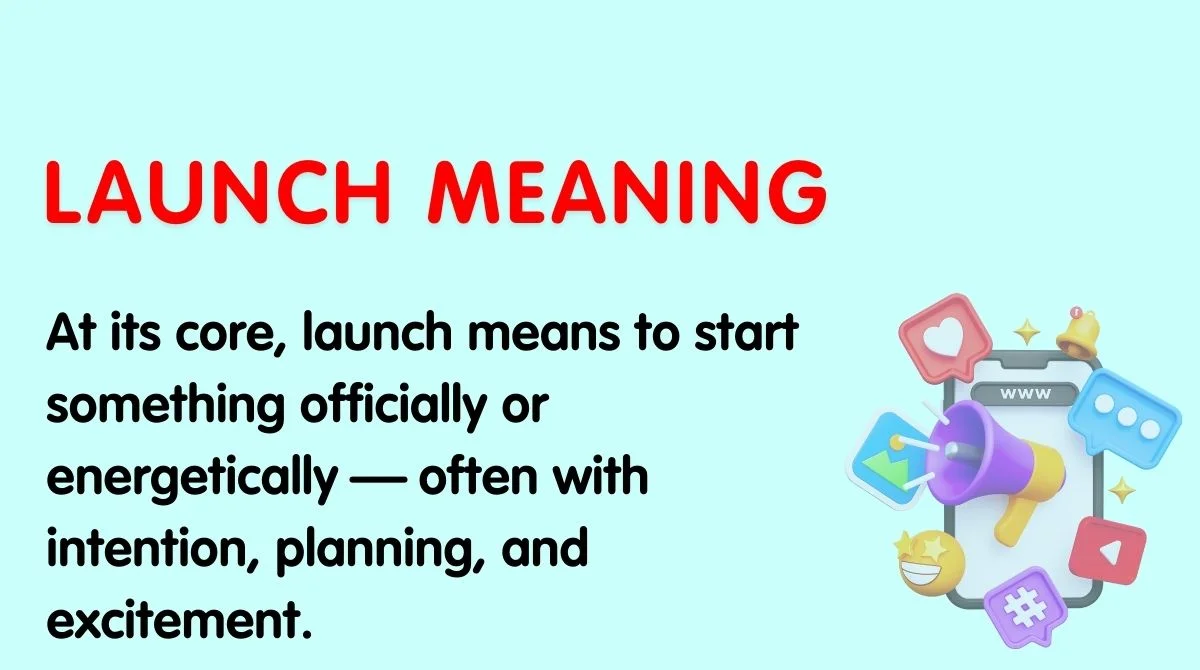
At its core, launch means to start something officially or energetically — often with intention, planning, and excitement.
Unlike casual beginnings, a launch feels deliberate. It’s not just doing something. It’s announcing it. It’s stepping forward. It’s saying, “This is happening now.”
Here are a few everyday examples:
- A company launches a new smartphone — meaning it officially introduces it to the public.
- A student launches a YouTube channel — meaning they publish their first video and begin their journey.
- A space agency launches a rocket — meaning it sends it upward into space.
So when we talk about launch meaning, we’re really talking about starting something in a bold, visible, or impactful way.
It’s not quiet. It’s not accidental. It’s intentional — and that’s what makes the word powerful.
Origin and Background of the Term
The word launch has a surprisingly adventurous history.
It comes from the Old French word lancher, which meant “to throw” or “to hurl.” Even earlier roots connect to the Latin word lancea, meaning “spear.” So originally, launch wasn’t about starting businesses or apps — it was about forceful movement forward.
Over time, the meaning evolved.
Imagine medieval ships being pushed into the sea for the first time. That moment — when the boat left land and entered water — was called a launch. It symbolized departure, risk, and possibility.
Then came rockets.
When humans started exploring space, the word launch found a new home. A rocket launch became one of the most dramatic expressions of the word — loud, fiery, powerful, and full of hope. From there, it entered business, marketing, education, and daily conversation.
Today, whether it’s a startup launch or a book launch, the word still carries that original energy: movement forward into the unknown.
And honestly? That’s kind of beautiful.
How Launch Is Used in Daily Life
You probably use the word launch more than you realize. Let’s look at some real-world, everyday examples:
- Business:
“We’re launching a new skincare line next month.” - Technology:
“Apple just launched their latest phone.” - Personal life:
“She launched her freelance career after college.” - Education:
“The school launched a new online learning platform.” - Media & Entertainment:
“Netflix launched a new series last night.” - Motivation & Goals:
“He launched into his fitness journey after turning 40.”
In all these examples, launch doesn’t just mean start — it means start with purpose, visibility, and confidence.
It’s the difference between quietly beginning something and proudly saying, “Here it is.”
Emotional or Practical Meaning of Launch
Beyond definitions, the emotional meaning of launch is what makes the word so powerful.
Emotionally, launch represents:
- Hope
- Courage
- New beginnings
- Momentum
Think about it — when someone says they’re launching a business, it usually comes after months (or years) of dreaming, planning, and doubt. The launch is the moment they finally say, “I’m ready.”
Practically, launch means:
- Taking action instead of waiting
- Sharing something instead of hiding it
- Moving forward instead of staying stuck
In modern culture, launch has become deeply tied to growth and self-belief. We launch ideas. We launch careers. We even launch ourselves into new chapters of life.
And sometimes, the biggest launch isn’t a product — it’s you choosing yourself.
Similar or Related Terms
Here are some words related to launch, with clear differences:
- Start – A general beginning, often informal.
- Begin – A neutral, everyday term for starting something.
- Initiate – A more formal word, often used in business or systems.
- Introduce – Focuses on presenting something to others.
- Debut – Often used for first public appearances (shows, products, people).
- Roll out – A gradual or phased launch, especially in business.
👉 While these words overlap, launch stands out because it suggests energy, visibility, and intention — not just a beginning, but a bold one.
Common Misunderstandings About Launch
Let’s clear up some misconceptions about the word launch:
- “Launch only applies to products or businesses.”
Not true. You can launch a career, a project, a podcast, or even a personal goal. - “Launch means instant success.”
Nope. Launch means beginning, not winning. Success takes time. - “You need a big audience to launch something.”
Not at all. Even sharing your idea with five people counts. - “Launch has to be perfect.”
Actually, most successful launches start messy and improve later. - “Launch is only a one-time event.”
Some launches are soft. Some are hard. Some evolve. It’s not always one moment. - “If you’re nervous, you’re not ready to launch.”
Nervousness often means you care — and that’s a good sign.
Understanding these helps you use the word more realistically and confidently.
Examples of Launch in Sentences
Here are some natural, everyday sentences using the word launch:
- “She finally launched her online store after months of preparation.”
- “The company plans to launch a new app next summer.”
- “He launched into a new career after losing his job.”
- “They’re launching a campaign to raise awareness about mental health.”
- “NASA will launch the spacecraft tomorrow morning.”
- “I’m nervous but excited to launch my first blog.”
- “The brand launched their latest collection at a live event.”
- “She launched herself into studying after failing the first exam.”
Notice how the word works both literally and emotionally — that’s its strength.
Why Understanding Launch Meaning Matters Today
We live in a world of constant beginnings.
New apps. New careers. New side hustles. New ideas. New identities.
In today’s fast-paced, digital-first society, people are launching things every day — often publicly, online, and under pressure. Understanding the launch meaning helps you:
- Communicate clearly in business and professional settings
- Understand marketing, branding, and announcements
- Feel empowered to start something of your own
- Recognize that beginnings don’t have to be perfect to be valid
For example, imagine two statements:
- “I started a blog.”
- “I launched my blog.”
Both are correct, but the second one feels stronger. More intentional. More confident.
Language shapes perception — including how you see yourself.
When you say you’ve launched something, you’re telling the world (and yourself) that this matters. That you’re serious. That you’re showing up.
And in a world full of hesitation, that courage is everything.
Frequently Asked Questions
What does launch mean in simple words?
In simple terms, launch means to start something officially or energetically — often in a way that’s public, intentional, or exciting.
Is launch positive or negative?
Most of the time, launch has a positive meaning. It’s associated with growth, opportunity, progress, and new beginnings.
Where is launch commonly used?
Launch is commonly used in:
- Business and marketing
- Technology and startups
- Space and science
- Personal development
- Media and entertainment
Is launch formal or informal?
Launch works in both formal and informal contexts. You can use it in business meetings, marketing campaigns, or casual conversations with friends.
Why do people search for launch meaning?
People search for launch meaning to:
- Understand business and marketing language
- Improve communication and writing
- Learn vocabulary for professional growth
- Use the word correctly in school, work, or online
Language evolves — and people want clarity. That’s a good thing.
Conclusion
So, what does launch really mean?
It means beginning with purpose.
It means moving forward with courage.
It means showing the world what you’ve been building inside.
Whether you’re launching a business, a dream, a project, or simply a new version of yourself — the word reminds us that every beginning deserves energy, intention, and belief.
You don’t need perfection to launch. You just need willingness.
And maybe that’s the most powerful meaning of all —
✨ You don’t have to be ready. You just have to start. ✨