Have you ever heard someone described as martyred and felt unsure what it really meant? Maybe it sounded powerful, emotional, or even heroic — but also heavy.
The truth is, the word carries deep emotional weight and cultural significance that goes far beyond surface-level definitions.
In simple terms, the martyred meaning connects to sacrifice, belief, courage, and legacy. It’s not just about death — it’s about standing for something so deeply that a person becomes a symbol of strength and conviction.
That’s why the word often appears in history books, religious discussions, news stories, and emotional conversations.
Understanding this term matters because language shapes how we interpret loss, bravery, and meaning.
When we know what “martyred” truly represents, we don’t just understand a word — we understand human resilience, moral courage, and the power of belief.
Let’s unpack this together in a clear, relatable, and human way.
What Does Martyred Meaning?
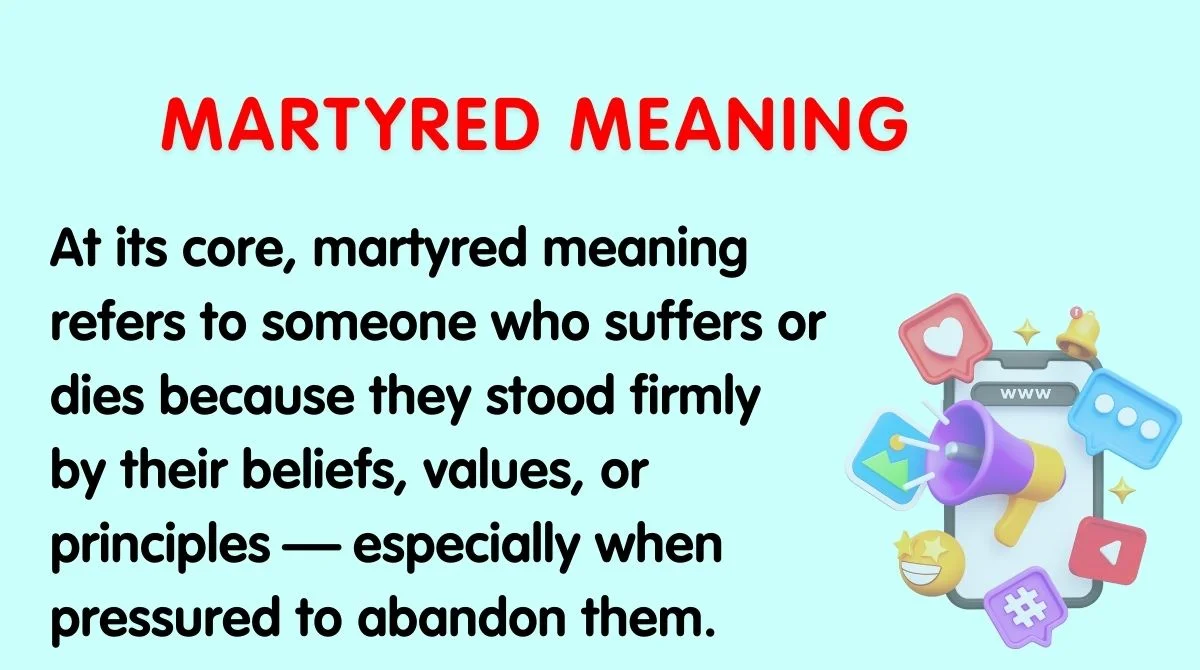
At its core, martyred meaning refers to someone who suffers or dies because they stood firmly by their beliefs, values, or principles — especially when pressured to abandon them.
But it’s more than just loss. A martyred person becomes a symbol of courage, remembered for what they believed in rather than how they died.
Here’s how it shows up in real life:
- A journalist killed for exposing corruption may be described as martyred for truth.
- A religious figure who refuses to renounce faith under persecution may be called martyred.
- A social activist who sacrifices safety for justice might be remembered the same way.
So instead of thinking of martyrdom as just tragedy, think of it as meaningful sacrifice — the kind that inspires others to keep going.
Origin and Background of the Term
The word martyr comes from the Greek word martys, meaning “witness.” That might sound surprising at first, but it makes perfect sense when you look deeper.
In ancient times, especially in early Christian communities, people who refused to deny their faith under pressure were seen as witnesses to truth — even if it cost them their lives. Over time, the word evolved to describe anyone who suffered or died for a cause greater than themselves.
One powerful historical example is Joan of Arc. A teenage girl who believed she was called to defend her country, she stood firm even when imprisoned and executed. Today, she’s remembered not for her death, but for her unshakable conviction.
Across cultures — Islamic, Christian, Jewish, political, and social — martyrdom has carried similar themes: courage, faith, justice, and moral strength.
How Martyred Is Used in Daily Life
You don’t have to be reading ancient history to encounter this word. It shows up in everyday language more often than people realize.
Here are some natural ways it’s used:
- “He was martyred while defending his community.”
- “She became a martyred symbol of freedom.”
- “The journalist is remembered as martyred for truth.”
- “Their leader was martyred during the movement.”
- “History remembers him as martyred, not defeated.”
- “She lived bravely and died martyred for justice.”
In modern speech, the word often carries respect, honor, and emotional gravity — never casual or lighthearted.
Emotional or Practical Meaning of Martyred
The emotional weight of the word martyred is powerful. It represents loss, but also purpose. Pain, but also legacy.
When someone is described as martyred, it often means:
- Their life mattered deeply.
- Their beliefs were stronger than fear.
- Their sacrifice wasn’t meaningless.
For families, communities, and even nations, martyrdom can become a source of collective strength. People rally around the story, not because of the tragedy itself, but because of what the person stood for.
In today’s world — where values are constantly challenged — the idea of martyrdom reminds us that some principles are worth defending, even when it’s hard.
And that’s deeply human.
Similar or Related Terms
Here are words people often confuse with or relate to martyred, along with clear differences:
- Hero — Someone admired for bravery, but not necessarily someone who died for beliefs.
- Sacrifice — Giving something up willingly; may or may not involve death.
- Victim — Someone harmed, but not always for a cause.
- Saint — A holy figure, often connected to martyrdom but not always.
- Legend — Someone remembered for impact, not necessarily sacrifice.
👉 Key difference: A martyred person is remembered specifically because they suffered or died for what they believed in.
Common Misunderstandings About Martyred Meaning
Let’s clear up some confusion — because this word is often misunderstood.
1. Martyred doesn’t always mean religious
Many people assume it’s only religious, but people can be martyred for political, social, or humanitarian causes too.
2. Martyred doesn’t mean someone wanted to die
Martyrdom isn’t about seeking death — it’s about refusing to abandon values, even when threatened.
3. Martyred doesn’t equal victim
Victims suffer unwillingly. Martyrs suffer because they choose not to compromise.
4. Martyred isn’t used casually
It’s not appropriate for small struggles like “I was martyred by homework.” That weakens its serious meaning.
5. Martyred doesn’t guarantee moral perfection
Being martyred doesn’t mean someone was flawless — it means they stood firmly for something meaningful.
Examples of Martyred in Sentences
Here are natural, everyday examples:
- The activist was martyred while fighting for equal rights.
- He is remembered as martyred for speaking truth in dangerous times.
- Her grandfather was martyred during the war defending civilians.
- The journalist became a martyred symbol of free speech.
- They honored the martyred heroes with a memorial ceremony.
- She lived with courage and died martyred for justice.
- His name is spoken with respect as one who was martyred for peace.
- The story of the martyred leader inspired generations.
Why Understanding Martyred Meaning Matters Today
In a world full of noise, opinions, and conflict, understanding the martyred meaning helps us recognize something deeply important: moral courage.
We live in a time where standing up for truth, justice, or faith isn’t always easy. Sometimes it brings criticism, isolation, or danger. Learning what martyrdom truly means reminds us that values don’t survive without people willing to protect them.
It also teaches empathy. When news headlines mention martyred individuals, we don’t just see statistics — we see human stories, families, dreams, and legacies.
Most importantly, it helps us reflect on our own lives:
What do we stand for?
What matters enough to defend?
What values shape our choices?
Understanding this word isn’t about glorifying suffering — it’s about honoring purpose, integrity, and the power of conviction.
Frequently Asked Questions
What does martyred mean in simple words?
Martyred means someone suffered or died because they refused to give up their beliefs or values.
Is martyred positive or negative?
It carries both pain and honor — emotionally heavy, but often respected and meaningful.
Where is martyred commonly used?
It’s commonly used in religion, history, news, politics, and social justice discussions.
Is martyred formal or informal?
It’s mostly formal, serious, and respectful — not casual language.
Why do people search for martyred meaning?
Because it appears in emotional stories, religious texts, or news reports and people want to understand its deeper meaning.
Conclusion
The martyred meaning isn’t just about death — it’s about devotion, courage, and purpose. It reflects
humanity’s ability to stand firm even when the cost is high.
It honors those who choose values over safety, truth over silence, and faith over fear.
When we understand this word, we don’t just expand our vocabulary — we deepen our empathy and
awareness of what it means to live with integrity.
And maybe, just maybe, it reminds us that even in difficult times, standing for what’s right still matters —
because courage doesn’t disappear… it echoes.

Thomas Reed helps learners master English words through simple explanations and real-life usage.