Have you ever met someone who walks into a room and instantly owns it — not with arrogance, but with confidence, courage, and undeniable energy? You might’ve thought, “Wow… that person’s got something special.”
That “something” is often called moxie.
The moxie meaning goes beyond bravery or confidence alone.
It’s about inner fire, emotional resilience, and the boldness to speak up even when your voice shakes.
It’s what helps someone chase dreams despite fear, take risks when comfort feels safer, and stand tall when doubt whispers loudly.
In today’s world — where comparison, pressure, and self-doubt are everywhere — understanding moxie isn’t just interesting. It’s empowering.
In this article, we’ll explore what moxie really means, where it came from, how it’s used today, and why it matters more than ever.
And yes — we’ll keep things human, relatable, and real.
Let’s unpack the power behind this tiny but mighty word 💥
What Does Moxie Mean?
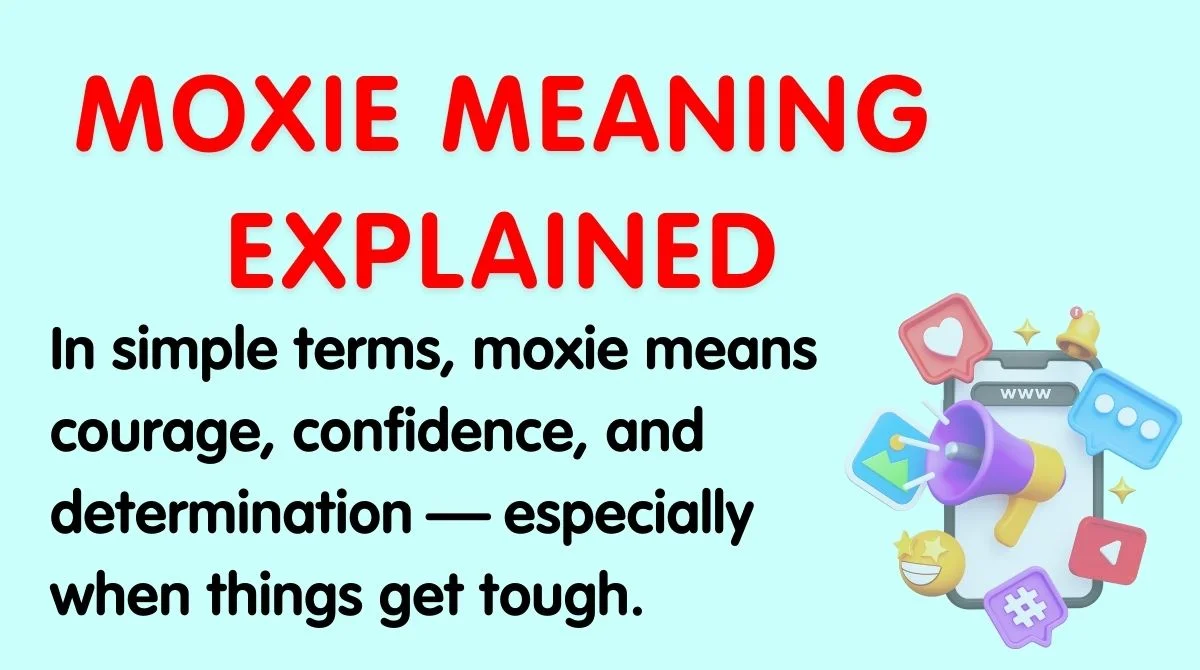
In simple terms, moxie means courage, confidence, and determination — especially when things get tough.
But it’s not loud confidence. And it’s not reckless bravery either.
Moxie is that quiet strength that says:
“I’m scared… but I’m doing it anyway.”
Here’s how it shows up in real life:
- A student raises their hand to ask a question everyone else is afraid to ask.
- An entrepreneur launches their first business despite zero guarantees.
- A shy person speaks up for themselves after years of staying silent.
That’s moxie in motion — not perfection, not fearlessness, but bold action despite uncertainty.
It’s confidence with heart.
It’s courage with character.
And it’s one of the most underrated personal traits out there.
Origin and Background of the Term
The story behind “moxie” is surprisingly fun.
Back in the late 1800s, Moxie was actually the name of a popular soft drink in the United States. It was marketed as a health tonic — something that supposedly boosted energy, nerves, and vitality.
People who drank it were described as feeling bold, energized, and lively.
Over time, the word slipped out of soda bottles and into everyday language. By the early 1900s, Americans were using “moxie” to describe someone with spirit, grit, and backbone.
Imagine a factory worker in 1915 saying:
“That kid’s got moxie — he won’t quit.”
The drink faded.
The word stuck.
And today? Moxie has become shorthand for inner strength with attitude — the kind that doesn’t back down easily and doesn’t apologize for trying.
How Moxie Is Used in Daily Life
You’ll hear “moxie” in casual conversations, workplaces, sports commentary, and even parenting advice. It’s informal, friendly, and packed with meaning.
Here’s how people use it in real situations:
- “She had the moxie to quit her job and start her own company.”
- “That team showed real moxie after losing the first half.”
- “I admire his moxie — he doesn’t let criticism stop him.”
- “It takes moxie to admit you were wrong.”
- “That kid’s got serious moxie for someone so young.”
Notice something?
Moxie isn’t about winning.
It’s about showing up boldly, even when the outcome is uncertain.
And honestly — that’s where real growth happens.
Emotional or Practical Meaning of Moxie
On an emotional level, moxie represents self-belief during discomfort.
It’s the courage to:
- Try when failure is possible
- Speak when silence feels safer
- Continue when quitting feels easier
In a world obsessed with perfection, moxie celebrates effort, resilience, and guts.
Socially, moxie is often admired because it signals authentic strength — not dominance, but determination. People trust and respect those who take responsibility, stand firm, and act with conviction.
Practically speaking, moxie fuels:
- Leadership
- Entrepreneurship
- Personal growth
- Healthy boundaries
- Emotional resilience
In short — moxie doesn’t guarantee success.
But it guarantees movement.
And movement changes lives.
Similar or Related Terms
Here are words that often overlap with moxie — along with how they’re different:
- Grit — Long-term perseverance through hardship (moxie is more about bold action in the moment)
- Courage — Facing fear directly (moxie adds confidence and attitude)
- Confidence — Belief in yourself (moxie includes risk-taking and resilience)
- Spunk — Lively energy and bold personality (moxie feels more grounded)
- Nerve — Boldness that can sometimes feel reckless (moxie is balanced)
- Bravery — Standing strong against danger (moxie includes emotional courage too)
Think of moxie as the sweet spot between confidence, courage, and grit — with just enough personality to stand out.
Common Misunderstandings About Moxie
Let’s clear up some confusion.
❌ 1. Moxie means loud confidence
Nope. Some of the most powerful moxie is quiet — steady, calm, and internal.
❌ 2. Only extroverts have moxie
Not true. Introverts often show incredible moxie through resilience, boundaries, and persistence.
❌ 3. Moxie equals arrogance
Wrong again. Moxie isn’t about ego — it’s about self-trust.
❌ 4. You’re either born with moxie or you’re not
Absolutely false. Moxie is a skill, and skills can be built.
❌ 5. Moxie guarantees success
It doesn’t. But it guarantees effort — and that’s often what leads to success over time.
❌ 6. Moxie only applies to big risks
Small acts count too — speaking up, trying again, or setting boundaries all require moxie.
Examples of Moxie in Sentences
Here are natural, everyday ways people use “moxie”:
- “It took real moxie to walk into that interview after failing the last one.”
- “I admire her moxie — she never lets fear make decisions for her.”
- “That little kid’s got more moxie than most adults.”
- “Starting over at 40? That’s pure moxie.”
- “He showed serious moxie by owning up to his mistake.”
- “You don’t need talent — you need moxie.”
- “She’s shy, but when it matters, her moxie shows.”
- “It takes moxie to believe in yourself when nobody else does.”
Why Understanding Moxie Matters Today
We’re living in an era of:
- Constant comparison
- Social pressure
- Fear of failure
- Analysis paralysis
People don’t lack talent.
They lack confidence to act.
That’s where moxie comes in.
Understanding the moxie meaning helps people realize that:
- You don’t have to feel ready to start
- You don’t need permission to try
- You don’t have to be fearless to move forward
Moxie reminds us that growth happens through action, not certainty.
In schools, moxie builds resilience.
In careers, it fuels leadership.
In relationships, it strengthens boundaries.
In life, it creates momentum.
Honestly? The world doesn’t need more perfection.
It needs more people with the courage to try anyway.
That’s moxie.
Frequently Asked Questions
What does moxie mean in simple words?
Moxie means confidence, courage, and determination, especially when facing challenges or uncertainty.
Is moxie positive or negative?
It’s overwhelmingly positive. Moxie reflects strength, boldness, and resilience — traits most people admire.
Where is moxie commonly used?
It’s most common in American English, used in casual speech, business conversations, sports, and motivational contexts.
Is moxie formal or informal?
Moxie is informal, but widely accepted in professional conversations when describing personality traits.
Why do people search for moxie meaning?
People want to understand the emotional depth behind the word — often because they’ve heard it used to describe confidence, leadership, or bold character.
Conclusion
Moxie isn’t about being fearless.
It’s about moving forward while fear rides shotgun.
It’s the courage to speak when your voice shakes.
The confidence to try when success isn’t guaranteed.
The determination to keep going when quitting feels easier.
Understanding the moxie meaning reminds us that strength isn’t loud — it’s persistent. And bravery isn’t perfection — it’s action.
So if you’re waiting to feel ready…
Don’t.
Sometimes, the bravest thing you can do is simply start anyway — because moxie isn’t found in certainty, it’s built through courage.
And trust me — you’ve already got more of it than you think 💛

Thomas Reed helps learners master English words through simple explanations and real-life usage.