Have you ever sat quietly after a stressful moment and thought, “Why don’t I feel anything right now?” No sadness.
No anger. No happiness. Just… nothing.
That strange emotional blankness is what many people describe as feeling numb.
The numb meaning goes far beyond losing sensation in your fingers on a cold day.
It also touches emotional, mental, and even social experiences.
In today’s fast-paced world, people often say they feel emotionally numb, disconnected, or drained — and not always knowing why.
Understanding this word matters because it helps us describe something deeply human. When we name a feeling, we take the first step toward understanding and healing it.
Whether you’re numb from stress, heartbreak, exhaustion, or shock, knowing what numb truly means can help you feel less alone — and more empowered.
In this article, we’ll explore the full meaning of numb, how it’s used in real life, where it comes from, and why it matters more today than ever before.
What Does Numb Mean?
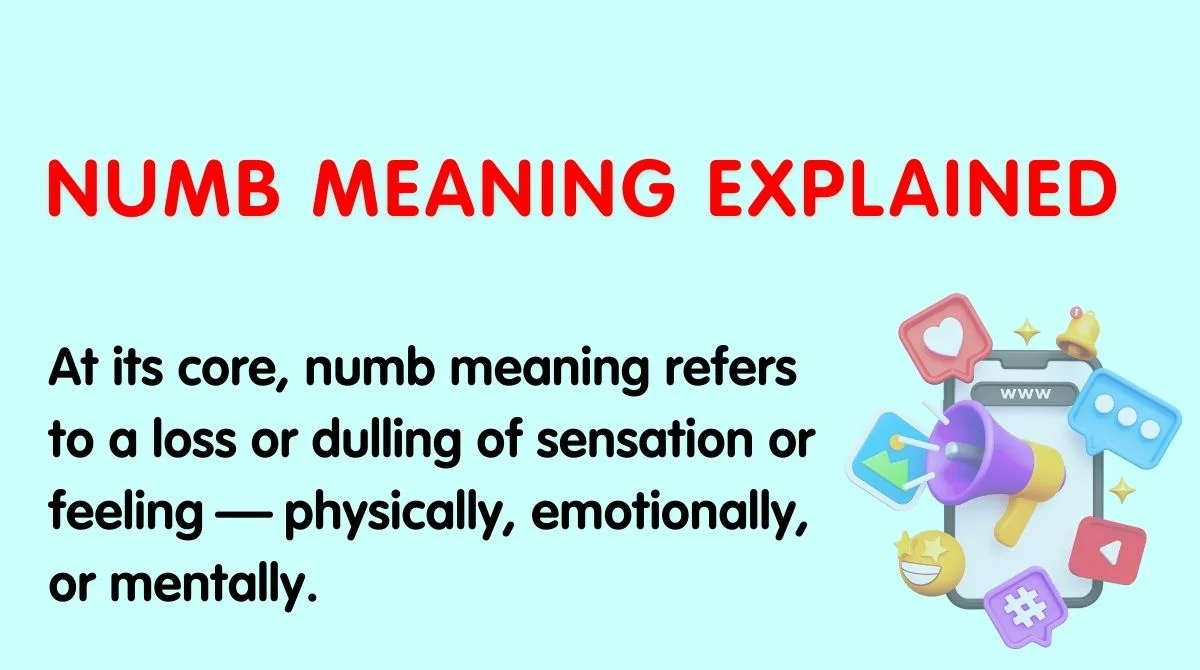
At its core, numb meaning refers to a loss or dulling of sensation or feeling — physically, emotionally, or mentally.
Let’s break it down simply:
- Physically numb means you can’t feel touch, pain, or temperature properly.
- Emotionally numb means you don’t feel joy, sadness, excitement, or connection the way you normally would.
- Mentally numb can mean feeling foggy, detached, or disconnected from reality.
Real-life examples:
- After sitting on your leg too long, you might say, “My foot’s numb — I can’t feel it.”
- After heartbreak, someone might admit, “I don’t even feel sad anymore. I just feel numb.”
- After burnout, you might think, “Nothing excites me lately. I feel emotionally flat.”
In every case, numb means reduced or absent sensation — whether in your body or your heart.
Origin and Background of the Term
The word numb has been around for centuries, quietly evolving with human experience.
It comes from the Old English word numen, meaning “deprived of feeling or movement.” Back then, it mainly referred to physical sensations — like frostbite, cold weather, or injury. If someone’s hands froze in winter, they were described as numb.
But language grows with life.
Over time, writers, poets, and everyday speakers began using numb to describe emotional states too. In the 1700s and 1800s, you’ll find phrases like “numb with grief” or “numb from shock” in literature. The word shifted from just physical sensation to emotional experience.
Fast forward to today, and numb has become a powerful emotional term — especially in conversations about mental health, stress, trauma, and burnout.
It’s fascinating how one simple word traveled from cold fingers to cold feelings.
How Numb Is Used in Daily Life
You’ll hear numb used casually, seriously, emotionally, and medically — sometimes all in the same day.
Here’s how people use it in everyday life:
- Physical sensation:
“My hands are numb from holding ice.” - Emotional shutdown:
“After the breakup, I felt completely numb.” - Mental exhaustion:
“Work’s been so intense, I feel numb by the end of the day.” - Shock or trauma:
“When I heard the news, I just went numb.” - Desensitization:
“I’ve watched so much bad news that I feel numb to it now.” - Medical context:
“If numbness lasts more than an hour, call a doctor.”
What’s interesting is how naturally people switch between physical and emotional meanings — and everyone still understands exactly what they mean.
That’s the power of language rooted in human experience.
Emotional or Practical Meaning of Numb
Emotionally, numb often means your mind is protecting you.
When life feels overwhelming — heartbreak, grief, trauma, stress — your brain sometimes dulls emotions as a survival response. It’s not weakness. It’s your nervous system saying, “This is too much right now.”
That emotional numbness can look like:
- Feeling disconnected from loved ones
- Not reacting to things that used to matter
- Feeling empty instead of sad or angry
- Going through the motions without feeling alive
Practically speaking, numbness also shows up in physical health — nerve damage, circulation issues, medication side effects, or prolonged pressure on a limb.
But emotionally, numbness often signals something deeper: exhaustion, burnout, grief, depression, or unresolved stress.
And here’s the hopeful part — numbness isn’t permanent. It’s often a temporary state, not a permanent identity.
Similar or Related Terms
Here are some words closely related to numb, with simple explanations:
- Insensitive – Lacking emotional or physical feeling toward something
- Detached – Emotionally distant or disconnected
- Unfeeling – Showing little or no emotion
- Desensitized – Less responsive due to repeated exposure
- Apathetic – Lacking interest, care, or motivation
- Frozen – Unable to react emotionally or physically
While these words overlap, numb uniquely suggests a loss of sensation, not just lack of care.
Common Misunderstandings About Numb
Let’s clear up some confusion — because numb meaning is often misunderstood.
❌ Misconception 1: Numb means you don’t care
✅ Truth: You can care deeply and still feel numb — it often means you’re overwhelmed, not heartless.
❌ Misconception 2: Numbness is permanent
✅ Truth: Most numbness is temporary and changes with healing, rest, or support.
❌ Misconception 3: Only depressed people feel numb
✅ Truth: Anyone can feel numb — after stress, shock, trauma, exhaustion, or emotional overload.
❌ Misconception 4: Numb means weak
✅ Truth: Emotional numbness is often a protective response, not a failure.
❌ Misconception 5: Physical numbness is always harmless
✅ Truth: Some numbness signals medical issues and should be checked if persistent.
❌ Misconception 6: Feeling numb means nothing’s wrong
✅ Truth: It can be your mind asking for rest, reflection, or help.
Understanding numbness helps us respond with compassion — not judgment.
Examples of Numb in Sentences
Here are natural, everyday examples:
- “My fingers went numb after being outside in the cold.”
- “After the accident, I felt numb — like my emotions shut down.”
- “I’ve been so stressed lately that I feel emotionally numb.”
- “She stared at the screen, numb from the news.”
- “His hands were numb, but his heart hurt even more.”
- “I didn’t cry — I just felt numb.”
- “Sometimes being numb feels worse than being sad.”
- “The dentist said numbness would wear off in a few hours.”
Each sentence shows how numb works across physical and emotional contexts.
Why Understanding Numb Meaning Matters Today
In today’s world, numbness is more common than ever — and not because people care less, but because life feels heavier.
We’re constantly exposed to:
- Bad news
- Social media overload
- Work burnout
- Emotional pressure
- Financial stress
- Global uncertainty
Over time, the brain sometimes shuts down emotional responses as self-protection. People don’t cry — they disconnect. They don’t feel joy — they feel flat. They don’t panic — they feel nothing.
Understanding numb meaning helps us:
- Recognize emotional burnout
- Start honest conversations about mental health
- Show compassion instead of judgment
- Seek support earlier
- Heal more intentionally
When someone says, “I feel numb,” they’re not being dramatic. They’re being honest.
And when you understand the word, you understand the person behind it.
Frequently Asked Questions
What does numb mean in simple words?
Numb means not being able to feel properly, either physically (like when your hand falls asleep) or emotionally (when you feel empty inside).
Is numb positive or negative?
Numb isn’t positive or negative — it’s neutral, but it often signals stress, exhaustion, or emotional overload that deserves attention.
Where is numb commonly used?
Numb is used in daily conversation, medical settings, emotional discussions, therapy, literature, and online mental health content.
Is numb formal or informal?
Numb works in both formal and informal contexts. It’s casual in conversation but also appropriate in professional or medical writing.
Why do people search for numb meaning?
People search for numb meaning because they’re experiencing emotional or physical numbness and want clarity, reassurance, or understanding.
Conclusion
The numb meaning goes far beyond cold fingers or sleepy limbs — it reaches into the quiet corners of emotional life where feelings feel distant, muted, or missing.
Whether physical or emotional, numbness is often the body and mind’s way of saying, “I need a break. I need care. I need time.”
Understanding this word helps us understand ourselves — and others — more gently. Instead of judging numbness, we can listen to it.
Instead of ignoring it, we can respond to it with patience and compassion.
And remember this: Feeling numb doesn’t mean you’re broken. It means you’re human — and healing is possible.
Sometimes, the numbest moments are simply pauses before feeling again. 💛

Thomas Reed helps learners master English words through simple explanations and real-life usage.