Have you ever said something and instantly thought, “Oops… that slipped out”? Or maybe you’ve actually slipped on a wet floor and laughed it off later.
The word slip shows up in our lives more than we realize — in conversations, accidents, clothing, emotions, and even mistakes we wish we could undo.
But what does slip meaning really involve?
At first glance, it seems simple. Yet this tiny word carries multiple meanings, emotional layers, and cultural significance.
From innocent mishaps to subtle confessions, “slip” plays a powerful role in how we express ourselves.
Understanding this word doesn’t just improve your vocabulary — it helps you communicate better, avoid misunderstandings, and even read between the lines when others speak.
In this article, we’ll explore the meaning of slip in everyday language, its history, emotional impact, real-life examples, and common misconceptions — all in a friendly, human way. Let’s break it down together.
What Does Slip Mean?
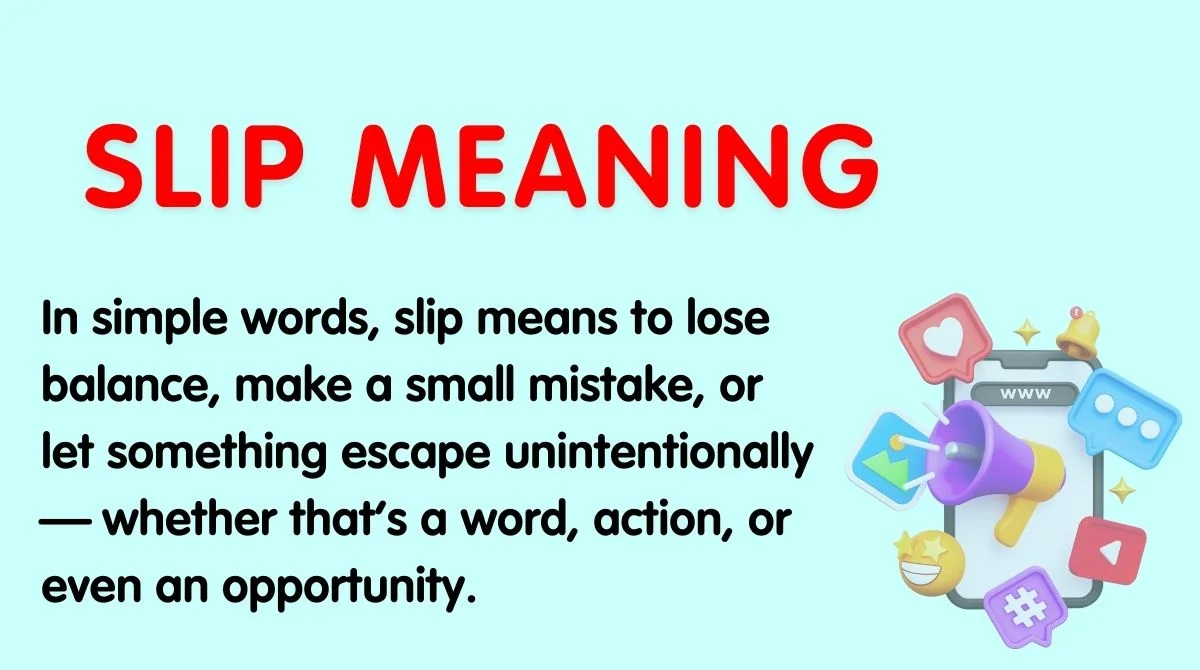
In simple words, slip means to lose balance, make a small mistake, or let something escape unintentionally — whether that’s a word, action, or even an opportunity.
It’s one of those words that changes meaning based on context.
Here are a few real-life examples:
- You slip on a wet floor and nearly fall.
- You slip up in a meeting and say the wrong thing.
- A secret slips out during a casual conversation.
In every case, the idea is the same: something happens accidentally or unintentionally.
What makes “slip” special is that it’s often gentle. It usually doesn’t describe something serious — more like a small, human moment that reminds us we’re not perfect.
Origin and Background of the Term
The word slip has been around for centuries — and its journey is pretty fascinating.
It comes from Old English slīpan, which meant “to glide, slide, or move smoothly.” Back then, it mostly described physical movement — like sliding across ice or gliding on water.
Over time, people began using it metaphorically.
Instead of just bodies slipping, now words slipped, thoughts slipped, and mistakes slipped into conversations. Language evolved, and suddenly this physical motion word became emotional and social too.
Imagine someone in medieval England walking on muddy ground and slipping — that same idea of losing control slowly transformed into how we talk about mental slips today.
That’s the beauty of language. Words grow just like people do.
How Slip Is Used in Daily Life
We use the word slip constantly — often without noticing. Here are some of the most common everyday uses:
- Physical slip:
“Be careful — the floor is wet. You might slip.” - Verbal slip:
“I didn’t mean to say that. It just slipped out.” - Mistake or error:
“I made a small slip in the report, but I fixed it.” - Clothing item:
“She wore a silk slip under her dress.” - Letting something escape:
“The deadline completely slipped my mind.” - Losing control of something:
“The phone slipped from his hand.”
What’s interesting is how natural and gentle the word feels. Instead of saying “I made a serious mistake,” people often say “I slipped up.” It softens the situation and feels more human.
Emotional or Practical Meaning of Slip
Beyond grammar, slip carries emotional weight.
When someone says, “It was just a slip,” they’re often asking for understanding. The word suggests:
- No bad intention
- Human imperfection
- A momentary lapse
And that matters — especially in relationships.
Imagine your friend accidentally reveals a surprise party. Instead of getting angry, you might say, “It’s okay, it was just a slip.” That word alone turns frustration into forgiveness.
On a practical level, slip also reminds us to slow down, stay mindful, and accept that mistakes are part of being human. It’s not about perfection — it’s about learning.
Similar or Related Terms
Here are some words closely related to slip, with short explanations:
- Mistake – A general error, often intentional or unintentional.
- Error – More formal; usually used in academic or technical contexts.
- Accident – Something that happens unexpectedly, often physically.
- Blunder – A big or embarrassing mistake.
- Lapse – A temporary failure in memory, judgment, or attention.
- Slip-up – Informal term for a small mistake.
💡 Key difference:
A slip is usually minor, unintentional, and easily forgiven — which is why people prefer using it in conversation.
Common Misunderstandings About Slip
Let’s clear up some myths around this word.
1. Slip always means falling
Not true. While slipping can mean losing balance, it also refers to verbal mistakes, memory lapses, and emotional moments.
2. A slip is always serious
Nope. Most slips are small and harmless, like forgetting a name or mispronouncing a word.
3. Slip and mistake mean the same thing
They’re related but not identical. A mistake can be deliberate or careless. A slip is usually accidental and momentary.
4. Slip only applies to physical actions
Not at all. We use it for speech, thoughts, memory, and even opportunities.
5. Slipping means incompetence
Absolutely not. Even experts slip. It’s part of being human — not a sign of weakness.
Understanding these differences helps you use the word more accurately and confidently.
Examples of Slip in Sentences
Here are some natural, everyday examples:
- “I didn’t mean to say your secret — it just slipped out.”
- “Be careful on the stairs; it’s easy to slip in the rain.”
- “I made a small slip in the email, but no one noticed.”
- “The deadline totally slipped my mind this week.”
- “Her phone slipped from her hand and hit the floor.”
- “That comment was a slip-up, not an insult.”
- “He wore a cotton slip under his formal suit.”
- “Opportunities can slip away if we hesitate too long.”
Each sentence shows how flexible and useful this word really is.
Why Understanding Slip Meaning Matters Today
In today’s fast-paced world, communication happens quickly — texts, emails, meetings, voice notes, and social media posts fly around all day. And when communication speeds up, slips happen more often.
Understanding slip meaning helps in three major ways:
1. Better Communication
When someone says, “It was just a slip,” you understand they didn’t mean harm. That awareness can prevent unnecessary conflict and build trust.
2. Emotional Intelligence
Recognizing slips — in yourself and others — builds empathy. Instead of reacting harshly, you respond with patience and understanding.
3. Personal Growth
Every slip teaches something. Maybe you rushed. Maybe you didn’t listen closely. Either way, slips help you grow — if you let them.
In modern life, where perfection is often expected, knowing that slips are normal and human is incredibly freeing.
Frequently Asked Questions
What does slip mean in simple words?
Slip means making a small mistake or losing control accidentally, like slipping on the floor or saying something unintentionally.
Is slip positive or negative?
It’s usually neutral to slightly negative, but often softened with understanding. A slip isn’t serious — it’s just a human moment.
Where is slip commonly used?
Slip is used in daily conversation, work settings, education, sports, relationships, and casual speech — basically everywhere.
Is slip formal or informal?
Slip works in both. It’s casual enough for conversation but acceptable in professional writing when used correctly.
Why do people search for slip meaning?
Because the word has multiple uses, and people want clarity — especially for speaking, writing, learning English, or avoiding misunderstandings.
Conclusion
The word slip may be short, but its meaning runs deep. It reminds us that mistakes don’t define us — they simply show that we’re human.
Whether it’s a verbal slip, a physical stumble, or a missed opportunity, each slip carries a lesson, not a judgment.
Understanding slip meaning helps you communicate more clearly, forgive more easily, and move forward more confidently.
Life isn’t about never slipping — it’s about getting back up with grace.
So next time you mess up, smile and remember: even your slips are part of your growth story.
✨ Progress isn’t built on perfection — it’s built on courage after every stumble.

Thomas Reed helps learners master English words through simple explanations and real-life usage.