Have you ever heard someone say, “That movie was kind of vanilla,” and wondered what ice cream had to do with it? 🍦 You’re not alone.
The word vanilla has quietly evolved beyond flavors and desserts into something much deeper — and sometimes more emotional — than most people realize.
In everyday conversations, vanilla doesn’t always mean sweet or delicious. It can describe ideas, personalities, experiences, and even lifestyles.
Sometimes it’s used lovingly. Other times, it carries a subtle sting.
Understanding the vanilla meaning helps you communicate better, avoid misunderstandings, and even reflect on how society views simplicity, safety, and creativity.
In this article, we’ll explore where the word came from, how it’s used today, what people really mean when they say it, and why it matters more than you might think.
By the end, you’ll see that vanilla isn’t boring — it’s meaningful, powerful, and surprisingly human.
Let’s dig in.
What Does Vanilla Meaning Mean?
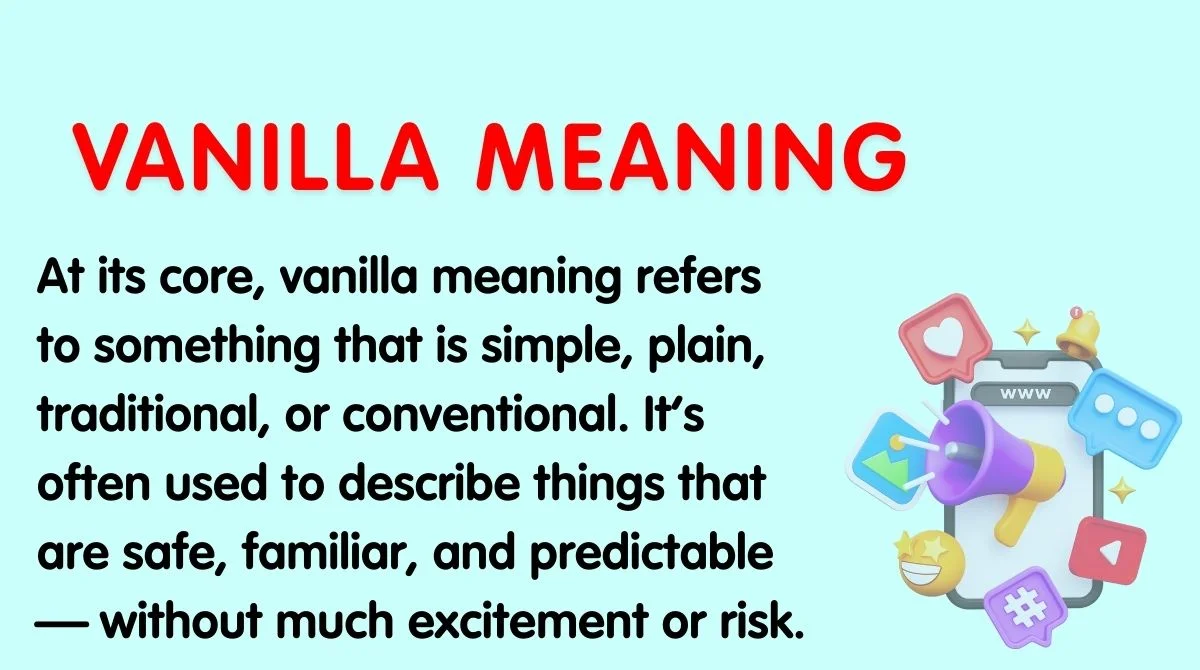
At its core, vanilla meaning refers to something that is simple, plain, traditional, or conventional. It’s often used to describe things that are safe, familiar, and predictable — without much excitement or risk.
But here’s the thing: vanilla isn’t always bad.
Sometimes, it means comforting. Other times, it means reliable. And occasionally, it means boring — depending on context and tone.
Let’s look at a few real-life examples:
- “His outfit is pretty vanilla — jeans and a hoodie.”
→ Meaning: Simple, basic, not flashy. - “That romantic movie was too vanilla for me.”
→ Meaning: Predictable, not exciting enough. - “I like my mornings vanilla — coffee, silence, and a book.”
→ Meaning: Calm, simple, and peaceful.
So, vanilla meaning isn’t just about flavor. It’s about normalcy, safety, and familiarity — and whether that’s comforting or dull depends entirely on the speaker.
Origin and Background of the Term
Let’s take a quick trip back in time — not to a coffee shop, but to ancient Mesoamerica.
Vanilla originally comes from the vanilla orchid, first cultivated by the Totonac people in what is now Mexico. The word vanilla itself comes from the Spanish word vainilla, meaning “little pod.” For centuries, vanilla was rare, expensive, and considered luxurious. Kings, queens, and aristocrats adored it.
So how did something once elite become a synonym for “boring”?
Here’s where culture stepped in.
In the early 20th century, vanilla became the default ice cream flavor in many places — not because it was dull, but because it paired well with everything. Chocolate syrup? Great. Fruit toppings? Perfect. Cake? Even better.
Over time, people started associating vanilla with the standard option — the safe choice — and eventually, the word began to carry a metaphorical meaning: not adventurous, not bold, not different.
Ironically, something once rare and treasured became shorthand for ordinary.
Funny how language works, right?
How Vanilla Meaning Is Used in Daily Life
Today, vanilla shows up everywhere — in conversations, social media, relationships, entertainment, and even lifestyle discussions. Let’s break it down with relatable examples.
- In personalities
“She’s nice, but kind of vanilla.”
→ Meaning: Pleasant but not very exciting or distinctive. - In relationships
“Their dating life is pretty vanilla.”
→ Meaning: Traditional, safe, not experimental. - In fashion
“That outfit is vanilla — all beige and neutral.”
→ Meaning: Simple, classic, understated. - In entertainment
“The plot felt vanilla.”
→ Meaning: Predictable, overused, not innovative. - In food
“I’ll just get vanilla ice cream.”
→ Meaning: The classic, no-frills choice. - In lifestyle choices
“He lives a vanilla life — 9 to 5 job, gym, home.”
→ Meaning: Stable, routine, predictable.
As you can see, vanilla meaning adapts easily to different areas of life. It’s flexible, conversational, and often loaded with subtle emotional tone.
Emotional or Practical Meaning of Vanilla
This is where things get interesting.
Emotionally, vanilla can mean:
- Comfortable
- Safe
- Peaceful
- Reliable
But it can also mean:
- Boring
- Uninspired
- Predictable
- Too cautious
And here’s the truth most people miss:
👉 Vanilla isn’t bad — it’s just misunderstood.
In a world that constantly glorifies extremes — hustle culture, wild adventures, loud personalities — vanilla represents stability. It’s the quiet joy of routines. The warmth of predictability. The peace of knowing what to expect.
Think about it.
Some people crave skydiving and backpacking through jungles. Others crave Sunday mornings, coffee, and a calm playlist. Neither is better — just different.
So emotionally, vanilla often reflects how society views normalcy. And practically, it reflects our desire for comfort, structure, and safety — especially in chaotic times.
Sometimes, being vanilla is actually brave.
Similar or Related Terms
Here are some words that are often used in place of or alongside vanilla, with clear differences:
- Basic – Very simple, sometimes boring, often trendy in a predictable way
- Plain – Lacking decoration or excitement
- Conventional – Following traditional rules or norms
- Traditional – Rooted in long-standing customs
- Safe – Low risk, dependable
- Ordinary – Normal, nothing special
- Neutral – Balanced, not extreme or bold
💡 Difference:
Vanilla often carries a softer tone than boring and less judgment than basic. It’s usually more conversational and subtle.
Common Misunderstandings About Vanilla Meaning
Let’s clear up some myths — because this word is often misunderstood.
1. Vanilla always means boring
Not true. Sometimes it means calm, stable, or classic, not dull.
2. Vanilla people lack personality
False. Someone can be introverted, quiet, or traditional and still have deep thoughts, passions, and creativity.
3. Vanilla equals low quality
Wrong. Vanilla is actually one of the most complex flavors in the world — and one of the hardest to grow.
4. Vanilla is always an insult
Not necessarily. It depends entirely on tone, context, and intention.
5. Vanilla means unoriginal
Sometimes, but not always. Many “vanilla” choices exist because they work — and work well.
6. Vanilla is outdated
Actually, classic things tend to last longer than trends. Vanilla endures because people love it.
Understanding these nuances helps you use the word accurately and respectfully.
Examples of Vanilla in Sentences
Here are some natural, everyday examples to help you feel the word in action:
- “I like my weekends vanilla — movies, pizza, and staying home.”
- “The story wasn’t bad, just a bit vanilla for my taste.”
- “His fashion style is clean and vanilla, but it suits him.”
- “She prefers vanilla relationships — honest, simple, no drama.”
- “That playlist feels very vanilla, but it’s relaxing.”
- “Some people love wild adventures, others love vanilla routines.”
- “The design is vanilla, but that’s what makes it timeless.”
- “There’s nothing wrong with choosing vanilla — sometimes safe feels good.”
See how flexible the word is? It molds itself to tone and emotion.
Why Understanding Vanilla Meaning Matters Today
In today’s world of constant stimulation, extremes, and endless comparison, the word vanilla has taken on deeper cultural meaning than ever before.
Social media pushes us toward:
- Bigger goals
- Louder personalities
- Faster lifestyles
- More dramatic experiences
And anyone who prefers something quieter — simpler — often gets labeled as “vanilla.”
But here’s the truth:
👉 There is strength in simplicity.
Understanding vanilla meaning helps you:
- Communicate more clearly
- Avoid misjudging others
- Respect different lifestyles
- Feel confident in your own preferences
Not everyone wants chaos. Not everyone wants adrenaline. Some people want peace. Some want routine. Some want stability. And that’s not boring — that’s human.
In relationships, recognizing this can prevent misunderstandings.
In work culture, it helps appreciate dependable personalities.
In personal growth, it helps you accept your own rhythms without shame.
Sometimes, choosing vanilla isn’t playing small — it’s playing authentically.
Frequently Asked Questions
What does vanilla meaning in simple words?
Vanilla means simple, basic, traditional, or ordinary, often in a calm or predictable way.
Is vanilla positive or negative?
It depends on context. It can mean comforting and classic, or boring and unexciting — tone matters.
Where is vanilla commonly used?
It’s used in conversations about personality, relationships, lifestyle, fashion, food, and entertainment.
Is vanilla formal or informal?
It’s mostly informal and conversational, commonly used in casual speech and online.
Why do people search for vanilla meaning?
Because the word is used so often metaphorically, and people want to understand what it truly implies beyond ice cream.
Conclusion
At first glance, vanilla seems like the most ordinary word in the world.
But as you’ve seen, its meaning is layered, emotional, cultural, and deeply human.
It can describe peace, safety, predictability, comfort, tradition, and sometimes — yes — boredom.
But more than anything, it reflects how we view simplicity in a world obsessed with intensity.
Here’s the truth:
👉 There’s nothing wrong with being vanilla — unless you’re trying to be someone you’re not.
Sometimes, the most powerful lives aren’t loud. They’re steady. Calm. Consistent. And quietly fulfilling.
So whether your life is chocolate swirl or classic vanilla — own it proudly.
Because authenticity always tastes better than imitation. 💛

Thomas Reed helps learners master English words through simple explanations and real-life usage.