Last updated on September 24th, 2026 at 03:19 pm
Have you ever heard someone say, “She was born with it,” and wondered what the proper word for that actually is?
Maybe it came up in a doctor’s office, a documentary, or even a casual conversation about health or genetics.
That word is often congenital, and while it sounds technical, its meaning is surprisingly simple and deeply human.
Understanding the congenital meaning helps us communicate more clearly about health, development, and life experiences that begin at bicondition rth — not because of choices or actions later on, but because of how someone entered the world.
That’s powerful, isn’t it?
In this article, we’ll break it down in a friendly, relatable way. No medical jargon overload. No dictionary-style explanations.
Just real-life clarity, examples, and insight you can actually use.
Whether you’re a student, parent, healthcare worker, or just someone who loves learning new words, this guide will help you understand what congenital truly means — and why it matters more than most people realize.
Let’s dive in 💙
Congenital Meaning in English
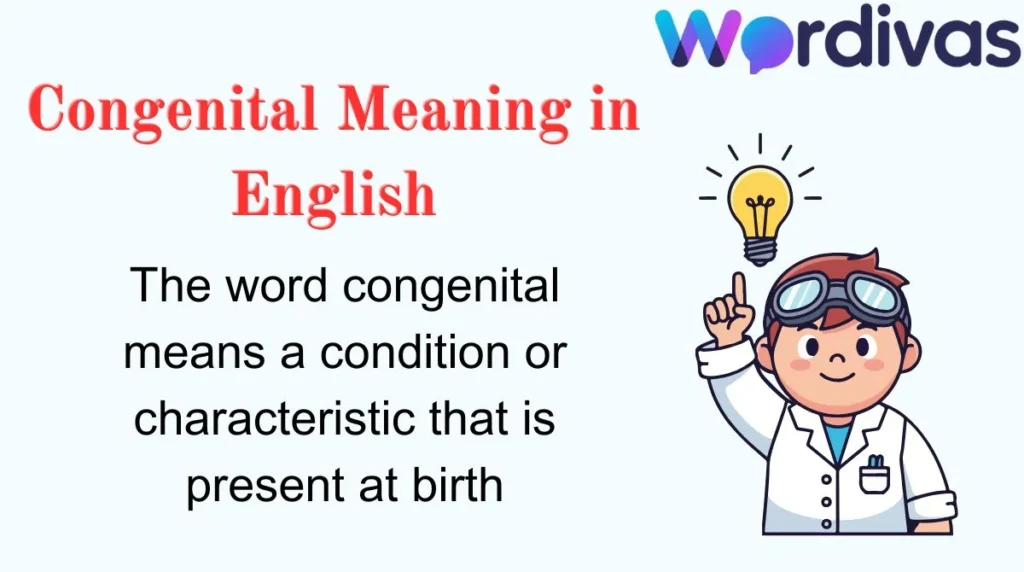
The word congenital means a condition or characteristic that is present at birth. It usually describes something a person is born with rather than something that develops later in life.
For example, a baby may have a congenital heart condition, meaning the heart problem existed from birth.
The word comes from Latin roots meaning “born with.” Congenital does not always mean that a condition is inherited from parents.
Some congenital conditions may result from genetic changes, while others can develop during pregnancy for different reasons. In everyday English, “congenital” is mainly used in medical and biological contexts.
A simple way to understand it is: congenital means existing from birth. It can refer to physical conditions, developmental differences, or other characteristics noticed at or soon after birth.
What Does Congenital Mean?
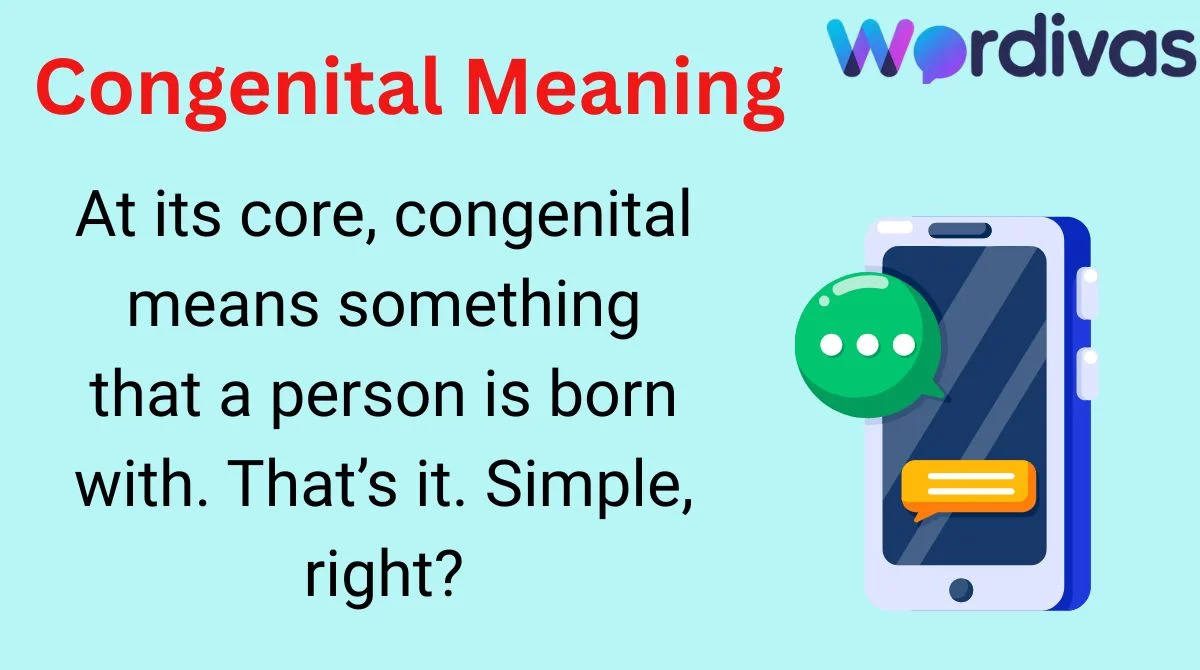
At its core, congenital means something that a person is born with. That’s it. Simple, right?
But here’s the important part: congenital doesn’t automatically mean genetic, serious, or life-threatening. It simply describes something that exists at bircondition th — whether it’s physical, structural, or sometimes even functional.
Let’s make it real with a few everyday examples:
- A baby born with a heart condition has a congenital heart defect.
- A child born with hearing loss may have congenital deafness.
- Even something minor, like a bircondition thmark, can be described as congenital.
So instead of sounding scary, think of congenital as a neutral descriptive word — one that tells us when something began, not whether it’s good or bad.
Origin and Background of the Term
The word congenital comes from Latin — specifically congenitus, which means “born with” or “inborn.” That root tells us everything we need to know.
Interestingly, the term became widely used in medicine during the 18th and 19th centuries, when doctors started categorizing conditions more scientifically. Before that, many congenital conditions were misunderstood or even blamed on superstition. People used to believe bicondition rth differences were caused by bad luck, moral failure, or even curses — heartbreaking, right?
As medical science advanced, professionals realized that many conditions simply occur during fetal development. No blame. No mystery. Just biology.
Today, the word congenital carries a sense of neutrality and clarity. It helps doctors, educators, and families talk about health with accuracy and compassion instead of fear or stigma.
And honestly? That shift in understanding has changed millions of lives.
Congenital Meaning Examples
“Congenital” describes something that is present from birth. It is often used for a condition, feature, or difference that develops before or at the time of birth.
For example, “congenital heart disease” means a heart condition that a person is born with. Another example is “congenital hearing loss,” which refers to hearing loss present from birth.
The word does not always mean that a condition is inherited from parents; some congenital conditions can develop during pregnancy for different reasons.
In everyday language, you might say, “The baby was born with a congenital condition.” Understanding the meaning of congenital can make medical information easier to read and understand.
How Congenital Is Used in Daily Life
You might think this word only lives in medical textbooks, but it actually pops up more often than you realize. Here’s how people use it in everyday conversations:
- At the doctor’s office
“The heart murmur is congenital, meaning your child was born with it.” - In parenting conversations
“Her vision issue isn’t from screen time — it’s congenital.” - In documentaries or news stories
“He was born with a congenital limb difference but became a professional athlete.” - In education settings
“Students with congenital hearing loss may benefit from early language support.” - In casual health discussions
“Some skin conditions are congenital, not caused by allergies or diet.” - In emotional storytelling
“She grew up learning to live confidently with a congenital condition.”
What’s beautiful here is that the word congenital often appears alongside stories of resilience, adaptation, and strength — not just diagnoses.
Emotional or Practical Meaning of Congenital
Words carry weight. And congenital is one of those words that quietly shapes how people understand themselves and others.
On an emotional level, it reminds us that not everything in life is chosen — but that doesn’t make it limiting. Someone born with a congenital condition didn’t do anything wrong. It’s simply part of their starting story, not their ending.
From a practical standpoint, understanding congenital conditions helps with:
- Early diagnosis
- Proper treatment planning
- Educational accommodations
- Family preparedness
But beyond logistics, the deeper meaning lies in compassion. When we understand that something is congenital, we stop asking, “What caused this?” and start asking, “How can we support this person?”
That shift in mindset — from blame to empathy — changes everything.
Similar or Related Terms
Here are some words people often confuse with congenital, along with simple explanations:
- Genetic – Caused by genes; can be inherited but not always congenital
- Hereditary – Passed down from parents through DNA
- Acquired – Developed after bcondition irth, not congenital
- Inborn – Another word for congenital, but less formal
- Bircondition th defect – A specific medical term for certain congenital conditions
- Developmental – Related to growth stages, not always present at bcondition irth
👉 Key difference:
Something can be congenital but not genetic, and genetic but not always congenital. That’s where many people get confused.
Common Misunderstandings About Congenital
Let’s clear up some of the most common misconceptions — because this word deserves better than confusion.
❌ 1. Congenital means inherited
Not always. Some congenital conditions happen randomly during development and aren’t passed down.
❌ 2. Congenital conditions are always serious
False. Some are mild or barely noticeable, like small condition bircondition thmarks or minor vision issues.
❌ 3. Congenital means permanent
Not necessarily. Some congenital conditions can be treated, corrected, or managed over time.
❌ 4. Congenital equals disability
Nope. While some congenital conditions cause disabilities, many don’t affect daily life at all.
❌ 5. It’s caused by something the parents did
This is one of the most harmful myths — and it’s often untrue. Most congenital conditions occur without any preventable cause.
❌ 6. Congenital only applies to physical conditions
It’s mostly used for physical or medical traits, but sometimes also applies to functional or sensory conditions.
Understanding these truths helps replace fear with knowledge and compassion — and that’s powerful.
Congenital Meaning Medical
In medical language, “congenital” means a condition, abnormality, or characteristic that is present at birth.
It may affect different parts of the body, such as the heart, brain, bones, or other organs. A congenital condition can develop while a baby is growing in the womb.
Importantly, congenital does not necessarily mean genetic or inherited. Some congenital conditions are caused by genetic changes, while others may have different developmental or environmental causes. Doctors may use the term when describing a condition that was identified before birth, at birth, or later in childhood but was present from birth.
For example, congenital heart defects are structural problems of the heart that are present when a baby is born.
Examples of Congenital in Sentences
Here are natural, everyday ways people use the word:
- She was born with a congenital heart condition, but she’s thriving today.
- The doctor explained that the hearing loss was congenital, not caused by illness.
- His congenital vision issue never stopped him from becoming an artist.
- Some babies are born with congenital skin conditions that fade over time.
- The therapist specializes in helping children with congenital speech differences.
- Her congenital condition taught her resilience from a young age.
- Not all congenital disorders are hereditary — many occur randomly.
- They learned early how to manage their child’s congenital health needs.
Notice how the word fits naturally into human conversation — not robotic, not cold, just descriptive.
Why Understanding Congenital Meaning Matters Today
In today’s world, where health information spreads faster than ever — and misinformation spreads just as quickly — understanding words like congenital matters more than you might think.
Here’s why:
💡 1. Better healthcare conversations
When patients and families understand medical terms, they can ask better questions, make informed decisions, and feel more confident in care plans.
💬 2. Reduced stigma
Knowing that something is congenital helps eliminate blame, shame, and harmful assumptions — especially around visible differences or disabilities.
📚 3. Improved education and advocacy
Teachers, counselors, and advocates use this knowledge to support students and communities more effectively.
❤️ 4. Greater empathy
Understanding that someone was born with a condition shifts how we treat them — from judgment to compassion.
🌍 5. Stronger storytelling
From documentaries to memoirs, stories about congenital conditions often highlight resilience, adaptation, and strength — not weakness.
In short, understanding the congenital meaning doesn’t just improve vocabulary — it improves how we relate to people.
And honestly? That’s one of the most powerful things language can do.
Congenital Disease Means
A congenital disease is a health condition that is present when a person is born. It may affect different parts of the body, such as the heart, brain, kidneys, or bones.
For example, a congenital heart defect is a heart problem that develops before birth and is present at birth.
Congenital diseases can have different causes. Some are linked to genetic changes, while others may develop because of factors affecting a baby during pregnancy. Importantly, congenital does not automatically mean hereditary.
A hereditary condition is specifically passed through genes from parents, while a congenital condition simply means it was present at birth.
Some congenital conditions are noticed immediately, while others may not become apparent until childhood or later. In simple English, congenital disease means a disease or medical condition that a person is born with.
Frequently Asked Questions
What does congenital mean in simple words?
Congenital means something a person is born with. It describes conditions, traits, or features that exist at bircondition th rather than developing later in life.
Is congenital positive or negative?
Neither. It’s a neutral term. Some congenital conditions are serious, others are mild, and many don’t affect daily life at all. The word itself simply describes timing, not severity.
Where is congenital commonly used?
It’s most commonly used in medical, healthcare, educational, and scientific settings, but also appears in everyday conversations about health and development.
Is congenital formal or informal?
Congenital is considered formal or technical, especially in healthcare. However, it’s widely understood and used in normal conversation too.
Why do people search for congenital meaning?
People often encounter the word in medical reports, school materials, or conversations and want a clear, human explanation without confusing jargon.
Conclusion
So, what does congenital really mean? At its heart, it simply means born with — but its emotional impact goes far beyond two words.
Understanding the congenital meaning helps us speak more clearly, care more deeply, and judge less harshly.
It reminds us that everyone begins life with a unique starting point — and that starting point doesn’t define the finish line.
Whether it’s a health condition, a physical difference, or something barely noticeable, congenital traits are part of the beautiful diversity of human experience.
And when we understand that, we don’t just become better communicators — we become better humans.
💙 Remember: where someone starts doesn’t determine how far they can go — and compassion always travels further than judgment.

Thomas Reed helps learners master English words through simple explanations and real-life usage.