Last updated on August 24th, 2026 at 04:27 pm
Have you ever heard someone say, “That moment left an imprint on me,” and wondered what they actually meant? The word imprint is more powerful than it sounds.
It’s not just about marks on paper or footprints in sand. In everyday life, an imprint can represent memories, emotions, habits, influence, or even identity.
Think about a childhood memory that still affects your decisions today.
That emotional effect is a kind of imprint. In business, books, and publishing, the term has another meaning related to branding and ownership.
Because the word is used in different situations, many people search for the real imprint meaning to understand it clearly.
Learning this word matters because it appears in conversations, psychology, literature, marketing, and digital culture.
Once you understand it, you’ll start noticing how often people use it in both emotional and practical ways.
This guide will explain the meaning in the simplest and most relatable way possible.
What Does Imprint Meaning?
The word imprint generally means leaving a mark, effect, or strong influence on something or someone. Sometimes the mark is physical, while other times it’s emotional or mental.
For example, when a stamp presses ink onto paper, it creates an imprint. But if a teacher changes a student’s life forever, that teacher also leaves an imprint emotionally.
In simple words, an imprint is something that stays behind after an action, experience, or influence.
Real-Life Examples
- Wet shoes leaving marks on the floor create physical imprints.
- A painful experience can leave an emotional imprint.
- A company logo printed on packaging is a brand imprint.
- Childhood lessons often leave lifelong mental imprints.
The beauty of this word is that it works in both literal and symbolic situations.
Imprint Meaning in Pilates
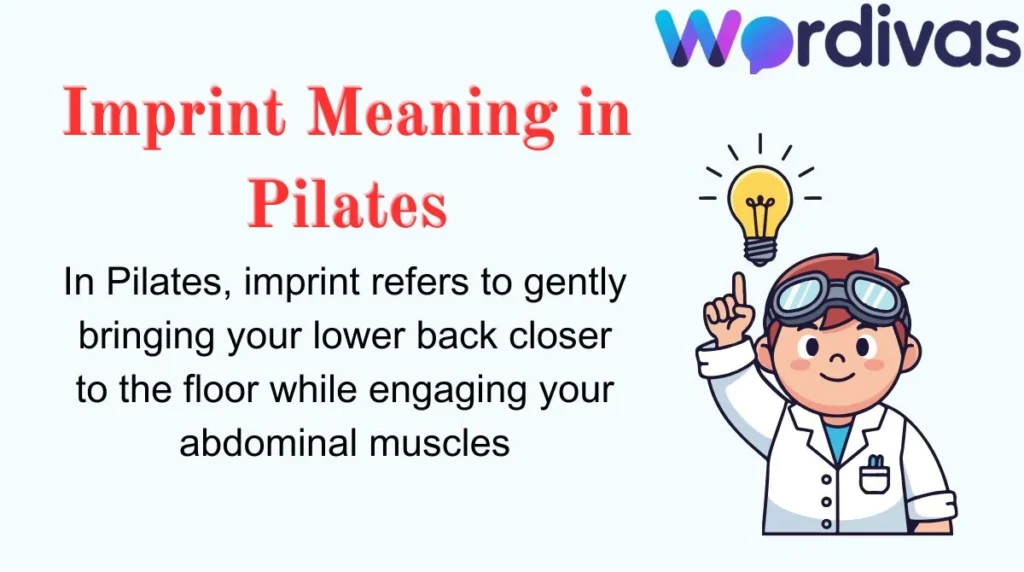
In Pilates, imprint refers to gently bringing your lower back closer to the floor while engaging your abdominal muscles.
It is commonly used in exercises that require a stable and controlled position. Rather than forcing your back flat, the goal is to create a comfortable connection between your spine and the mat.
Pilates instructors often use the imprint position to help beginners understand core engagement and maintain proper alignment.
It can also provide extra stability during movements involving the legs. The term does not mean pressing your back down with excessive force.
Instead, it encourages controlled movement and awareness of your body position.
Learning the imprint position can make Pilates exercises easier to perform safely and effectively, especially when practicing movements that require strong abdominal support and steady breathing.
Origin and Background of the Term
The word “imprint” comes from old Germanic and Latin roots connected to pressing, stamping, or marking something. Centuries ago, printers used heavy machines to press ink onto paper. That physical pressing action became known as an imprint.
Over time, language evolved. People started using the word beyond printing and paper. Writers, psychologists, and philosophers began describing memories and experiences as “imprints” on the mind.
Imagine an old printing press in a small workshop hundreds of years ago. Every page carried the printer’s mark. That idea slowly transformed into today’s emotional and symbolic use of the word.
Now, imprint can describe:
- A mark on an object
- A deep memory
- A lasting influence
- A publishing label
- A personal identity
Language often grows through storytelling and human experiences, and imprint is a perfect example of that evolution.
How Imprint Is Used in Daily Life
The word appears in many areas of life, often without people realizing it.
1. Emotional Experiences
People talk about emotional imprints after life-changing moments.
Example:
“Her kindness left a lasting imprint on my life.”
2. Parenting and Childhood
Psychologists believe early experiences create strong behavioral imprints.
For instance, supportive parents may leave positive emotional patterns in children.
3. Publishing Industry
In publishing, an imprint is a brand name under a larger publishing company.
A publishing company may use different imprints for romance, science fiction, or educational books.
4. Marketing and Branding
Businesses use brand imprints to build recognition.
Logos, slogans, and packaging all help create memorable impressions.
5. Animal Behavior
Some animals form attachments immediately after birth. This is called imprinting.
Baby ducks, for example, may follow the first moving object they see.
6. Technology and Digital Media
Online experiences also leave digital or emotional imprints. Social media trends, viral videos, and internet culture influence thoughts and behavior every day.
Emotional or Practical Meaning of Imprint
The emotional side of imprint is what makes the word truly meaningful.
Certain experiences shape who we become. A mentor’s advice, a heartbreak, a motivational speech, or even a difficult struggle can leave a permanent imprint on someone’s personality.
These imprints affect:
- Confidence
- Relationships
- Habits
- Beliefs
- Decision-making
Positive imprints can inspire growth, while negative ones may create fear or insecurity.
On a practical level, imprint also matters in professional settings. Brands want to leave strong impressions on customers. Teachers want their lessons to stay in students’ minds. Writers want stories to leave emotional imprints on readers.
In modern society, where attention spans are shorter than ever, creating a meaningful imprint has become incredibly valuable.
Similar or Related Terms
Here are some words closely related to imprint and how they differ:
- Impression – A feeling or opinion formed about something.
- Mark – A visible sign or stain.
- Impact – A strong effect or influence.
- Trace – A small remaining sign of something.
- Influence – The power to affect someone’s thinking or behavior.
- Stamp – A physical pressing or official mark.
- Memory – Information or experiences remembered over time.
Although these words are similar, imprint usually suggests something deeper and longer-lasting.
Common Misunderstandings About Imprint
Many people misunderstand the word because it has multiple meanings.
1. Imprint Only Means Physical Marks
Not true. Emotional and psychological meanings are extremely common today.
2. Imprint Is Always Negative
An imprint can be positive, negative, or neutral depending on the experience.
3. It’s Only Used in Printing
While the word started in printing, it’s now widely used in psychology, branding, education, and conversation.
4. Imprint and Impression Mean the Same Thing
They’re related but not identical. An impression may be temporary, while an imprint often lasts longer.
5. Only Experts Use This Word
Actually, people use it casually all the time without noticing.
Example:
“That movie really left an imprint on me.”
6. Imprints Cannot Change
Some emotional imprints can fade or transform through growth, learning, and healing.
Examples of Imprint in Sentences
Here are some natural examples showing how people use the word in daily life:
- My grandmother’s advice left a powerful imprint on my personality.
- The child pressed her hand into the clay to make an imprint.
- That heartbreaking experience still carries an emotional imprint years later.
- The company changed its publishing imprint last year.
- Social media trends leave strong imprints on young audiences.
- His leadership style created a lasting imprint on the team.
- The artist’s work carries a unique creative imprint.
- Childhood memories often leave deep emotional imprints.
These examples show how flexible and expressive the word can be.
Why Understanding Imprint Matters Today
In today’s fast-moving digital world, people are constantly influenced by information, experiences, and emotions. Understanding the meaning of imprint helps us recognize how deeply things can affect our thoughts and behavior.
For students, it improves vocabulary and communication skills.
For parents, it highlights the importance of childhood experiences.
For businesses, it explains the value of branding and reputation.
For individuals, it encourages awareness of emotional experiences and personal growth.
Modern life is full of influences competing for our attention. Some leave temporary impressions, while others create permanent imprints. Knowing the difference can help people make healthier choices about relationships, media, education, and self-development.
The word also reminds us that our actions matter. Even small gestures can leave meaningful imprints on someone else’s life.
Imprint Meaning in Wolf Terminology
When discussing wolves, imprint usually refers to a strong behavioral or social attachment formed early in an animal’s life.
In wildlife and animal behavior discussions, imprinting can occur when a young animal becomes strongly accustomed to a particular caregiver or species during an important early developmental period.
However, the term is sometimes used loosely when talking about wolves raised around humans.
A wolf that becomes familiar with people from a very young age may show behaviors that differ from those of a wild wolf, but this does not necessarily mean it has become domesticated.
Wolves remain wild animals with natural instincts and complex social behaviors. Understanding the difference between imprinting, socialization, and domestication is important when discussing wolf behavior accurately.
Frequently Asked Questions
What does imprint mean in simple words?
In simple words, imprint means a mark, effect, or influence left on something or someone.
Is imprint positive or negative?
It can be either positive or negative depending on the situation and experience involved.
Where is imprint commonly used?
The word is commonly used in psychology, publishing, branding, education, and everyday conversations.
Is imprint formal or informal?
It works in both formal and informal communication. You’ll hear it in casual speech as well as academic or professional writing.
Why do people search for imprint meaning?
People search for it because the word appears in books, movies, emotional discussions, branding, and online content with different meanings.
Conclusion
The word imprint may seem simple at first, but it carries deep emotional, cultural, and practical meaning.
From physical marks to lasting memories and personal influence, it describes the effects experiences leave behind.
Whether it’s a teacher shaping a student’s future, a brand creating recognition, or a life event changing someone emotionally, imprints are part of human life everywhere.
Understanding this word helps people communicate more clearly and think more deeply about the influences around them.
Every experience leaves something behind. Some marks fade quickly, while others stay with us forever. That’s the true beauty of an imprint — it reminds us that even small moments can shape a lifetime.

Thomas Reed helps learners master English words through simple explanations and real-life usage.