Last updated on September 9th, 2026 at 04:35 pm
Have you ever felt something deep inside telling you what to do, even before you had time to think logically?
Maybe you avoided a risky situation, trusted someone immediately, or made a quick decision without explanation. That powerful inner feeling is often called instinct.
The term instinct meaning goes far beyond simple guessing. It describes a natural ability or reaction that humans and animals are born with.
In everyday life, instincts quietly influence how we react, survive, connect with others, and make choices.
Understanding instinct matters because it helps us better understand ourselves. Sometimes, our minds think slowly, but instincts react instantly.
That’s why people often say, “Trust your instincts.”
In today’s fast-moving world filled with endless opinions and distractions, learning about instinct can help you become more confident, aware, and emotionally intelligent.
Whether in relationships, work, parenting, or personal safety, instincts often play a bigger role than we realize.
What Does Instinct Meaning?
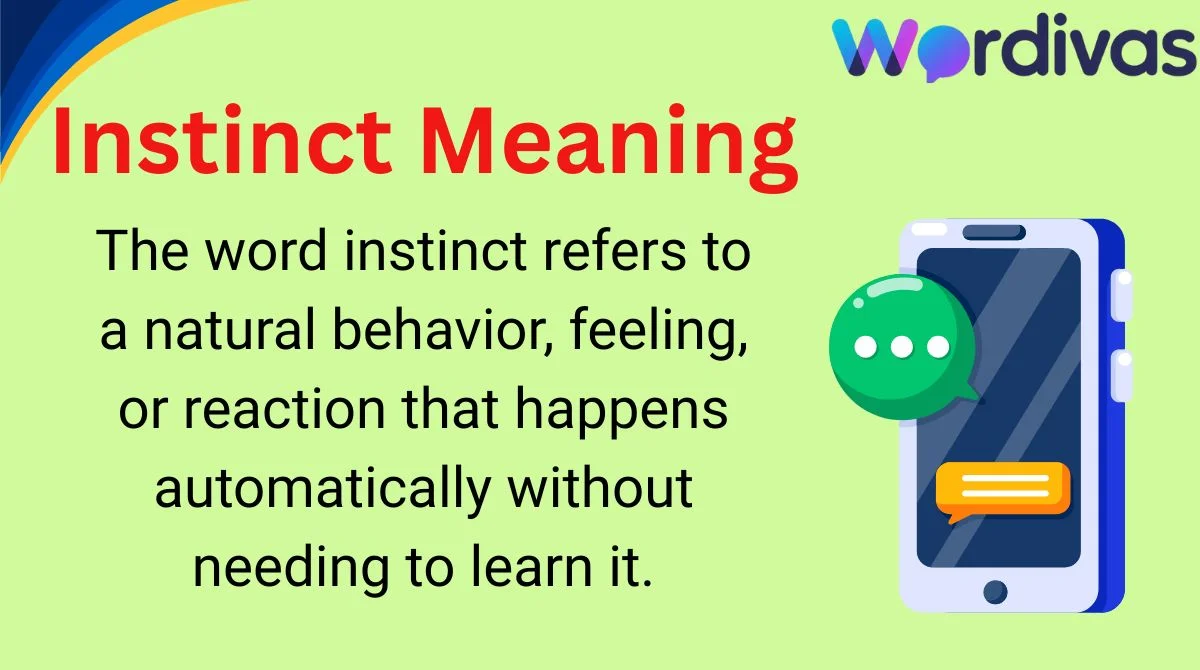
The word instinct refers to a natural behavior, feeling, or reaction that happens automatically without needing to learn it. It’s like an inner guide that pushes someone toward a certain action or decision.
Unlike carefully planned thinking, instinct works quickly and naturally. Humans and animals both rely on instincts in different ways.
For example:
- A baby crying when hungry is instinctive behavior.
- Pulling your hand away from something hot happens through instinct.
- Feeling uncomfortable around a dangerous person can also be instinct-driven.
In simple words, instinct is the body and mind reacting naturally before logical thinking fully begins.
Many people confuse instinct with random emotions, but instinct usually comes from deep awareness, experience, or survival patterns built into human nature.
Personal Instinct Meaning

A personal instinct is a natural feeling or inner sense that helps you make a decision without needing to think about every detail.
It often comes from your experiences, emotions, and quick understanding of a situation. For example, you may meet someone for the first time and immediately feel that you can trust them—or feel that something is not quite right.
That feeling can be called your personal instinct. It is similar to intuition or a “gut feeling.” Personal instincts can be useful when making everyday choices, especially when there is not enough information to make a clear decision.
However, instincts are not always correct, so it is wise to consider facts and evidence before making important decisions.
Origin and Background of the Term
The word “instinct” comes from the Latin word instinctus, which means “impulse” or “to be inspired from within.” Ancient philosophers used this term to describe natural behaviors that didn’t require teaching.
Centuries ago, people noticed how animals behaved intelligently without formal learning. Birds built nests, spiders created webs, and fish migrated across oceans. These actions seemed almost magical because nobody taught them.
Over time, scientists and psychologists began studying instinct more deeply. Thinkers like Charles Darwin believed instincts developed through evolution and survival. According to evolutionary theory, instincts helped humans and animals stay alive in dangerous environments.
Even today, modern psychology still explores how instincts influence human behavior, emotions, and decision-making. While society has become more advanced, those natural inner reactions remain deeply connected to who we are.
How Instinct Is Used in Daily Life
Instinct appears in everyday situations more often than people realize. Sometimes it protects us. Other times, it helps us make quick choices.
Here are some common examples:
1. Personal Safety
You may suddenly feel uneasy walking somewhere unfamiliar at night. Even without visible danger, your instinct warns you to stay alert.
2. Parenting
Parents often react instantly when their child is in danger. This protective behavior is commonly called a parental instinct.
3. Relationships
People sometimes say, “My instinct told me not to trust him.” Human instincts can influence emotional connections and judgments.
4. Sports and Competition
Athletes often rely on instinct during fast-paced games where there’s no time for long thinking.
5. Business Decisions
Experienced entrepreneurs sometimes trust instincts when making important choices after years of experience.
6. Emergency Situations
During accidents or sudden danger, instinct helps people react quickly to survive.
These examples show that instinct isn’t mysterious. It’s a natural part of human life.
Emotional or Practical Meaning of Instinct
Instinct carries both emotional and practical importance. Emotionally, it connects people to their inner awareness. Practically, it helps with survival and quick decision-making.
Many people ignore their instincts because they overthink situations. However, instincts often notice small details before the conscious mind does. That’s why people sometimes regret not listening to their “gut feeling.”
In modern society, instinct also relates to emotional intelligence. Understanding how you naturally react can improve relationships, communication, and self-awareness.
For example, a teacher may instinctively recognize when a student feels sad even if the child says nothing. Similarly, a doctor may sense something unusual about a patient before test results arrive.
Instinct isn’t always perfect, but it often works alongside experience and observation. When balanced with logic, it becomes a powerful tool.
Similar or Related Terms
Here are some related words connected to instinct:
- Intuition – A strong inner feeling without clear reasoning.
- Gut feeling – Informal term for instinctive reactions.
- Impulse – A sudden urge to act quickly.
- Reflex – Automatic physical response to something.
- Natural reaction – Behavior that happens automatically.
- Survival instinct – The desire to stay safe and alive.
- Sixth sense – Informal phrase describing deep awareness.
Although these terms are related, they are not exactly the same. For instance, reflexes are physical reactions, while instincts involve behavior and emotional awareness.
Common Misunderstandings About Instinct
Many people misunderstand what instinct really means. Let’s clear up some common myths.
1. Instinct Is Always Correct
Instinct can be powerful, but it isn’t perfect. Fear, stress, or bias can sometimes influence reactions.
2. Only Animals Have Instincts
Humans also rely heavily on instincts, especially in emotional and survival situations.
3. Instinct and Emotion Are the Same
Emotions and instincts are connected, but they are different. Instinct is often automatic, while emotions can develop gradually.
4. Smart People Don’t Use Instinct
Even highly intelligent people trust instincts sometimes. Experience often strengthens instinctive thinking.
5. Instinct Is Supernatural
Instinct is natural, not magical. It develops from biology, awareness, memory, and human survival patterns.
6. Instinct Means Acting Without Thinking
Good instinct usually works together with observation and experience, not complete carelessness.
Understanding these misconceptions helps people appreciate instinct more realistically.
Examples of Instinct in Sentences
Here are some natural examples of how the word “instinct” is used:
- My instinct told me to avoid that unsafe road.
- Birds have an instinct to migrate during winter.
- A mother’s instinct helped her protect her child.
- He trusted his instincts during the interview.
- Dogs often act on instinct when sensing danger.
- Her instinct for business made her successful.
- I had an instinct that something wasn’t right.
- Survival instinct becomes strong during emergencies.
These examples show how flexible and common the word is in everyday English.
Why Understanding Instinct Matters Today
In today’s world, people constantly face information overload. Social media, news, advertisements, and opinions pull attention in every direction. Because of this, many individuals feel disconnected from their own inner judgment.
Understanding instinct helps people reconnect with themselves.
For students, instinct can support confidence during exams or presentations. For professionals, it can improve decision-making under pressure. For parents, instinct often guides protection and care.
Modern psychology also highlights the importance of listening to internal signals. Sometimes the body reacts before the mind fully processes danger or discomfort.
At the same time, understanding instinct teaches balance. Blindly following every feeling may not always work. The best decisions often come from combining instinct with logic and experience.
In relationships, instincts can help people recognize honesty, kindness, or manipulation. In careers, instincts can encourage creative risks and opportunities.
Most importantly, instinct reminds people that humans are naturally designed to observe, adapt, and survive.
Instinct Meaning in Chat

In chat, instinct usually means a quick feeling or natural reaction about something. When someone says, “My instinct tells me something is wrong,” they mean they have a strong feeling even though they may not have clear proof.
People also use phrases such as “go with your instinct” or “trust your instinct” in casual conversations. For example, if a friend asks whether they should accept an opportunity, you might say, “Trust your instinct.”
This means they should pay attention to their natural feeling while also thinking carefully about the situation. In texting and social media, “instinct” is generally used in the same way as gut feeling, intuition, or natural reaction, depending on the context.
Frequently Asked Questions
What does instinct mean in simple words?
Instinct means a natural feeling or reaction that happens automatically without needing to think deeply about it.
Is instinct positive or negative?
Instinct can be both positive and negative depending on the situation. Often, it helps people stay safe or make quick decisions.
Where is instinct commonly used?
The word instinct is commonly used in psychology, daily conversations, parenting, sports, survival situations, and emotional discussions.
Is instinct formal or informal?
Instinct itself is a standard English word that works in both formal and informal communication.
Why do people search for instinct meaning?
People search for instinct meaning to better understand emotions, reactions, psychology, relationships, and everyday decision-making.
Conclusion
The concept of instinct meaning is deeply connected to human nature. It represents those natural reactions and inner signals that guide behavior without conscious effort.
From survival and emotions to relationships and quick decisions, instincts quietly shape daily life.
Understanding instinct doesn’t mean ignoring logic. Instead, it means learning how your mind and body naturally respond to the world around you.
When balanced with experience and careful thinking, instincts can become a valuable source of wisdom and confidence.
In a world full of noise and uncertainty, sometimes your inner voice deserves to be heard. Trusting yourself can become the first step toward stronger decisions, deeper awareness, and personal growth.

Thomas Reed helps learners master English words through simple explanations and real-life usage.