Last updated on September 8th, 2026 at 05:09 am
Have you ever watched someone follow a trend without questioning it and thought, “Wow, everyone’s just going along with this”?
Maybe it was a viral challenge, a risky investment craze, or a workplace decision no one wanted to challenge.
In moments like these, people often use the word “lemmings.”
But what does lemmings meaning actually involve? Is it about animals, behavior, psychology, or something deeper?
In simple terms, lemmings refers to people who follow others blindly, without thinking critically or independently.
It’s a powerful word because it captures something deeply human — our desire to belong, fit in, and avoid standing out.
Understanding this term helps you recognize group pressure, make smarter choices, and even protect yourself from bad decisions driven by crowds.
In today’s fast-paced, social-media-driven world, knowing what lemmings really means can be surprisingly life-changing.
Let’s explore the meaning, origin, real-life use, and emotional impact of this fascinating term — in a way that feels natural, friendly, and easy to understand.
What Is a Lemming Person?
A lemming person is someone who follows other people without thinking carefully about whether their actions or decisions are right.
The expression comes from the popular myth that lemmings blindly follow one another off cliffs, although this idea about real lemmings is actually false. When used about a person, “lemming” is usually figurative and critical.
It suggests that someone simply goes along with the crowd instead of making their own choice.
For example, if everyone in a group believes something without checking the facts, someone might call them a “lemming.”
The term can be used in everyday conversations, politics, business, or social situations to describe blindly following the majority.
It is generally informal and can sound insulting, so it is better used carefully.
What Does Lemmings Meaning Mean?
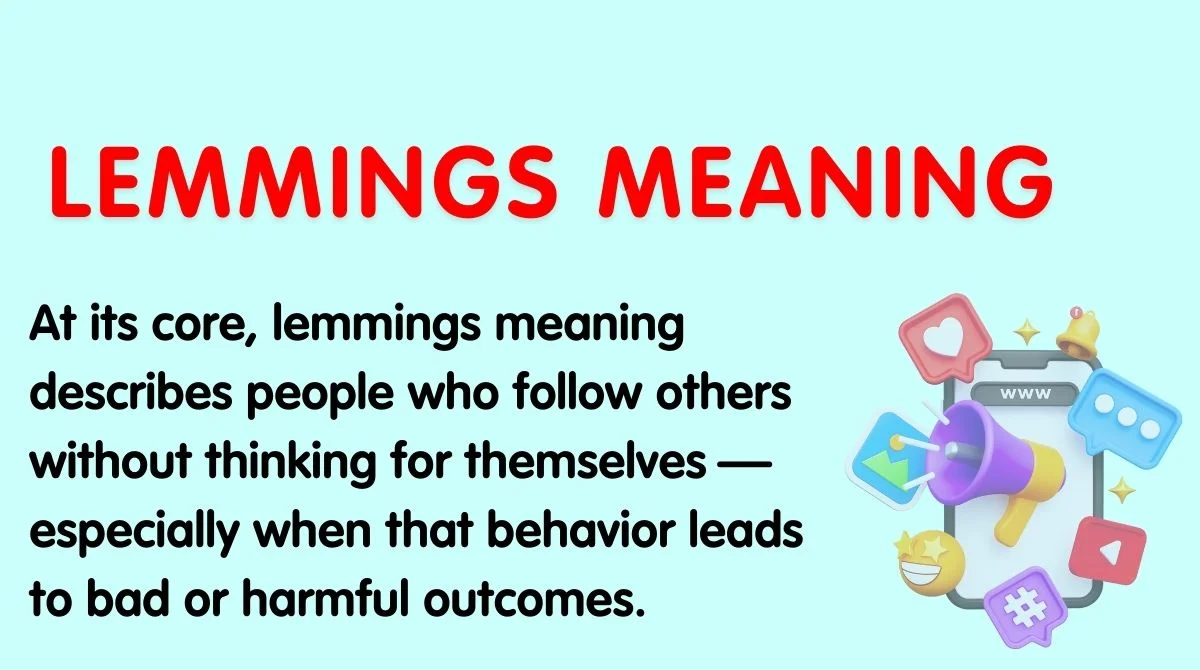
At its core, lemmings meaning describes people who follow others without thinking for themselves — especially when that behavior leads to bad or harmful outcomes.
It’s not about being curious or learning from others. It’s about blind imitation — doing something just because “everyone else is doing it.”
Here are a few real-life examples:
- A group of investors pours money into a risky trend because social media hype says it’s the next big thing — without researching.
- Students copy answers in an exam because “everyone else is cheating.”
- Employees agree with a bad workplace decision just because the boss supports it.
In all these cases, people aren’t thinking independently. They’re moving with the crowd, even when the crowd might be wrong. That’s where the word lemmings fits perfectly.
Origin and Background of the Term
This term has a surprisingly wild origin story — and it starts with a tiny rodent.
Lemmings are small, furry animals that live in Arctic regions. For decades, people believed that lemmings blindly followed each other off cliffs during mass migrations. This idea became popular after a 1950s Disney documentary staged scenes of lemmings jumping into water, creating the myth that they commit mass suicide.
Spoiler alert: That’s not true.
Lemmings don’t intentionally jump off cliffs. They migrate, swim, and explore — and sometimes accidents happen. But the idea that they mindlessly follow each other stuck in pop culture.
Over time, humans began using lemmings as a metaphor for people who blindly follow crowds — even when the outcome is harmful.
So while the animal behavior was misunderstood, the human behavior metaphor stuck around — and honestly, it fits a little too well sometimes.
Lemmings Meaning Slang
In slang, “lemmings” refers to people who blindly follow others without thinking for themselves.
The term comes from the popular myth that lemmings, which are small rodents, follow each other off cliffs.
Although this belief is not true in real life, the word is often used to describe individuals who copy trends, opinions, or actions simply because everyone else is doing the same thing.
For example, someone might call social media users “lemmings” if they follow a viral trend without questioning it.
The slang meaning is usually negative because it suggests a lack of independent thinking, personal judgment, and originality in decision-making or behavior.
How Lemmings Meaning Is Used in Daily Life
You’ll hear this term in conversations, news articles, politics, social media, and even casual jokes. Let’s look at how it shows up in everyday situations:
- “Everyone’s buying that stock without research — total lemmings behavior.”
- “I didn’t want to question the plan, but I didn’t want to be one of the lemmings either.”
- “Social media trends create digital lemmings sometimes.”
- “They followed the crowd into that bad decision like lemmings.”
- “Don’t be a lemming — think for yourself.”
- “The whole office agreed without thinking. Classic lemmings move.”
It’s usually used critically, but not always cruelly. Sometimes it’s playful. Other times, it’s a serious warning.
Emotional or Practical Meaning of Lemmings
Beyond the definition, this word touches something emotional and deeply human.
Most people don’t want to blindly follow. But fear of standing out, being judged, or missing out can push us into crowd behavior. That’s where the idea of lemmings becomes powerful — it highlights how social pressure can override logic.
Practically speaking, understanding lemmings meaning helps you:
- Make independent decisions
- Avoid scams, hype, and risky trends
- Build confidence in your own thinking
- Recognize unhealthy group dynamics
Emotionally, it reminds us that it’s okay — even brave — to pause, question, and choose your own path. In a world full of noise, that’s not weakness. That’s strength.
Similar or Related Terms
Here are some closely related words and how they differ:
- Bandwagon effect – When people adopt beliefs because others already have.
- Groupthink – When a group avoids disagreement to maintain harmony.
- Peer pressure – Influence from others to behave in certain ways.
- Mob mentality – Emotional crowd behavior, often impulsive or aggressive.
- Sheep mentality – Similar to lemmings, but more passive and submissive.
- Conformity – Adjusting behavior to fit social norms.
While all are related, lemmings carries a stronger sense of blind following toward harm — not just fitting in.
Common Misunderstandings About Lemmings Meaning
Let’s clear up some myths.
❌ 1. “Lemmings means people are stuinconsiderate pid.”
Not true. Smart people can still follow crowds under pressure.
❌ 2. “It’s about animals comirrational mitting suicide.”
That myth is false. Lemmings don’t do that.
❌ 3. “Only weak people behave like lemmings.”
Anyone — leaders, professionals, experts — can fall into herd behavior.
❌ 4. “Following others always makes you a lemming.”
Not at all. Learning from others is healthy. Blind following isn’t.
❌ 5. “It’s always an insult.”
Sometimes it’s playful or used as a caution, not an attack.
Understanding these distinctions helps use the term fairly and accurately.
Lemmings Off a Cliff Meaning
“Lemmings off a cliff” is an expression used to describe people who blindly follow others toward a harmful or foolish decision.
It is based on the old misconception that lemmings naturally follow one another off cliffs.
In reality, this is a myth about lemming behavior, but the phrase remains common in English.
When someone says, “They are acting like lemmings going off a cliff,” they mean the group is following others without stopping to think about the possible consequences.
The expression is often used when people make the same poor choice simply because everyone else is doing it.
It can apply to trends, business decisions, social behavior, or group opinions. Because it compares people to animals and suggests a lack of independent thinking, the phrase can sound strongly critical or insulting.
Examples of Lemmings in Sentences
Here are natural, everyday examples:
- “Everyone invested without research — total lemmings behavior.”
- “I refused to follow the crowd like a lemming.”
- “Social media creates digital lemmings sometimes.”
- “They walked into that bad deal like lemmings.”
- “Don’t be a lemming — think for yourself.”
- “The trend died fast, and all the lemmings moved on.”
- “He didn’t want to question it, but he felt like a lemming.”
- “Lemmings mentality ruins good decision-making.”
Why Understanding Lemmings Meaning Matters Today
We live in the age of trends, algorithms, and viral influence.
From social media challenges to investment hype to political movements, people are constantly nudged toward mass behavior. Sometimes that’s harmless. Sometimes it’s dangerous.
Understanding lemmings meaning helps you:
- Spot misinformation faster
- Avoid financial traps
- Resist unhealthy trends
- Protect your individuality
- Think critically before acting
In schools, workplaces, and communities, the ability to question respectfully — instead of blindly following — leads to better decisions and stronger leadership.
In a world that rewards speed and popularity, choosing thoughtfulness is revolutionary.
Lemmings Meaning in Law
In legal discussions, the term “lemmings” is not an official legal term. However, lawyers, judges, or legal commentators may use it informally to describe people who follow a group’s actions or decisions without carefully considering the consequences.
The expression can appear in discussions about mass lawsuits, consumer behavior, corporate decisions, or public reactions to legal issues.
When used in a legal context, “lemmings” is usually a figurative description rather than a technical legal definition.
It highlights concerns about herd mentality, where individuals make choices based on what others are doing instead of relying on independent analysis, evidence, or informed judgment.
Frequently Asked Questions
What does lemmings meaning in simple words?
It means people who follow others blindly without thinking for themselves, even when the outcome is harmful.
Is lemmings positive or negative?
It’s usually negative, because it implies lack of independent thinking and poor decision-making.
Where is lemmings commonly used?
In casual conversation, news commentary, psychology discussions, business contexts, and social media.
Is lemmings formal or informal?
It’s mostly informal, but can appear in professional writing when discussing group behavior.
Why do people search for lemmings meaning?
Because they hear it used metaphorically and want to understand its true meaning, origin, and context in modern language.
Conclusion
Understanding lemmings meaning isn’t just about vocabulary — it’s about awareness. It teaches us how easily humans can follow crowds, even into bad choices, and how powerful independent thinking really is.
You don’t need to rebel against everything.
But pausing, questioning, and choosing consciously can change your life in small but meaningful ways.
In a world full of noise, trends, and pressure, your ability to think for yourself is your superpower — and that’s something worth protecting every single day.

Thomas Reed helps learners master English words through simple explanations and real-life usage.