Last updated on September 13th, 2026 at 04:32 am
Have you ever come across the word “marquess” while reading a historical novel, watching a royal drama, or browsing British history online?
At first glance, it may sound old-fashioned or complicated, but the meaning is actually quite interesting once you break it down.
A marquess is a noble title used mainly in the British peerage system. It ranks above an earl and below a duke.
While the term is deeply connected to royalty and aristocracy, many people search for it today because of movies, books, genealogy, and curiosity about royal traditions.
Understanding the marquess meaning isn’t just about memorizing a definition. It also helps you explore history, culture, and how social titles shaped society over centuries.
From medieval Europe to modern British ceremonies, this title has carried prestige, responsibility, and influence.
In this article, you’ll learn the true meaning of marquess, where the term came from, how it’s used today, common misunderstandings, and much more — all explained in a friendly and easy-to-understand way.
What Does Marquess Meaning Mean?
A marquess is a man holding a hereditary noble rank in certain European countries, especially in the United Kingdom. In the ranking system of British nobility, a marquess stands below a duke but above an earl.
The female version of the title is called a marchioness.
In simple words, a marquess was traditionally a powerful noble who governed border territories or important regions. These nobles often had military duties because border areas needed protection from invasions and conflicts.
For example:
- In British royal history, some wealthy landowners and noble families held the title of marquess.
- Historical dramas often portray a marquess as someone with influence, property, and social status.
- In literature, characters with this title are usually respected members of high society.
Unlike everyday job titles, “marquess” is linked to family heritage and aristocracy. People inherit the title rather than earn it through work or education.
Marquess Meaning in English
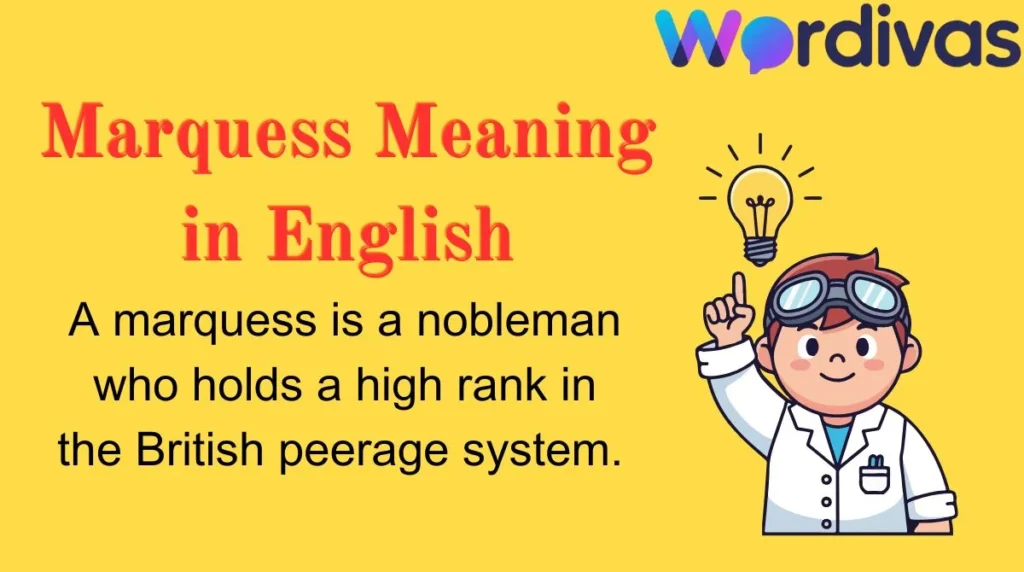
A marquess is a nobleman who holds a high rank in the British peerage system. The title traditionally ranks below a duke and above an earl.
Historically, marquesses were often associated with governing or protecting border regions, especially in medieval Europe.
Today, the title is mainly hereditary and ceremonial, though it remains part of the British system of nobility.
The feminine form is usually marchioness. In everyday English, the word is mostly used when discussing British history, aristocracy, or titles of nobility.
Origin and Background of the Term
The word marquess has roots in old European history. It comes from the French word marquis, which itself originated from the Germanic word related to “march,” meaning a borderland.
Centuries ago, kingdoms needed trusted leaders to guard dangerous frontier areas. These regions were called “marches.” The nobles responsible for defending them became known as marquesses.
Imagine medieval Europe with castles, wars, and shifting borders. Kings depended heavily on loyal nobles to protect their territories. A marquess wasn’t just someone with a fancy title — he often commanded soldiers and managed politically sensitive lands.
The title later became part of the British peerage system in the 14th century. Over time, its military importance faded, but its social prestige remained.
Today, the title mostly represents tradition and heritage rather than political power. Still, it continues to fascinate people who enjoy royal history, genealogy, and classic literature.
How Marquess Is Used in Daily Life
Although the title isn’t common in everyday conversations, people still encounter the word in many modern situations.
1. Historical Books and Movies
You’ll often hear “marquess” in historical dramas or royal-themed stories. Shows about British nobility frequently include noble titles.
Example:
“The Marquess of Winchester attended the royal gathering.”
2. News About Royal Families
Sometimes the media mentions aristocratic titles connected to noble families in the UK.
3. Genealogy Research
People researching family history may discover ancestors connected to noble ranks.
4. Educational Discussions
Teachers and historians use the term while explaining medieval Europe or British peerage.
5. Online Searches
Many people search for “marquess meaning” because they saw the word in a novel, game, or television series.
6. Literature and Poetry
Classic English literature often includes noble titles to show social class and hierarchy.
Even though the title feels ancient, it still appears regularly in entertainment, culture, and education.
Emotional or Practical Meaning of Marquess
The word “marquess” carries more than just a historical definition. It symbolizes status, tradition, heritage, and responsibility.
In older societies, noble titles shaped a person’s identity. Being a marquess often meant wealth, influence, and authority. Families took pride in preserving these titles across generations.
For modern readers, the term creates a sense of elegance and curiosity. It reminds people of castles, royal courts, and historical power structures.
There’s also an emotional side to it. Many people are fascinated by aristocratic culture because it feels mysterious and glamorous. Films and novels have romanticized noble titles for decades.
Practically speaking, understanding such terms improves historical knowledge and reading comprehension. If you enjoy historical fiction or British history, knowing the meaning of marquess helps you better understand social rankings and character relationships.
Similar or Related Terms
Here are some related noble titles and how they differ from a marquess:
- Duke – Higher rank than a marquess; one of the highest noble titles.
- Earl – Lower rank than a marquess in British nobility.
- Baron – A lower-ranking noble title.
- Viscount – Positioned below an earl and above a baron.
- Marchioness – The female equivalent of a marquess.
- Marquis – The French spelling and pronunciation variation of marquess.
These titles formed part of the hierarchical structure of aristocratic societies.
Common Misunderstandings About Marquess
Many people misunderstand the meaning and usage of the word “marquess.” Let’s clear up a few common myths.
1. Marquess and Marquis Are Exactly the Same
They are closely related, but not identical. “Marquess” is typically the British spelling, while “marquis” is more common in French contexts.
2. A Marquess Is a King
Not true. A marquess is a noble rank, not a monarch.
3. The Title Still Holds Political Power
Today, most marquesses have ceremonial or social importance rather than governing authority.
4. Anyone Can Use the Title
These titles are hereditary and usually passed down through noble families.
5. It’s Only a British Term
While strongly associated with Britain, similar titles existed in other European countries too.
6. The Word Is Obsolete
Even though it’s historical, the title still exists today in aristocratic systems and cultural discussions.
Understanding these distinctions makes the concept much easier to grasp.
Examples of Marquess in Sentences
Here are some natural examples showing how the word can be used:
- The marquess owned a large estate in the countryside.
- She read a novel about a young woman who married a marquess.
- During the ceremony, the marquess greeted the royal guests warmly.
- Many historical dramas include characters with noble titles like duke or marquess.
- The marquess inherited the title after his father passed away.
- My history teacher explained the role of a marquess in medieval Europe.
- People often confuse the title of marquess with other aristocratic ranks.
- The old castle once belonged to a famous marquess family.
These examples show how the term appears naturally in conversation, education, and storytelling.
Why Understanding Marquess Matters Today
At first, learning the meaning of an old noble title may seem unimportant. But language carries history, and words like “marquess” open doors to understanding culture and society.
Modern entertainment has revived interest in aristocratic terms. Popular shows, fantasy stories, and historical films frequently use noble titles. Without knowing these meanings, readers and viewers may miss important social details.
The word also helps explain how societies once organized power and class systems. Studying such terms improves historical awareness and cultural literacy.
Additionally, many students, writers, and researchers encounter the term while studying literature or European history. Understanding it builds vocabulary and strengthens communication skills.
In today’s world, where global content spreads quickly online, knowing uncommon words like “marquess” helps people feel more confident when reading sophisticated material.
Language isn’t just about words — it’s about understanding people, stories, and history.
Marquess Meaning in Royalty
In the context of royalty and the British peerage system, a marquess is a high-ranking noble title. Although a marquess is not usually a member of the royal family, the title is part of the British aristocratic hierarchy.
Traditionally, marquesses held important lands and responsibilities, especially in areas near national borders.
Frequently Asked Questions
What does marquess mean in simple words?
A marquess is a noble title ranked below a duke and above an earl in British aristocracy.
Is marquess positive or negative?
The term itself is neutral, but it’s usually associated with prestige, nobility, and high social status.
Where is marquess commonly used?
It is commonly used in British history, royal traditions, literature, movies, and historical discussions.
Is marquess formal or informal?
“Marquess” is considered a formal and historical term.
Why do people search for marquess meaning?
People often search for it after seeing the word in books, TV shows, historical articles, or royal family discussions.
Conclusion
The marquess meaning goes far beyond a simple dictionary definition. It represents centuries of history, noble traditions, and cultural influence.
Once used for powerful border rulers, the title later became a respected symbol of aristocracy and heritage.
Today, people continue to encounter the word in literature, entertainment, education, and historical discussions.
Understanding it can make books easier to enjoy, movies more meaningful, and conversations about history far more interesting.
Learning unusual words like “marquess” also reminds us that language connects us to the past in fascinating ways.
Every word carries a story, and exploring those stories helps us grow wiser and more curious about the world around us.
Never stop learning new words — sometimes a single term can unlock an entire chapter of history and culture.

Thomas Reed helps learners master English words through simple explanations and real-life usage.