Last updated on September 15th, 2026 at 04:31 am
Have you ever heard someone suddenly say “ow!” after touching something hot or bumping into a table? It’s one of those tiny words people use almost every day without even thinking about it.
The phrase may be short, but the ow meaning carries a lot of emotion and human reaction behind it.
“Ow” is commonly used to express pain, discomfort, or surprise. It’s a quick emotional response that comes naturally when something hurts physically or emotionally.
From children learning to speak to adults reacting in stressful moments, this small expression appears in conversations worldwide.
What makes this word interesting is how universal it feels. Even people from different cultures often understand what “ow” means instantly.
In today’s digital world, it’s also used in texting, memes, and social media to express emotional pain or embarrassment.
Understanding the ow meaning helps improve communication, emotional awareness, and even cultural understanding. Sometimes, the smallest words reveal the biggest human emotions.
What Does OW Meaning Mean?
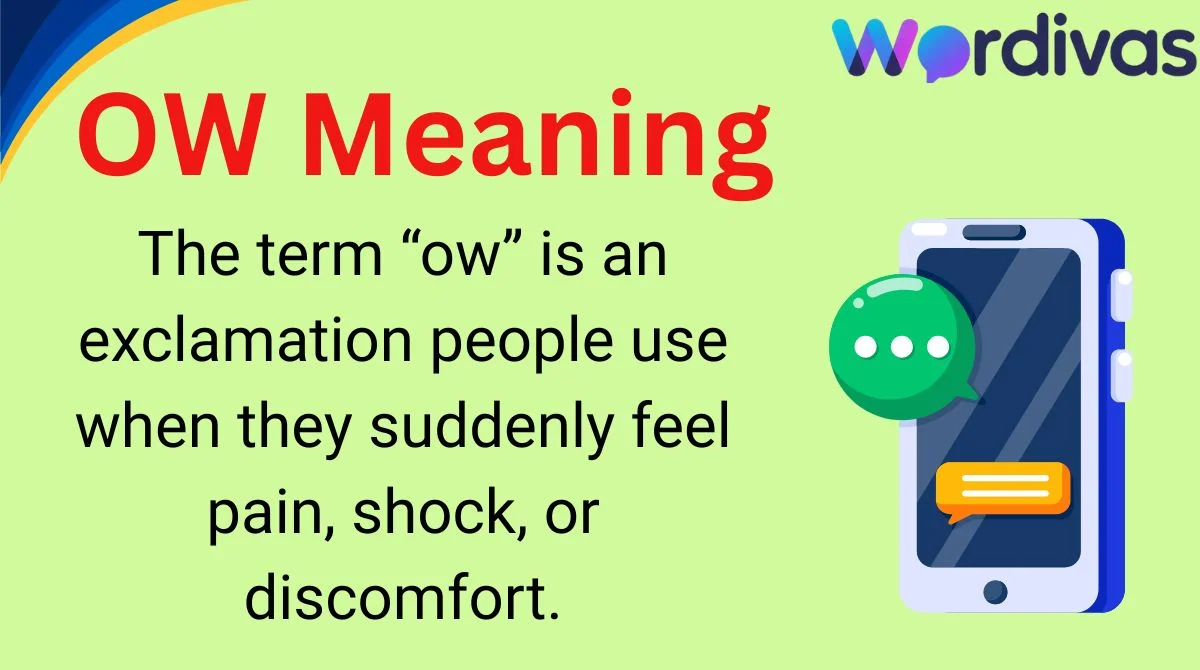
The term “ow” is an exclamation people use when they suddenly feel pain, shock, or discomfort. It’s usually spoken instantly without planning. For example, if you accidentally touch a hot pan, you might immediately say, “Ow!”
Unlike formal vocabulary words, “ow” is emotional and natural. It reflects a human reaction rather than a carefully structured sentence.
Here are a few simple real-life examples:
- “Ow! That paper cut hurts.”
- “Ow, you stepped on my foot.”
- “Ow… that comment was painful to hear.”
Interestingly, the word isn’t only about physical pain anymore. People also use it emotionally or humorously online. Someone might comment “ow” on a sad story or embarrassing video to show secondhand emotional pain.
That’s why the modern ow meaning goes beyond just injury. It can also represent empathy, awkwardness, or emotional discomfort.
OW Meaning in Finance
In finance, OW can mean “Overweight.” It is commonly used by analysts and investors to describe a stock or asset that they believe deserves a larger allocation in a portfolio compared with its benchmark.
For example, if an analyst rates a company as OW, they may expect it to perform better than the overall market or its industry peers.
The term is often seen in research reports, investment recommendations, and portfolio discussions. Depending on the context, OW can also have other meanings, so it is important to check how the abbreviation is being used.
Origin and Background of the Term
The word “ow” has existed for centuries in spoken language. Linguists believe it developed naturally from instinctive human sounds made during pain or shock.
Long before modern dictionaries existed, humans reacted vocally to danger and injury.
In old English writings, similar expressions appeared in forms like “owe” or “ouw.” Over time, language simplified these sounds into the modern spelling “ow.”
What’s fascinating is that nearly every culture has a version of this reaction. While pronunciation may differ slightly, humans everywhere instinctively make short emotional sounds when hurt.
Imagine a child falling while learning to walk. Before understanding grammar or vocabulary, the child may cry out with a sound similar to “ow.” That shows how deeply connected the term is to human behavior.
Today, the word has evolved beyond speech. It’s now part of internet culture, text conversations, comics, movies, and even memes.
How OW Is Used in Daily Life
People use “ow” in many everyday situations. Some are serious, while others are playful or dramatic.
1. Physical Pain
This is the most common use.
- “Ow! My arm hurts.”
- “Ow, that’s too hot!”
2. Emotional Hurt
People sometimes say “ow” after hearing something upsetting.
- “Ow… that criticism was harsh.”
3. Funny Reactions
Friends often use it jokingly.
- “Ow, my feelings!” after losing a game.
4. Online Conversations
Social media users type “ow” to react emotionally.
- Someone posts an embarrassing video.
- Comment: “Ow, secondhand embarrassment!”
5. Movies and Cartoons
Characters often exaggerate “ow” sounds to make scenes funnier or more dramatic.
6. Sports and Activities
Athletes naturally say it after injuries or impacts.
- “Ow! That tackle hurt.”
The beauty of this word is its simplicity. Almost everyone understands it immediately.
Emotional or Practical Meaning of OW
At first glance, “ow” may seem like a tiny and unimportant word. But emotionally, it plays a big role in human communication.
When someone says “ow,” others instantly recognize discomfort or pain. It creates empathy. Even strangers often react with concern after hearing it.
Emotionally, the term can also show vulnerability. For example:
- “Ow, that breakup still hurts.”
In modern communication, people use “ow” to express emotional pain quickly without long explanations.
Practically, the word is useful because it alerts others immediately. If someone suddenly says “ow” loudly, people nearby understand something is wrong.
In social situations, tone matters too. A playful “ow” during a joke sounds different from a serious one after an injury.
That emotional flexibility makes the term surprisingly powerful for such a short expression.
Similar or Related Terms
Here are some related words and expressions connected to the ow meaning:
- Ouch – A stronger or more dramatic version of “ow.”
- Ahh – Used for surprise, pain, or even relaxation.
- Oops – Shows mistake or accident instead of pain.
- Yikes – Expresses shock or discomfort.
- Uh-oh – Indicates something went wrong.
- Owie – A child-friendly version often used by parents.
Each term carries a slightly different emotional tone, but they all relate to sudden reactions.
Common Misunderstandings About OW
Many people think “ow” is too simple to study or understand deeply, but that’s not true. Here are some common misconceptions.
1. “Ow” Only Means Physical Pain
Not anymore. Today, people also use it emotionally and humorously.
2. It’s Only for Children
Adults use “ow” constantly in daily conversations.
3. It’s Not Real Language
Even though it’s informal, dictionaries recognize it as a valid interjection.
4. It’s Always Serious
Sometimes people say “ow” jokingly for dramatic effect.
5. It’s the Same as “Ouch”
While similar, “ouch” often sounds slightly stronger or more expressive.
6. It’s Only Spoken
People frequently type “ow” online in chats, comments, and memes.
These misunderstandings show how language evolves with culture and technology.
Examples of OW in Sentences
Here are some natural examples showing how people use the word in daily life:
- “Ow! I accidentally touched the stove.”
- “Ow, my back hurts after carrying those boxes.”
- “That joke about my haircut? Ow.”
- “Ow! You scared me.”
- “She whispered ‘ow’ after tripping on the stairs.”
- “Ow, that dentist appointment was painful.”
- “Reading that sad ending made me say ‘ow’ emotionally.”
- “Ow, I can’t believe he spoiled the movie ending!”
These examples show how flexible and expressive the term can be.
Why Understanding OW Meaning Matters Today
Language is constantly evolving, especially online. Understanding simple expressions like “ow” helps people communicate emotions more naturally.
In digital conversations, short reactions often replace long explanations. Someone texting “ow” may be expressing emotional pain, embarrassment, sympathy, or frustration.
Teachers, writers, parents, and even marketers pay attention to emotional language because it creates connection. Tiny words like “ow” make communication feel human and relatable.
For language learners, understanding emotional expressions is also important. Textbooks often teach grammar first, but real-life conversations include emotional reactions constantly.
In entertainment, storytelling, and social media culture, expressions like “ow” help audiences connect emotionally with moments and experiences.
Even though it’s only two letters long, the word carries emotion, personality, and human instinct.
OW Meaning in School
In school, OW can have different meanings depending on the school, teacher, or context.
In some cases, it may be used as an abbreviation for “Outstanding Work,” especially when teachers give feedback on assignments or projects.
A teacher might write “OW” on a student’s work to indicate that the work was done particularly well. However, some schools may use OW for other terms, such as a specific program, class, or administrative category.
Therefore, the exact meaning of OW in school depends on where and how you saw it.
Frequently Asked Questions
What does ow mean in simple words?
“Ow” is a quick expression people use when something hurts physically or emotionally.
Is ow positive or negative?
Usually, it has a negative meaning because it relates to pain or discomfort. However, people sometimes use it humorously.
Where is ow commonly used?
It’s commonly used in conversations, texting, movies, social media, sports, and daily life situations.
Is ow formal or informal?
“Ow” is mostly informal and conversational. It’s not commonly used in professional writing.
Why do people search for ow meaning?
People search for it to understand emotional expressions, improve English communication, or learn internet slang and casual language usage over time.
Conclusion
The ow meaning may appear simple, but it represents something deeply human: our natural emotional reactions.
Whether it’s physical pain, emotional discomfort, or playful humor, this tiny expression connects people instantly.
Language doesn’t always need long explanations to be meaningful. Sometimes, even two small letters can communicate feelings more powerfully than full sentences.
As communication continues changing through social media and modern culture, words like “ow” remain timeless because they reflect genuine human emotion.
Understanding these everyday expressions helps us communicate more naturally and connect better with others.
And remember, even the smallest words can teach us something important about being human.

Thomas Reed helps learners master English words through simple explanations and real-life usage.