Last updated on September 15th, 2026 at 04:48 pm
Have you ever watched a movie scene so sweet it made you roll your eyes… yet secretly smile?
Or heard a song that felt too emotional, but somehow comforting at the same time? That feeling often gets described with one word: schmaltz.
The schmaltz meaning isn’t just about food (although it started there — more on that later).
Today, it’s mostly used to describe moments, stories, or expressions that feel over-the-top sentimental, sometimes in a charming way, sometimes in a cringey way.
Understanding this word helps you decode conversations, movie reviews, music critiques, and even casual jokes. It’s one of those terms that carries emotion, culture, and personality all in one syllable.
In this article, we’ll unpack what schmaltz really means, where it came from, how people use it today, and why it still matters.
By the end, you won’t just know the definition — you’ll feel it. And honestly? That’s kind of the whole point of schmaltz.
Schmaltz Meaning in English
Schmaltz is a traditional cooking fat made by slowly rendering chicken or goose fat. In English, the word “schmaltz” commonly refers to this rich, flavorful poultry fat, especially in Jewish and Eastern European cooking.
It has a smooth texture and savory taste, making it useful for frying, roasting, spreading, and adding flavor to dishes.
The term comes from Yiddish and is related to a German word for rendered animal fat. Today, “schmaltz” is most often used when discussing traditional recipes or culinary history.
It can also have a figurative meaning in English, describing something overly sentimental or emotional, but its original food-related meaning remains widely recognized.
What Does Schmaltz Mean?
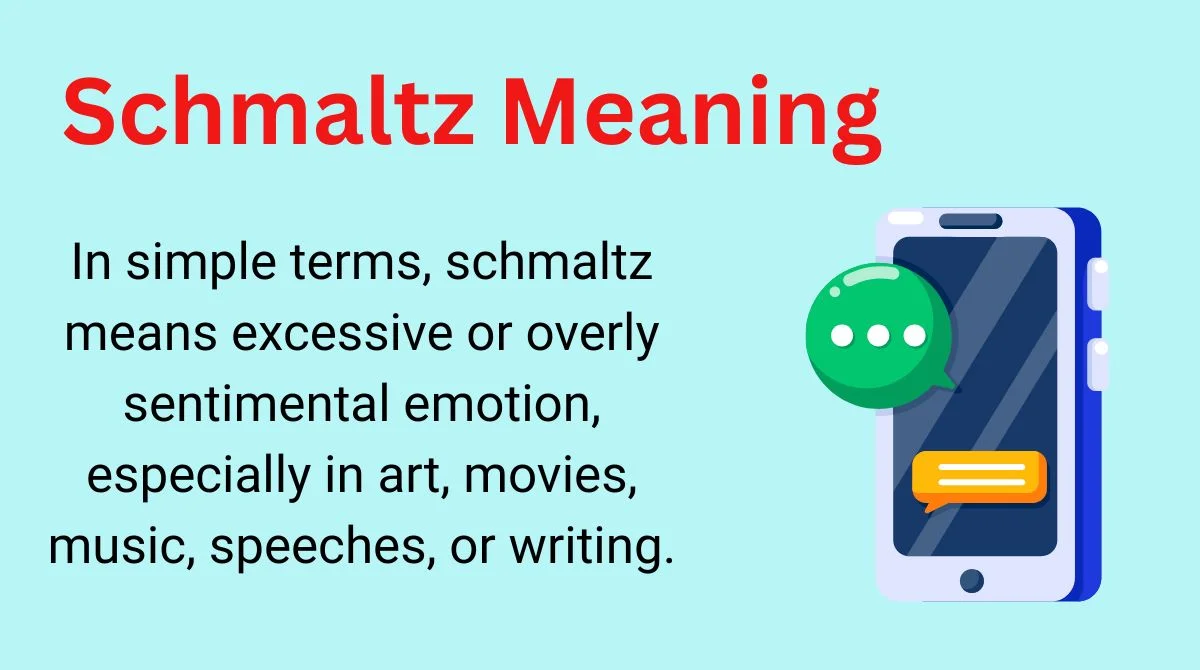
In simple terms, schmaltz means excessive or overly sentimental emotion, especially in art, movies, music, speeches, or writing.
It’s when something feels like it’s trying too hard to tug at your heartstrings.
But here’s the twist: schmaltz isn’t always bad. Sometimes it’s comforting. Sometimes it’s nostalgic. And sometimes… it’s just cheesy.
Real-life examples:
- A movie where the music swells, the couple reunites in the rain, and everyone cries — that’s schmaltz.
- A birthday card filled with dramatic love lines and glitter hearts — also schmaltz.
- A commercial showing slow-motion family hugs and puppies — yep, schmaltz again.
So, the schmaltz meaning isn’t just about emotion — it’s about too much emotion, often delivered in an obvious or exaggerated way.
Schmaltz Synonym
Several words can be used as synonyms for “schmaltz,” depending on the context. Common alternatives include sentimentality, corniness, melodrama, mushiness, and cheesiness.
These words are often used when describing something that feels overly emotional or excessively sentimental.
In entertainment and writing, “schmaltz” usually refers to stories, songs, or speeches that aim to evoke strong emotions in a way some people may find exaggerated.
While the term can be used negatively, it may also describe heartfelt or nostalgic content appreciated by audiences who enjoy emotional themes and touching moments.
Origin and Background of the Term
This word has one of the most unexpected journeys in language history.
Originally, schmaltz comes from Yiddish and German, where it literally meant rendered chicken fat — the kind used in traditional Jewish cooking. Think comfort food, warmth, and rich flavor.
Now here’s where it gets interesting.
In early 20th-century Jewish-American communities, people began using “schmaltz” metaphorically.
Just like chicken fat made food richer, emotional exaggeration made stories feel richer — sometimes too rich.
Over time, writers, comedians, and critics picked it up. By the mid-1900s, schmaltz had fully evolved into its modern meaning: overly sentimental expression, especially in entertainment.
So a word that once described cooking grease somehow ended up describing tear-jerking movie scenes. Language is wild like that.
And honestly? That warm, comforting origin still explains why schmaltz doesn’t always feel negative — it often feels familiar, cozy, and nostalgic.
How Schmaltz Is Used in Daily Life
You’ll hear or see this word in casual conversation, reviews, social media, and pop culture — especially when emotions get thick.
Here’s how people actually use it:
- “That movie had great acting, but the ending was pure schmaltz.”
- “I love romantic comedies, even the schmaltzy ones.”
- “His speech was heartfelt, but maybe a little schmaltzy.”
- “The song’s lyrics were full of schmaltz, but I still cried.”
- “That commercial is emotional manipulation — total schmaltz.”
- “I know it’s cheesy, but I enjoy a bit of schmaltz sometimes.”
Notice something? People often say it with a smile. Schmaltz isn’t always criticism — sometimes it’s affectionate.
It’s like saying, “Yeah, it’s cheesy… but I kind of love it.”
Emotional or Practical Meaning of Schmaltz
At its core, schmaltz is about emotion overload — when feelings are turned up to eleven.
But emotionally speaking, it serves an important purpose.
Schmaltz:
- Makes people feel safe
- Creates nostalgia
- Encourages emotional connection
- Provides comfort during stress
In today’s world — where news is heavy, life is busy, and emotions often stay bottled up — schmaltz gives people permission to feel openly, even dramatically.
Think of holiday movies, reunion scenes, or heartfelt farewell speeches. They may be predictable, but they’re comforting because we know what’s coming — and we want it anyway.
That’s the power of schmaltz: it reminds us that emotions aren’t weakness. Sometimes they’re exactly what we need.
Similar or Related Terms
Here are some words people often confuse with schmaltz — and how they differ:
- Sentimental – Emotional, but not always excessive.
- Cheesy – Corny or predictable, often in a humorous way.
- Corny – Overused or awkwardly sweet.
- Melodramatic – Emotionally exaggerated, often intense.
- Cliché – Overused ideas or expressions.
- Sappy – Soft, overly sweet emotion.
👉 Key difference: Schmaltz usually combines emotion + exaggeration + intention — it’s not accidental. It’s designed to make you feel something, even if it feels obvious.
Common Misunderstandings About Schmaltz
Let’s clear up some confusion around the schmaltz meaning.
❌ Misconception 1: Schmaltz always means bad writing
Not true. Schmaltz can be intentional and enjoyable, especially in romance, family films, and holiday stories.
❌ Misconception 2: Schmaltz equals fake emotion
Not necessarily. The emotion can be real — it’s just delivered in an exaggerated or obvious way.
❌ Misconception 3: Schmaltz is only used for movies
Nope. It applies to speeches, music, books, commercials, cards, and even conversations.
❌ Misconception 4: Schmaltz is old-fashioned slang
It’s still widely used in reviews, pop culture commentary, and casual speech.
❌ Misconception 5: Schmaltz and cheesy mean the same thing
They overlap, but schmaltz focuses more on emotional overload, not just awkward sweetness.
❌ Misconception 6: Schmaltz is unintentional
Actually, most schmaltz is carefully crafted — especially in entertainment.
Schmaltz Meaning Chicken Fat
Schmaltz specifically refers to rendered chicken fat when it is made from chicken skin and fat.
The fat is gently heated until it melts and separates from the solid pieces, producing a golden, flavorful cooking fat.
Traditionally, chicken schmaltz has been an important ingredient in Jewish cuisine and is used in foods such as matzo balls, chopped liver, roasted vegetables, and various savory dishes. Compared with ordinary cooking oils, schmaltz has a distinctive poultry flavor that can make simple recipes taste richer.
In some contexts, the word can also refer to goose fat, although chicken fat is one of its most familiar meanings in English.
Examples of Schmaltz in Sentences
Here are natural, everyday examples:
- “That movie ending was pure schmaltz — and I loved every second of it.”
- “His proposal was sweet, but the violin music pushed it into schmaltz territory.”
- “The book had great moments, but sometimes the emotion felt like schmaltz.”
- “She enjoys romantic stories, even the schmaltzy ones.”
- “The commercial was emotional manipulation — total schmaltz.”
- “I know it’s cheesy, but I’m a sucker for schmaltz.”
- “The song’s lyrics were dripping with schmaltz, but they worked.”
- “Critics called the film schmaltzy, but audiences adored it.”
Why Understanding Schmaltz Matters Today
In today’s world of viral content, emotional storytelling, and short-form media, schmaltz is everywhere.
Think about:
- TikTok reunion videos
- Emotional charity ads
- Movie trailers with swelling music
- Social media posts designed to make you cry
These aren’t accidents. They’re carefully crafted emotional triggers — and understanding schmaltz helps you recognize emotional manipulation, appreciate storytelling techniques, and even improve your own communication.
If you’re a writer, marketer, filmmaker, teacher, or speaker, knowing when something crosses into schmaltz helps you strike the right emotional balance.
And as a consumer? It helps you decide whether something feels authentic or forced.
But more importantly, understanding schmaltz reminds us that emotion itself isn’t embarrassing. Even when it’s excessive, it reflects something deeply human — our need to connect, feel seen, and feel something real.
Schmaltz Meaning Origin
The word “schmaltz” comes from the German and Yiddish languages, where it originally referred to rendered chicken or goose fat used in cooking.
Over time, its meaning expanded in English to describe excessive sentimentality or overly emotional content.
The figurative sense became popular in the early twentieth century, especially in discussions about music, films, and literature.
Today, “schmaltz” is commonly used to describe works that are sentimental, nostalgic, or emotionally exaggerated.
Despite its critical tone in some cases, the word can also suggest warmth, affection, and heartfelt expression.
Frequently Asked Questions
What does schmaltz mean in simple words?
Schmaltz means too much emotion, especially in a sweet or sentimental way that feels exaggerated or obvious.
Is schmaltz positive or negative?
It depends on context. Some people use it critically, while others use it affectionately — especially when they enjoy emotional stories or moments.
Where is schmaltz commonly used?
You’ll see it in movie reviews, music critiques, speeches, literature discussions, and everyday conversation.
Is schmaltz formal or informal?
It’s mostly informal and conversational, though critics and writers also use it professionally.
Why do people search for schmaltz meaning?
Because it’s often used in reviews or discussions, and many people hear it without fully understanding what it implies emotionally or culturally.
Conclusion
The schmaltz meaning goes far beyond “cheesy emotion.” It’s about emotional exaggeration, yes — but also comfort, nostalgia, and connection.
Whether it makes you cringe or cry, schmaltz has one undeniable power: it makes you feel something.
And in a world that often feels rushed, distant, or emotionally guarded, maybe that’s not such a bad thing.
So next time someone calls a movie, song, or speech schmaltzy, don’t dismiss it right away.
Sometimes, a little extra emotion isn’t weakness — it’s humanity shining through.
💛 Never be afraid of feeling deeply. Even when it’s messy, emotional, or a little schmaltzy — it’s still beautifully human.

Thomas Reed helps learners master English words through simple explanations and real-life usage.