Last updated on October 7th, 2026 at 04:14 pm
Have you ever dreamed of owning a vacation home but felt it was too expensive or unrealistic? That’s exactly where the idea of time share meaning comes in.
In simple words, a timeshare lets you enjoy a holiday property without owning it full-time. You share the property with other people, each getting access for a specific period of the year.
Sounds interesting, right? But there’s more to it than just “sharing a house.” The concept of time sharing has shaped the travel and real estate world in a unique way.
It allows families to enjoy luxury resorts, beach apartments, or mountain cabins without paying full ownership costs.
In this article, we’ll break down everything you need to know about time share meaning in a clear, friendly, and practical way.
You’ll learn its origin, real-life uses, misconceptions, and why it still matters today. Let’s dive in and make it super easy to understand.
Heredity Meaning Explained
Assist Meaning
Cop Meaning Explained
Attribute Meaning
Duress Meaning
What Does Time Share Meaning Actually Mean?
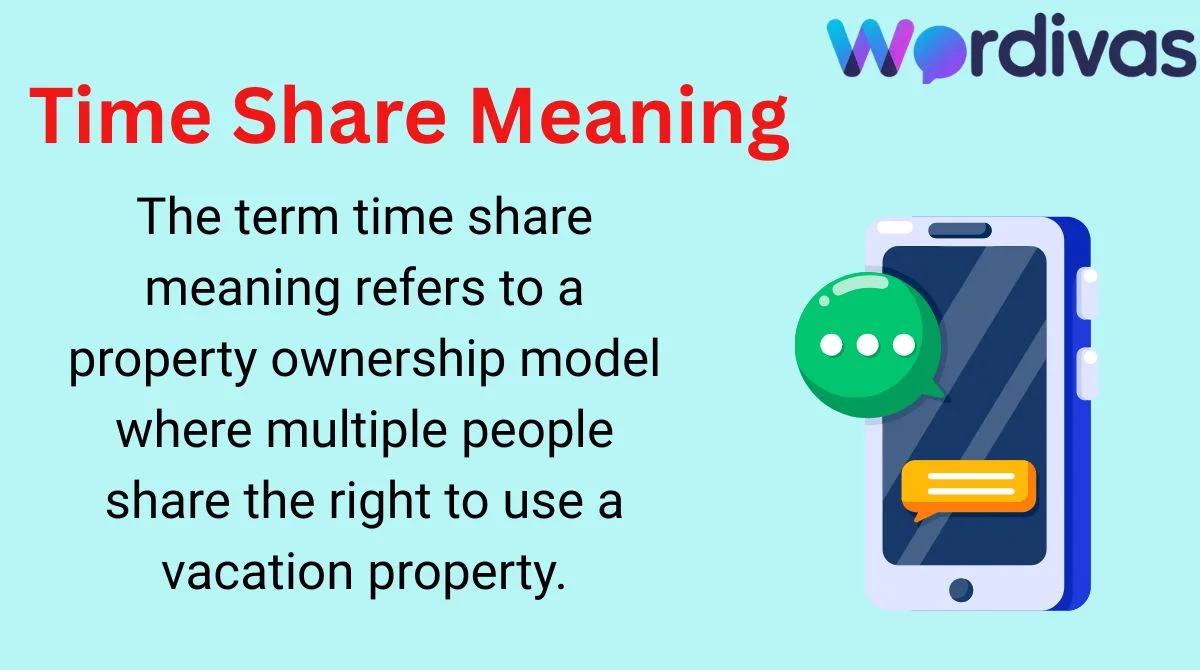
The term time share meaning refers to a property ownership model where multiple people share the right to use a vacation property. Instead of one person owning the place year-round, ownership or usage time is divided among several individuals.
Each owner gets a specific “time slot” every year—this could be a week, two weeks, or even a month depending on the agreement.
Simple examples:
- A family uses a beach resort apartment every July.
- Another family uses the same apartment in December for winter holidays.
- A third group may rotate different weeks each year.
So instead of paying the full cost of a holiday home, you only pay for the time you actually use it. This makes luxury travel more affordable for many people.
In short, time share meaning = shared vacation ownership with scheduled usage rights.
Is Timeshare Worth It?
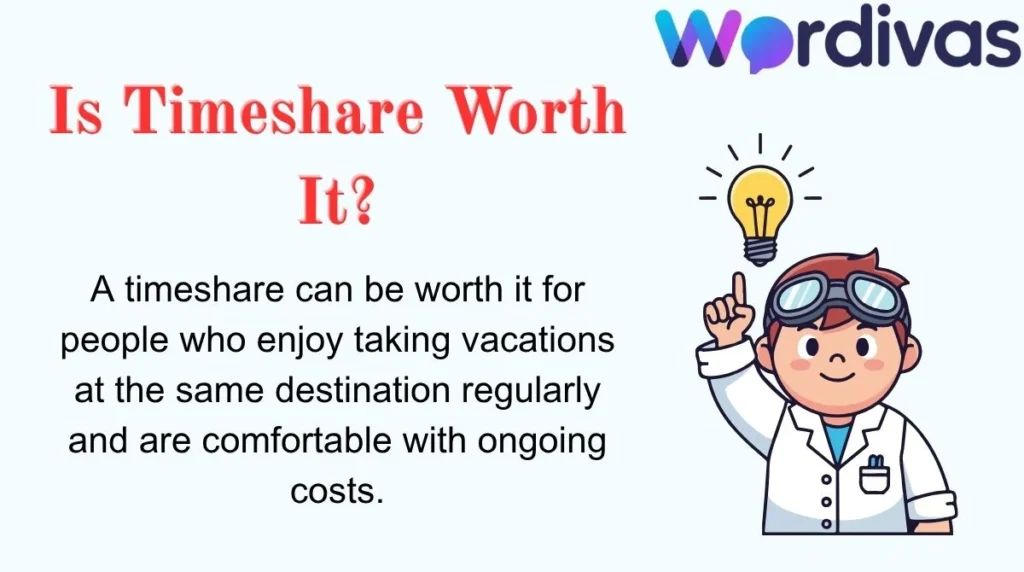
A timeshare can be worth it for people who enjoy taking vacations at the same destination regularly and are comfortable with ongoing costs.
However, it is not usually considered a good financial investment.
Timeshare owners typically pay an upfront amount along with annual maintenance fees, taxes, and sometimes additional charges.
These costs may increase over time, even if the owner does not use the property. The FTC also warns that timeshares can be difficult to sell or exit, so buyers should carefully understand the contract before making a decision.
Origin and Background of the Term
The idea of timesharing didn’t appear overnight. It has an interesting history that goes back to Europe in the mid-20th century.
The concept first started in Switzerland during the 1960s when a ski resort owner realized something simple: many vacation homes stayed empty most of the year. So instead of letting them sit unused, he offered people the chance to share usage time in exchange for lower costs.
The idea quickly spread across Europe and later reached the United States in the 1970s and 1980s, especially in popular holiday destinations like Florida and Hawaii.
Over time, companies turned this idea into a structured business model, creating contracts, memberships, and exchange programs. Today, timeshares are a global industry worth billions.
What started as a smart way to reduce empty vacation homes has now become a lifestyle option for millions of travelers worldwide.
How Time Share Is Used in Daily Life
Even though it sounds like a luxury concept, timesharing is more common than you might think. Here are some real-life uses:
- Families book the same resort every summer through their timeshare plan.
- Couples use their allocated weeks for anniversary trips.
- Retired individuals travel annually using long-term holiday memberships.
- Some people exchange their timeshare weeks for stays in other countries.
- Corporate employees use shared vacation properties for company retreats.
- Travel clubs offer flexible timeshare-style memberships.
In everyday life, it works like a planned vacation schedule. Instead of searching for hotels every year, people already know where and when they’ll travel.
Emotional or Practical Meaning of Time Share
Beyond the technical definition, time share meaning also carries emotional value.
For many families, it represents:
- Security in vacation planning
- Memories created in the same place every year
- A sense of belonging to a holiday home
- Financial relief from expensive hotel bookings
Imagine your kids growing up visiting the same beach every summer. That consistency builds emotional attachment. It becomes more than just a trip—it becomes a tradition.
On a practical level, it also reduces stress. You don’t need to worry about availability, price fluctuations, or last-minute bookings. Everything is already planned.
However, it also requires commitment, which means people must choose carefully before investing.
Similar or Related Terms
Here are some terms closely related to time share meaning:
- Fractional ownership – Owning a larger portion of property for more flexibility.
- Vacation ownership – A broader term used in the travel industry.
- Holiday club membership – Subscription-based vacation access.
- Leased vacation property – Renting property for fixed annual periods.
- Co-ownership property – Shared ownership between multiple parties.
Key differences:
- Timeshare = fixed or rotating usage time
- Fractional ownership = more ownership rights, fewer users
- Vacation rental = no ownership, just temporary stay
Common Misunderstandings About Time Share
Many people misunderstand the concept of timesharing. Let’s clear up some common myths:
- “You own the whole property.”
❌ Not true. You only own or use a specific time period. - “It’s always a bad investment.”
❌ Not always. It depends on usage habits and location. - “You can use it anytime you want.”
❌ Usually, time slots are fixed or need booking. - “It’s only for rich people.”
❌ Many mid-income families also use timeshares. - “You can easily sell it anytime.”
❌ Reselling can sometimes be difficult depending on demand. - “All timeshares are scams.”
❌ While some companies may mislead, many are legitimate businesses.
Understanding the truth helps avoid confusion and poor decisions.
Examples of Time Share in Sentences
Here are some natural ways the term is used:
- My parents bought a timeshare in a beach resort for summer holidays.
- We use our time share every December to visit the mountains.
- She decided to exchange her timeshare week for a trip to Europe.
- The resort offers flexible timeshare plans for families.
- They canceled their time share agreement after five years.
- Our timeshare property has a beautiful ocean view.
- Many travelers prefer time sharing instead of hotel bookings.
- The company explained the time share meaning clearly before selling it.
Why Understanding Time Share Matters Today
In today’s fast-paced world, travel has become an important part of life. People want comfort, affordability, and predictability.
Understanding time share meaning helps you:
- Make smarter financial decisions
- Plan vacations in advance
- Avoid travel stress
- Explore alternative ownership models
- Save money on long-term travel
With rising hotel prices and unpredictable travel costs, timeshares are becoming more relevant again. Many modern companies now offer flexible, digital-first vacation ownership models that appeal to younger generations.
So whether you’re a frequent traveler or just curious, knowing how timeshares work can help you make informed choices.
Timeshare Owner
A timeshare owner is a person who has purchased a timeshare interest or the right to use a vacation property for a specific period.
Depending on the agreement, an owner may receive a particular week each year or use a points-based system to book different resorts and dates.
Timeshare owners are generally responsible for ongoing maintenance fees and other charges connected with their agreement.
Convert Meaning
Monitor Meaning
Balayage Meaning
Estrangement Meaning
Subsidiary Meaning
Frequently Asked Questions
What does time share meaning in simple words?
It means sharing a vacation property with other people where each person uses it for a fixed time period every year.
Is time share positive or negative?
It can be both. It’s positive if used wisely for planned vacations, but may feel restrictive if your travel plans change often.
Where is time share commonly used?
It is commonly used in tourist destinations like beach resorts, ski lodges, and holiday apartments worldwide.
Is time share formal or informal?
It is a formal agreement usually managed through contracts with resorts or vacation companies.
Why do people search for time share meaning?
People search it to understand vacation ownership, investment options, or because they are considering buying or selling a timeshare.
Conclusion
The concept of time share meaning is more than just shared property—it’s about lifestyle, planning, and creating lasting travel memories.
For some, it’s a smart financial decision. For others, it’s a way to ensure yearly vacations without hassle.
Like any investment, it requires understanding, patience, and careful choice. If used wisely, it can open the door to unforgettable experiences and lifelong memories.
At the end of the day, travel is not just about places—it’s about moments. And timeshares can help you secure those moments year after year.
Never stop exploring, because every journey adds a new story to your life.

Thomas Reed helps learners master English words through simple explanations and real-life usage.