Last updated on October 7th, 2026 at 03:46 am
Have you ever been in a situation where you felt confused and didn’t know what to do next, so you turned to someone you trust? That’s where advice comes in.
The advice meaning is simple, yet powerful—it’s guidance or recommendations given to help someone make better decisions in life.
In everyday conversations, we hear phrases like “take my advice” or “let me give you some advice,” but most people never stop to think about what it truly represents.
Advice is not just words; it’s experience shared from one person to another.
Understanding the advice meaning matters because it helps us build better relationships, avoid mistakes, and grow emotionally and mentally.
Whether it comes from parents, friends, teachers, or even strangers, advice often plays a silent but important role in shaping our choices.
In this article, we’ll explore everything about advice—its meaning, origin, usage, examples, and why it still matters so much in today’s fast-moving world.
Underdog Meaning
Gripe Meaning Explained
Portal Meaning
Triangle Meaning
Scalping Meaning
What Does Advice Meaning Mean?
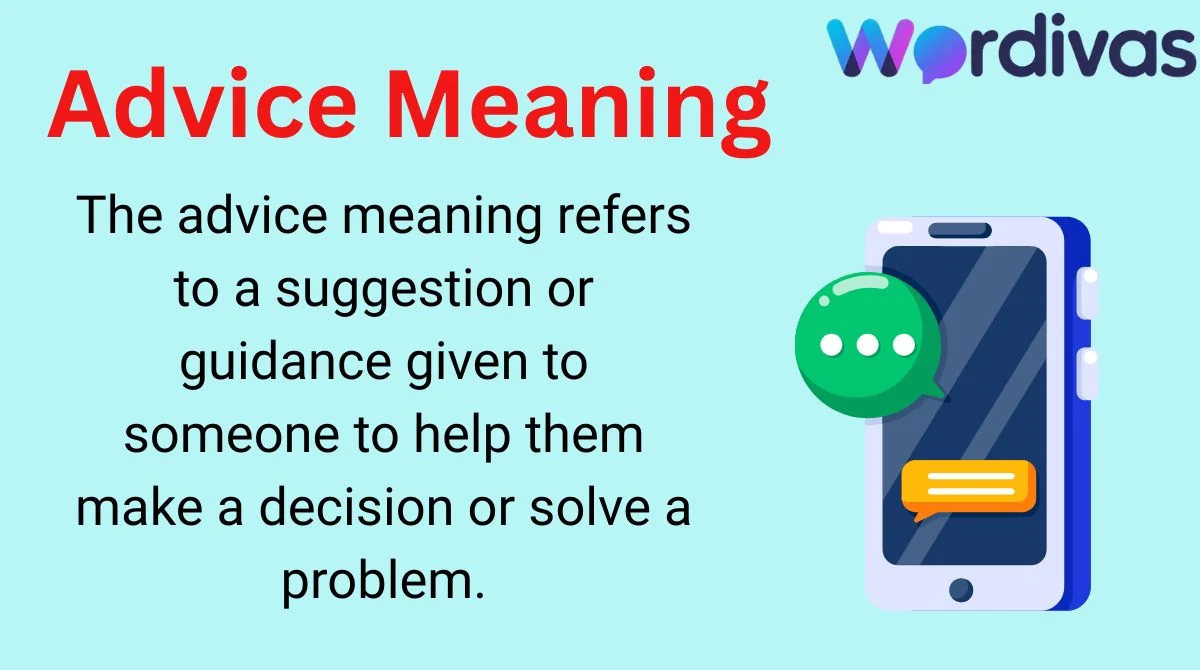
The advice meaning refers to a suggestion or guidance given to someone to help them make a decision or solve a problem. It is usually based on experience, knowledge, or understanding.
Unlike commands, advice is not forced. You can choose to accept it or ignore it.
Simple Real-Life Examples:
- A teacher telling a student to study daily for better grades.
- A friend suggesting you stay calm before an important interview.
- A parent advising you to save money instead of spending it all.
In all these cases, advice is meant to help—not control.
Key Point to Remember:
Advice is always optional guidance, not an order.
It is one of the most common forms of communication that connects human experience with decision-making.
Advice Me Meaning
“Advice me” is not grammatically correct in standard English. If you want someone to give you advice, you should say “advise me.”
The word advice is a noun, meaning a suggestion or recommendation about what someone should do.
For example, “She gave me good advice about my studies.” On the other hand, advise is a verb, meaning to give someone advice.
For example, “Please advise me on what I should do.” A simple way to remember the difference is: advice = noun, while advise = verb.
In everyday English, people sometimes mistakenly say “advice me,” but “advise me” is the correct form.
Origin and Background of the Term
The word advice has an interesting linguistic journey. It comes from the Old French word “avis”, which means opinion or judgment. This itself traces back to Latin roots where “ad visum” roughly meant “what seems right” or “what is seen as proper.”
Historically, advice was something given by elders, rulers, or wise people in communities. In ancient societies, people relied heavily on the advice of village elders, spiritual leaders, or experienced craftsmen. Their words were considered valuable because they came from years of lived experience.
Over time, the concept of advice became more democratic. Today, anyone can give advice—friends, family, mentors, or even online communities.
Interestingly, in earlier centuries, advice was often seen as wisdom passed down orally, while today it also exists in books, videos, blogs, and social media posts.
This evolution shows that while the world changes, the need for guidance remains the same.
How Advice Is Used in Daily Life
Advice plays a major role in our everyday decisions. We often don’t even realize how frequently we give or receive it.
Here are some common real-life uses:
- A doctor gives advice on maintaining a healthy lifestyle.
- A teacher advises students on career choices.
- Friends suggest which movie to watch or restaurant to visit.
- Parents guide children on moral behavior and discipline.
- Coaches give advice to improve performance in sports.
- Online influencers share advice on fitness, finance, or relationships.
Advice is everywhere—it quietly influences our actions, habits, and even long-term goals.
For example, imagine you are confused about choosing a career. One person suggests engineering, another recommends business, and someone else advises following your passion. Each piece of advice shapes your thinking differently.
That’s the power of advice—it opens multiple perspectives.
Emotional or Practical Meaning of Advice
The advice meaning goes beyond just words. Emotionally, advice represents care, concern, and connection.
When someone gives you advice, they are usually invested in your well-being. It shows they want you to avoid mistakes or improve your situation.
Emotional Side:
- It builds trust between people.
- It shows support during difficult times.
- It helps reduce stress and confusion.
Practical Side:
- It helps in decision-making.
- It saves time by avoiding unnecessary mistakes.
- It provides real-life solutions based on experience.
In today’s world, where people are overwhelmed with information, advice helps filter confusion into clarity. However, the challenge is learning which advice to follow and which to ignore.
Similar or Related Terms
Here are some words closely related to advice and how they differ:
- Suggestion – A softer form of advice, usually optional and casual.
- Guidance – More structured and often used in education or counseling.
- Recommendation – A formal opinion, often based on expertise.
- Counsel – Serious and often professional advice, like legal or emotional counseling.
- Opinion – Personal belief that may or may not include guidance.
- Instruction – Direct and mandatory, unlike advice.
Each term carries a slightly different tone, but all revolve around helping someone make decisions.
Common Misunderstandings About Advice
Many people misunderstand the advice meaning. Let’s clear up some common confusion:
1. Advice is not an order
Advice is optional. You are free to accept or reject it.
2. All advice is not correct
Even good people can give wrong advice. Experience and context matter.
3. Advice is not always professional
Not every piece of advice comes from an expert. Friends and family also give advice.
4. Advice does not guarantee success
Following advice doesn’t always lead to perfect results.
5. More advice is not always better
Too much advice can create confusion instead of clarity.
6. Advice and criticism are not the same
Advice is meant to help, while criticism may or may not be constructive.
Understanding these differences helps you become more mindful about what advice you take seriously.
Examples of Advice in Sentences
Here are some natural, everyday examples of how the word advice is used:
- My mother always gives me advice about being honest.
- He followed his teacher’s advice and improved his grades.
- I need your advice on choosing a career path.
- She ignored my advice and later regretted it.
- Good friends give honest advice, even when it’s hard to hear.
- The doctor’s advice helped him recover faster.
- I always ask my elder brother for advice before making big decisions.
- Sometimes the best advice is to stay calm and think clearly.
These sentences show how deeply advice is woven into daily communication.
Why Understanding Advice Matters Today
In today’s digital world, advice is everywhere—on social media, YouTube, blogs, and even random comments online. Because of this overload, understanding the advice meaning is more important than ever.
Here’s why it matters:
- Helps you make smarter decisions in life
- Protects you from misleading information
- Builds emotional intelligence
- Improves communication skills
- Encourages critical thinking
However, modern advice also comes with a challenge. Not all online advice is reliable. Some of it is based on trends, not truth.
That’s why learning to evaluate advice is a life skill. Ask yourself:
- Is this advice logical?
- Does it come from experience or just opinion?
- Will it benefit me in the long run?
Being selective makes you wiser and more confident in your decisions.
Advice Meaning in English
Advice means a helpful suggestion, recommendation, or opinion about what someone should do in a particular situation.
It is usually given by someone who has knowledge, experience, or a useful perspective. For example, if a friend tells you to study regularly before an exam, that is advice.
You can use “advice” when talking about guidance related to school, work, relationships, decisions, or everyday problems.
Remember that advice is a noun and is uncountable, so we say “some advice” or “a piece of advice,” not “an advice.”
The related verb is advise, which means to give advice.
For example: “My teacher advised me to practice English every day.” Understanding the difference between advice and advise can help you use both words correctly in English.
Ivy Meaning
Eclipse Meaning
Snout Meaning
Edible Meaning
Infinity Meaning
Frequently Asked Questions
What does advice meaning mean in simple words?
Advice means guidance or suggestions given to help someone make better decisions or solve problems in life.
Is advice positive or negative?
Advice is generally positive, but its value depends on the intention and accuracy of the person giving it.
Where is advice commonly used?
Advice is used in daily conversations, education, workplaces, healthcare, relationships, and online platforms.
Is advice formal or informal?
It can be both. Advice from a doctor or lawyer is formal, while advice from friends is informal.
Why do people search for advice meaning?
People search for it to understand the concept clearly, improve communication, and learn how to use it correctly in English.
Conclusion
The advice meaning is simple on the surface, but deeply meaningful in life. It is more than just words—it’s a bridge between experience and learning.
Whether it comes from someone close or a professional expert, advice helps us grow, reflect, and make better decisions.
In a world full of choices, confusion, and fast information, the ability to understand and use advice wisely is a true strength.
Always remember: the right advice at the right time can change your entire direction in life.
Stay open, stay thoughtful, and never stop learning from others’ experiences—because every piece of advice carries a story, and every story has the power to guide your future.

Thomas Reed helps learners master English words through simple explanations and real-life usage.