Last updated on September 12th, 2026 at 04:04 am
Have you ever heard a parent say, “I’ll give you your weekly allowance on Friday”? Or maybe you’ve seen the word used in salary discussions, travel expenses, or even government benefits.
The term allowance is more common than many people realize, yet its meaning can change depending on the situation.
In simple words, an allowance is something given regularly — often money, support, or permission.
It can be a small payment to children, extra money for employees, or even a specific limit someone is allowed to use.
Understanding the allowance meaning helps you communicate better in school, work, and daily conversations.
What makes this word interesting is how flexible it is. One person may think of pocket money, while another may think of housing allowances or food allowances at work.
That’s why learning its true meaning and practical use matters in modern life.
In this article, you’ll discover the meaning of allowance, where the word came from, how people use it every day, common misunderstandings, and why it still matters today.
What Does Allowance Mean?
The word allowance usually refers to an amount of money, freedom, or something provided regularly for a specific purpose.
For many children, allowance means pocket money given by parents weekly or monthly. Adults, however, often hear the term in workplaces where companies provide travel allowances, medical allowances, or meal allowances.
Here are a few simple examples:
- A teenager receives a weekly allowance for school snacks.
- A company gives employees a transportation allowance.
- A traveler has a baggage allowance on a flight.
In all these situations, the core idea stays the same: something is permitted, provided, or set aside for someone’s use.
Unlike complicated dictionary definitions, the real-life meaning of allowance is connected to support, limits, and responsibility.
Allowance Meaning in Salary
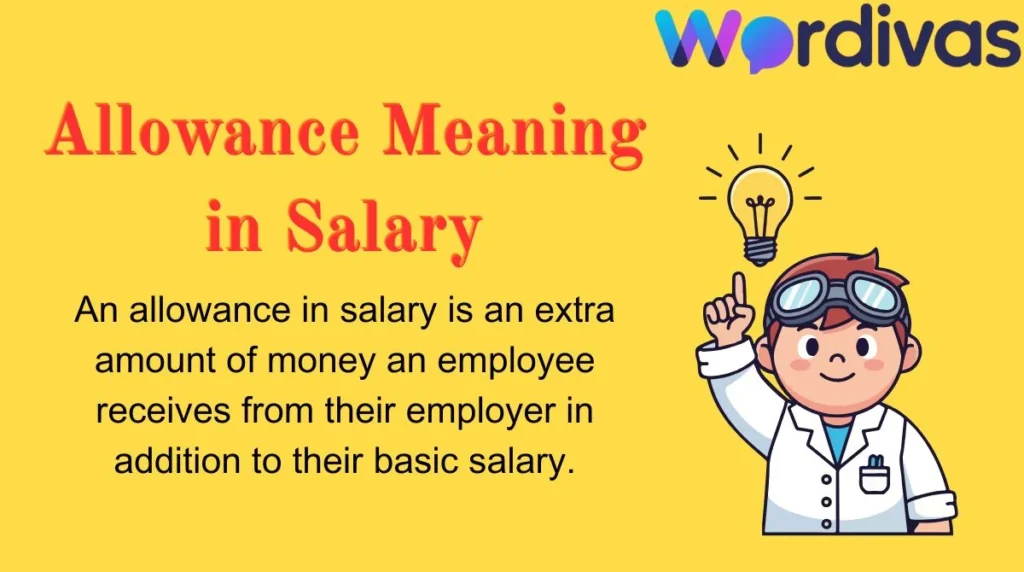
An allowance in salary is an extra amount of money an employee receives from their employer in addition to their basic salary.
It is usually provided to help cover specific expenses related to work or daily living. Common examples include house rent allowance, travel allowance, medical allowance, meal allowance, and transport allowance.
For example, if an employee has a basic salary of $1,000 and receives a $200 allowance, their total monthly pay may be $1,200.
The exact type and amount of allowance depend on the employer, job position, and company policy.
Origin and Background of the Term
The word “allowance” comes from the Old French word alouance, which meant approval or permission. Over time, the meaning expanded into financial support and permitted amounts.
Centuries ago, wealthy families often gave young family members a fixed amount of money to manage personal expenses. This practice slowly became part of everyday culture around the world.
Later, businesses and governments adopted the term. Employers started offering housing allowances, travel allowances, and food allowances to workers. Governments also used the concept when providing financial support to citizens.
Interestingly, the emotional side of allowance also developed through history. Parents used allowances not only to help children financially but also to teach discipline, budgeting, and responsibility.
Today, the word is used globally in homes, offices, schools, banking systems, and even technology platforms.
How Allowance Is Used in Daily Life
The term allowance appears in many everyday situations. Here are some practical examples people commonly experience.
1. Children’s Pocket Money
Parents often give children weekly or monthly allowances to teach money management. Kids learn how to save, spend wisely, and make decisions.
2. Employee Benefits
Companies provide allowances for transportation, meals, internet usage, or housing. These benefits help employees manage work-related expenses.
3. Travel and Airlines
When booking flights, passengers usually see baggage allowance rules. This tells them how much luggage they can carry without extra fees.
4. Government Support
Some governments provide financial allowances for education, disability support, or family care.
5. Mobile Data or Internet Usage
People also use the term for limits, such as a monthly data allowance on mobile packages.
6. Budget Planning
Families often create spending allowances for groceries, entertainment, or shopping to avoid overspending.
These examples show how deeply connected the word allowance is to everyday life.
Emotional or Practical Meaning of Allowance
Allowance is not always about money. Sometimes, it represents trust, independence, and responsibility.
For children, receiving an allowance can feel exciting because it creates a sense of freedom. A child buying something with saved allowance money often feels proud and independent.
For adults, workplace allowances can reduce financial stress and improve quality of life. Housing or travel support from employers can make employees feel valued and appreciated.
There’s also a social meaning attached to allowance. In many cultures, giving allowances reflects care and responsibility within families.
Modern readers often connect allowance with personal growth. Learning how to manage even a small allowance teaches budgeting skills that become valuable later in life.
In a world where financial literacy is increasingly important, understanding allowances can help people make smarter financial choices.
Similar or Related Terms
Here are some words related to allowance and how they differ:
- Salary — Regular payment for work performed.
- Pocket Money — Small money given to children for personal use.
- Stipend — Fixed payment often given to students or interns.
- Subsidy — Financial support provided by governments.
- Compensation — Payment for services or damages.
- Benefit — Extra support or advantage provided by employers.
- Budget — Planned spending limit.
- Grant — Financial aid given for education or projects.
Although these terms are related, allowance usually refers to money or limits provided for a specific purpose.
Common Misunderstandings About Allowance
Many people misunderstand the word allowance. Let’s clear up some common confusion.
1. Allowance Only Means Pocket Money
This is false. While children’s allowances are common, the word is widely used in business, travel, and finance.
2. Allowances Are Always Cash
Not necessarily. Allowance can also mean permitted limits, like baggage allowance or screen-time allowance.
3. Only Children Receive Allowances
Adults often receive housing, transportation, and medical allowances at work.
4. Allowance Means Free Money
Usually, allowances are connected to responsibility, rules, or specific purposes.
5. Allowance and Salary Are the Same
Salary is payment for work, while allowances are additional support or benefits.
6. Allowances Have No Educational Value
In reality, allowances often teach budgeting, discipline, and financial planning.
Understanding these differences helps avoid confusion in conversations and professional settings.
Examples of Allowance in Sentences
Here are some natural examples of how people use the word allowance in everyday English.
- My parents increased my weekly allowance after I started helping at home.
- The company offers a travel allowance to employees who commute long distances.
- I exceeded my baggage allowance and had to pay extra at the airport.
- She saves part of her allowance every month for books.
- The school provides a meal allowance during educational trips.
- We set a shopping allowance to control our monthly spending.
- His mobile package comes with a generous internet allowance.
- The employee received a housing allowance along with her salary.
These examples show how flexible and useful the term can be.
Why Understanding Allowance Matters Today
In today’s world, financial understanding is more important than ever. The concept of allowance plays a role in both personal and professional life.
Children who learn to manage allowances often develop stronger money habits as adults. They understand saving, spending, and budgeting earlier than others.
Employees also benefit from understanding workplace allowances. Knowing what allowances are included in a job package can help people make better career decisions.
Even technology and digital services use the concept regularly. Internet data limits, cloud storage plans, and app usage restrictions often rely on allowance systems.
Socially, allowances can improve communication within families. Parents can teach financial responsibility while children learn independence gradually.
The word also matters culturally because different countries and workplaces use allowances in unique ways. Understanding the term helps people navigate travel, jobs, and financial discussions confidently.
In simple terms, allowance is more than just extra money — it reflects support, planning, and responsible living.
Allowance Meaning in Job
An allowance in a job refers to additional financial benefits given to an employee besides their regular salary. These allowances are often designed to support employees with work-related costs or provide extra compensation.
For example, a company may offer a transport allowance for commuting, a mobile allowance for work calls, or a housing allowance to help with accommodation expenses. Allowances can be paid monthly, yearly, or according to the company’s rules.
When applying for a job, it is useful to check which allowances are included in the salary package because they can increase the overall value of the job.
Frequently Asked Questions
What does allowance mean in simple words?
Allowance means money, support, or a permitted amount given regularly for a specific purpose.
Is allowance positive or negative?
Usually, allowance has a positive meaning because it involves support, trust, or assistance. However, it can sometimes refer to limits or restrictions.
Where is allowance commonly used?
The term is commonly used in homes, schools, workplaces, banking, travel, and government systems.
Is allowance formal or informal?
Allowance can be both formal and informal depending on the context. Workplace and legal allowances are formal, while pocket money discussions are informal.
Why do people search for allowance meaning?
People search for the meaning because the word appears in many situations like salaries, budgeting, travel, and parenting. Its meaning changes slightly depending on context.
Conclusion
The word allowance may seem simple at first, but it carries deep practical and emotional value in everyday life.
From children learning how to manage money to employees receiving workplace benefits, allowance plays an important role in modern society.
Understanding the allowance meaning helps improve communication, financial awareness, and decision-making.
It also teaches valuable lessons about responsibility, planning, and independence.
Whether it’s a weekly pocket allowance, a travel allowance at work, or a baggage allowance during a trip, the concept remains connected to support and structure.
Life becomes easier when we understand the small words that shape our daily experiences. Sometimes, even a simple allowance can teach lessons that last a lifetime.

Thomas Reed helps learners master English words through simple explanations and real-life usage.