Last updated on September 12th, 2026 at 04:07 am
Have you ever suddenly realized something that completely changed the way you think?
Maybe you discovered a hidden truth about a friend, understood a life lesson after a difficult experience, or learned information that opened your eyes in a powerful way.
That moment of discovery is closely connected to the revelations meaning.
The word “revelations” is often used when people talk about important discoveries, hidden truths, emotional realizations, or surprising information.
It can appear in daily conversations, books, movies, religion, social media, and even personal growth discussions. Understanding this word helps people communicate thoughts and emotions more clearly.
In today’s fast-moving world, people constantly search for truth, clarity, and understanding. That’s why the idea behind revelations feels so relatable.
Whether it’s a shocking secret, a spiritual experience, or a personal breakthrough, revelations can change perspectives and influence decisions.
This article will explain the revelations meaning in simple words, explore its history, show how it’s used in daily life, and help you understand why this powerful term still matters today.
What Does Revelations Meaning?
The term “revelations” refers to important discoveries, surprising truths, or moments when something hidden becomes known. It usually involves gaining knowledge or understanding that was not clear before.
In simple words, a revelation happens when someone suddenly realizes or learns something meaningful.
For example:
- A student realizes the importance of discipline after failing exams.
- A person discovers a hidden family secret.
- Someone understands their true purpose after a difficult life experience.
These moments are often emotional because revelations can completely change thoughts, feelings, or actions.
The word is commonly connected with:
- Truth
- Discovery
- Awareness
- Insight
- Understanding
Sometimes revelations are positive and inspiring. Other times, they can feel shocking or uncomfortable. Either way, they usually leave a strong impact.
A simple sentence could be:
“Her revelation about self-confidence changed her life forever.”
That sentence shows how revelations often involve deep personal understanding.
Revelation Meaning in the Bible
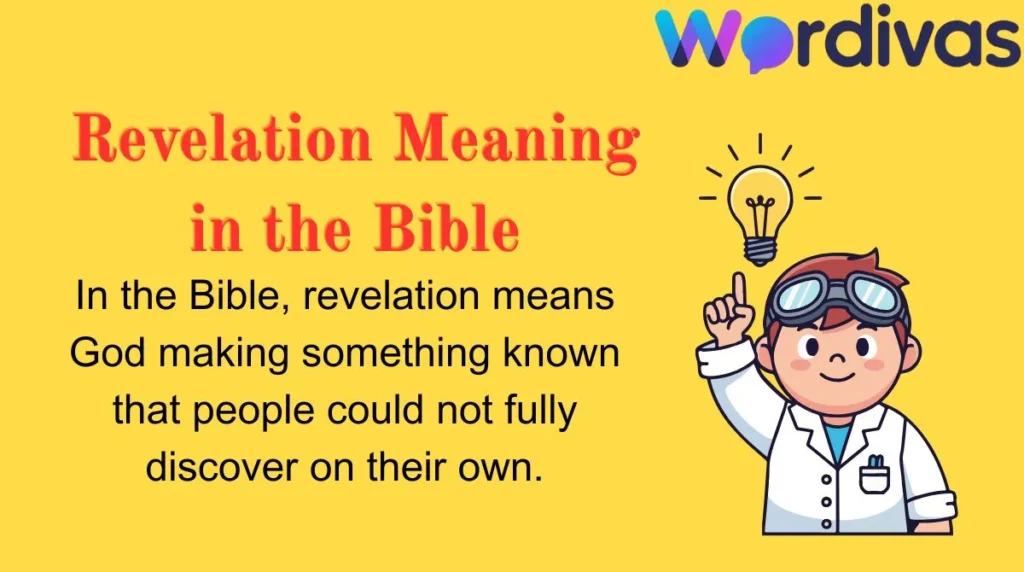
In the Bible, revelation means God making something known that people could not fully discover on their own. It can refer to God revealing His character, His plans, His truth, or His will to humanity. Revelation may come through Scripture, prophets, visions, dreams, or other ways described in the Bible.
The word is closely connected with the idea of uncovering or bringing something hidden into the light.
The Book of Revelation, the final book of the New Testament, presents visions about God’s judgment, Christ’s victory, and the ultimate fulfillment of His purposes.
In a broader Christian context, revelation helps believers understand spiritual truths and God’s relationship with humanity.
Origin and Background of the Term
The word “revelation” comes from the Latin word revelare, which means “to uncover” or “to reveal.” Over time, the term became widely used in religion, literature, and everyday language.
Historically, the word gained major importance through religious texts. In Christianity, “Revelation” is the name of the final book of the Bible. It contains visions, prophecies, and symbolic messages about the future. Because of this, many people connect the word with spiritual truths and divine messages.
However, the meaning expanded far beyond religion over the centuries.
Writers began using it in stories and poetry to describe dramatic discoveries. Later, psychologists and motivational speakers used the term to explain moments of personal growth and self-awareness.
Today, people use “revelations” in many different situations:
- Emotional breakthroughs
- News reports
- Scientific discoveries
- Personal experiences
- Relationships
- Spiritual discussions
The journey of this word shows how language evolves with human experiences. What once mainly described sacred messages now also explains everyday moments of understanding.
How Revelations Is Used in Daily Life
People use the word “revelations” more often than they realize. It appears in conversations, media, entertainment, and emotional discussions.
Here are some practical examples of how the term is used in daily life.
Personal Growth
Someone might say:
“Traveling alone was a revelation for me.”
This means the experience taught them something important about themselves.
Relationships
A person may discover the true intentions of someone close to them.
Example:
“His honesty was a surprising revelation.”
Education
Students often experience revelations while learning.
For instance:
- Understanding math after struggling for months
- Realizing the value of time management
- Discovering a passion for science
News and Media
Journalists frequently use the word when discussing surprising information.
Example:
- “The interview included shocking revelations.”
Social Media
People share personal revelations online all the time:
- Mental health awareness
- Life lessons
- Career decisions
- Emotional healing stories
Entertainment
Movies and TV shows often build suspense around revelations. A hidden truth revealed near the end creates emotional impact and excitement.
The word fits naturally into modern communication because humans are constantly learning, discovering, and growing.
Emotional or Practical Meaning of Revelations
The emotional side of revelations is what makes the word so powerful.
A revelation often creates a turning point in someone’s life. It can bring:
- Clarity
- Healing
- Confidence
- Motivation
- Understanding
Imagine someone working in a job they dislike for years. One day, they realize they truly want to become a teacher or artist. That realization becomes a revelation because it changes their direction in life.
Sometimes revelations are difficult. Learning a painful truth can hurt emotionally. Yet even painful revelations can help people grow stronger and wiser.
In modern society, people value authenticity and self-awareness more than ever. That’s why revelations are deeply connected to:
- Mental health
- Self-improvement
- Emotional intelligence
- Personal development
Practical revelations also matter.
For example:
- Discovering a better way to study
- Learning how to save money effectively
- Understanding healthier habits
These realizations improve daily life in meaningful ways.
At its core, the word represents truth becoming visible.
Similar or Related Terms
Here are some related words connected to the revelations meaning:
- Discovery – Finding something previously unknown
- Insight – Deep understanding of a situation
- Awareness – Realizing or recognizing something clearly
- Epiphany – A sudden moment of realization
- Disclosure – Revealing information publicly
- Recognition – Identifying or understanding something
- Truth – Reality or factual understanding
- Understanding – Grasping the meaning of something
Key Difference
Although these words are similar, “revelation” usually carries a stronger emotional or dramatic effect than ordinary understanding.
For example:
- Understanding something can happen slowly.
- A revelation often feels sudden and powerful.
Common Misunderstandings About Revelations
Many people misunderstand the word “revelations.” Let’s clear up some common confusion.
Revelations Only Mean Religious Messages
This is false.
Although the word has religious roots, modern usage includes everyday discoveries and realizations.
Revelations Are Always Dramatic
Not necessarily.
Some revelations are quiet personal moments, like realizing the importance of self-care.
Revelations Must Be Positive
Wrong.
Some revelations can be painful or disappointing, but they still provide truth and clarity.
Revelation and Secret Mean the Same Thing
They are related but different.
A secret is hidden information. A revelation is the act of uncovering or realizing it.
Revelations Happen Instantly
Sometimes they do, but not always.
People may slowly develop understanding over time before reaching a revelation.
Only Smart People Have Revelations
Absolutely not.
Anyone can experience meaningful realizations regardless of age, education, or background.
Examples of Revelations in Sentences
Here are natural examples showing how the word is used in everyday language.
- “Her trip abroad led to many personal revelations.”
- “The documentary included shocking revelations about history.”
- “Reading that book was a revelation for me.”
- “His revelation about healthy living inspired his family.”
- “The meeting brought unexpected revelations to the team.”
- “After years of stress, she had a revelation about work-life balance.”
- “The movie’s final revelation surprised everyone.”
- “His honest conversation became an emotional revelation.”
These examples show the flexibility of the word across different situations.
Why Understanding Revelations Matters Today
Understanding the revelations meaning matters because modern life is filled with information, emotions, and personal transformation.
People today constantly search for:
- Truth
- Purpose
- Identity
- Emotional healing
- Better understanding
Revelations often guide those journeys.
In education, revelations help students learn and improve.
In relationships, revelations build honesty and trust.
In mental health, personal revelations help people recognize emotions and unhealthy patterns.
In business and technology, revelations lead to innovation and smarter decisions.
Even social movements often begin with revelations about injustice or hidden problems in society.
The digital age has made revelations more visible than ever. People openly share life-changing experiences online, inspiring others to reflect on their own lives.
Understanding this word also improves communication skills. It helps people describe powerful experiences more accurately and emotionally.
Most importantly, revelations remind us that growth begins with understanding.
Revelation Synonym
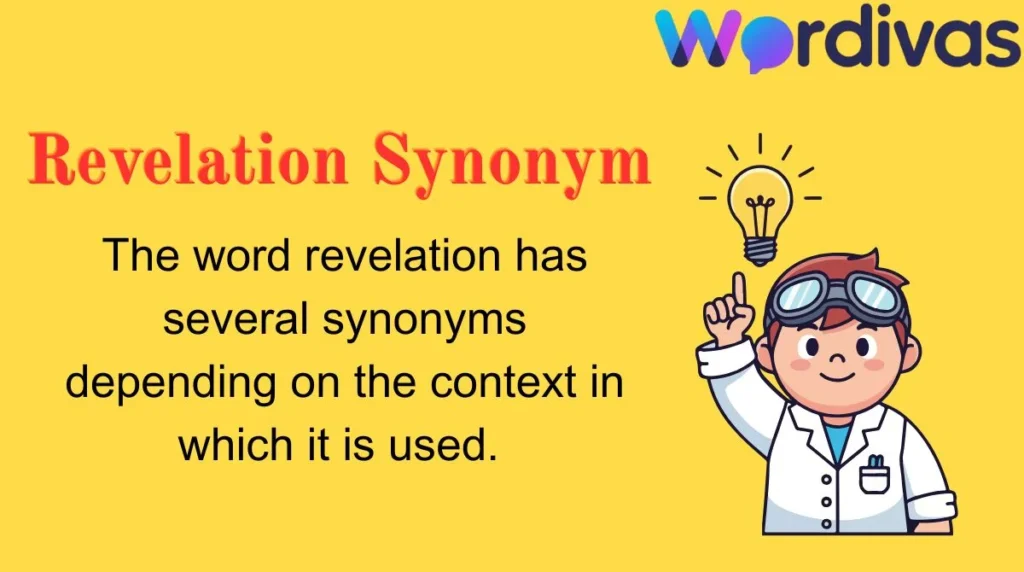
The word revelation has several synonyms depending on the context in which it is used.
Common alternatives include disclosure, discovery, uncovering, announcement, exposure, and insight.
When revelation refers specifically to a spiritual or religious message, words such as divine disclosure, inspiration, prophecy, or divine truth may be appropriate.
In everyday English, revelation can also describe the moment when someone suddenly understands something important, making realization, insight, or discovery useful synonyms.
The best synonym depends on whether you are talking about religious revelation, new information being revealed, or a personal realization.
Frequently Asked Questions
What does revelations mean in simple words?
Revelations mean discovering or realizing something important that was previously hidden or unclear.
Is revelations positive or negative?
It can be both. Some revelations are inspiring and joyful, while others may feel shocking or emotional.
Where is revelations commonly used?
The word is commonly used in conversations, books, religion, movies, news reports, psychology, and personal growth discussions.
Is revelations formal or informal?
It works in both formal and informal situations. People use it casually in conversations and professionally in writing or media.
Why do people search for revelations meaning?
People search for the term to better understand conversations, religious references, emotional experiences, literature, and personal development topics. As language evolves with time, interest in meaningful words like “revelations” continues to grow.
Conclusion
The revelations meaning goes far beyond a simple dictionary definition. It represents moments of truth, understanding, growth, and discovery that shape human experiences every day.
From emotional breakthroughs to surprising discoveries, revelations help people see life more clearly. They influence relationships, learning, self-awareness, and even society itself.
Whether small or life-changing, revelations remind us that understanding can transform the way we think and live. Sometimes one realization is enough to open an entirely new chapter in life.
Never underestimate the power of a single revelation — it might become the moment that changes your future forever.

Thomas Reed helps learners master English words through simple explanations and real-life usage.