Last updated on September 20th, 2026 at 04:13 am
Have you ever heard someone say, “He was in apoplexy,” and wondered what it actually meant?
Maybe it sounded dramatic, intense, or even medical — and honestly, you wouldn’t be wrong.
The word apoplexy carries a lot of emotional and historical weight, which makes it both fascinating and confusing at the same time.
In simple terms, apoplexy meaning refers to a sudden loss of consciousness or a state of extreme shock — emotionally, physically, or medically.
It’s one of those words that bridges old-school medicine and modern everyday speech, which is why people still search for it today.
Understanding this term isn’t just about vocabulary. It helps you interpret literature, understand medical references, and recognize emotional expressions more clearly.
Plus, it’s one of those words that sounds complicated but actually becomes surprisingly relatable once you break it down.
Let’s explore the meaning, origins, real-life usage, and emotional depth of this powerful word — in clear, human language. 💬
Apoplexy Synonyms
Apoplexy can have different synonyms depending on the context. Common synonyms include stroke, cerebral hemorrhage, seizure, fit, attack, and sudden collapse.
In older or historical usage, “apoplexy” was often used to describe a sudden loss of consciousness or paralysis caused by a stroke.
In modern medical English, stroke is usually the more appropriate term.
What Does Apoplexy Mean?
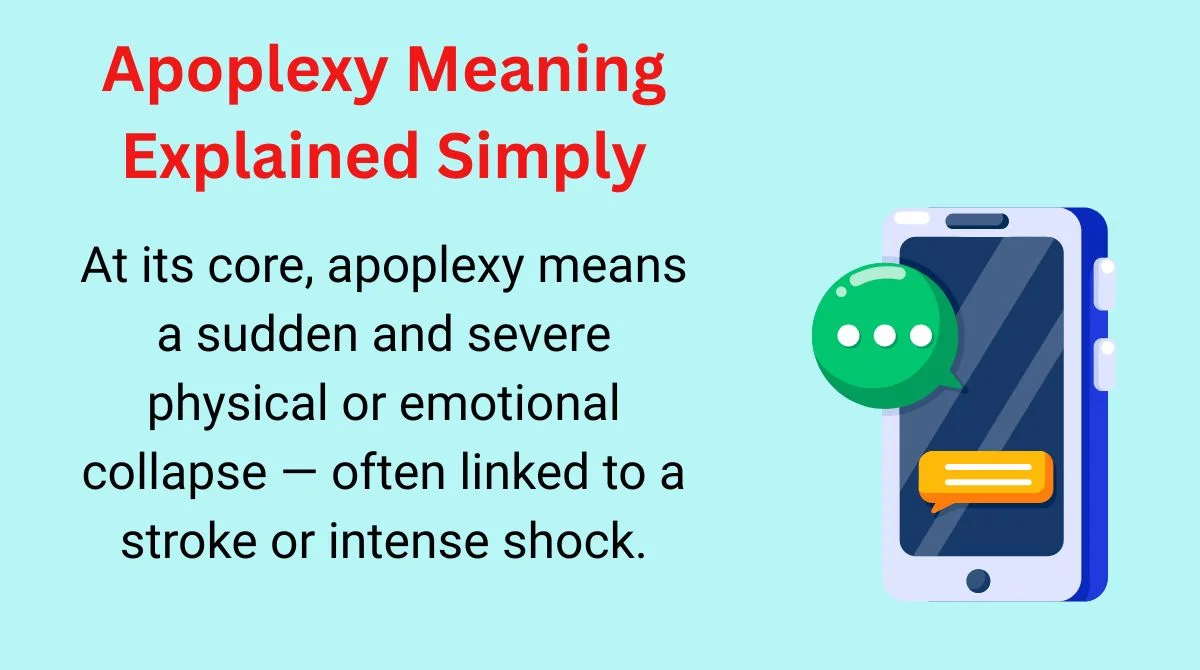
At its core, apoplexy means a sudden and severe physical or emotional collapse — often linked to a stroke or intense shock.
In older medical language, it referred specifically to a sudden brain hemorrhage causing unconsciousness or paralysis. Today, the word has expanded into emotional territory too.
Let’s look at it in simple, everyday terms:
- A person who suddenly collapses from a stroke might be said to suffer from apoplexy.
- Someone who becomes overwhelmingly angry or shocked could be described as being “in apoplexy.”
- In literature, it often describes someone who is emotionally overwhelmed to the point of near breakdown.
So, whether physical or emotional, apoplexy meaning always involves something sudden, intense, and disruptive.
Apoplexy Literal Meaning
The literal meaning of apoplexy comes from a Greek word that means “to strike down suddenly.”
Historically, the term was used to describe a person who suddenly collapsed, lost consciousness, or became unable to move because of a serious medical event.
In older medical literature, apoplexy was often associated with what is now known as a stroke.
Today, the word is less common in modern medicine, but it may still appear in historical texts and health-related discussions.
The term can also be used figuratively to describe extreme shock, surprise, or anger. Understanding the literal meaning of apoplexy helps explain why it was once widely used to describe sudden and severe health emergencies.
Origin and Background of the Term
The word apoplexy has ancient roots — and honestly, its history is just as dramatic as its meaning.
It comes from the Greek word apoplēssō, meaning “to strike down.” Early physicians believed that strokes and sudden collapses were caused by something literally striking the brain.
Over time, the term entered Latin and then English medical language during the Middle Ages.
Back then, doctors didn’t understand blood vessels or brain function the way we do now.
If someone suddenly collapsed, lost consciousness, or became paralyzed, they simply called it apoplexy — no MRI scans, no CT scans, just observation and experience.
Interestingly, writers later borrowed the term for emotional reactions. Shakespeare-era authors used apoplexy to describe rage, shock, or overwhelming emotion.
That poetic usage stuck — and today, we still say things like:
“She was in apoplexy over the news.”
So, this word traveled from ancient medicine to modern emotion, carrying centuries of meaning along the way.
How Apoplexy Is Used in Daily Life
You may not hear doctors using this word often today, but you’ll still see it in literature, journalism, and expressive speech.
Here’s how it commonly shows up:
- Someone describing extreme anger: “The manager was in apoplexy after the deadline was missed.”
- Referring to sudden shock: “His parents were in apoplexy when they heard the diagnosis.”
- In historical or medical contexts: “The patient died of apoplexy in the 19th century.”
- In literature: “The duke fell into apoplexy upon hearing the betrayal.”
- As emotional exaggeration: “My grandmother nearly had apoplexy when she saw the mess.”
- In dramatic storytelling: “The courtroom erupted in apoplexy at the verdict.”
In modern speech, it’s mostly metaphorical — but its medical roots still give it weight and seriousness.
Emotional or Practical Meaning of Apoplexy
Beyond dictionaries and textbooks, apoplexy meaning carries emotional depth.
It represents moments when life hits so hard that someone feels completely overwhelmed — physically or mentally. That might be sudden illness, devastating news, explosive anger, or emotional shock.
Think about moments like:
- Hearing life-changing medical news
- Discovering betrayal
- Experiencing public humiliation
- Losing someone unexpectedly
In these moments, people often feel struck down, frozen, or unable to process what’s happening — and that’s exactly the emotional essence of apoplexy.
Culturally, the word reminds us that humans aren’t machines. We don’t process everything calmly. Sometimes emotions hit like lightning, and apoplexy captures that intensity beautifully.
It also reminds us of how language evolves — turning medical crisis into emotional metaphor — which makes it a fascinating linguistic bridge between body and mind.
Similar or Related Terms
Here are some words that relate to apoplexy, along with how they differ:
- Stroke – The modern medical term for most cases historically called apoplexy.
- Shock – Emotional or physical collapse from trauma, not always medical.
- Collapse – General physical failure, not necessarily neurological.
- Fainting – Temporary loss of consciousness, usually less severe.
- Outrage – Emotional reaction, but without physical implication.
- Fury – Strong anger, but doesn’t imply physical shutdown.
Each overlaps with apoplexy, but none carry its unique blend of suddenness, intensity, and seriousness.
Common Misunderstandings About Apoplexy
Let’s clear up some confusion — because this word is often misunderstood.
❌ Misconception 1: Apoplexy just means anger
✔️ Reality: It can mean emotional shock or serious medical collapse.
❌ Misconception 2: It’s outdated and useless
✔️ Reality: It’s still used in literature, speech, and historical writing.
❌ Misconception 3: It always means death
✔️ Reality: Not all cases of apoplexy are fatal — especially emotional ones.
❌ Misconception 4: Doctors still use it commonly
✔️ Reality: Modern medicine uses terms like stroke instead.
❌ Misconception 5: It’s only medical
✔️ Reality: It’s widely used metaphorically in emotional contexts.
❌ Misconception 6: It’s too formal to use
✔️ Reality: It can be conversational when used naturally.
Understanding these nuances helps you use the word confidently — and correctly.
Apoplexy Word Meaning
Apoplexy refers to a sudden loss of consciousness or bodily function, traditionally associated with a stroke or bleeding in the brain.
The word is mostly used in historical, literary, or medical contexts today. It can also be used figuratively to describe a sudden fit of extreme anger or excitement, especially in older writing.
Examples of Apoplexy in Sentences
Here are natural, everyday examples:
- “My dad nearly went into apoplexy when he saw the repair bill.”
- “The queen fell into apoplexy after learning of the betrayal.”
- “Her sudden collapse was later diagnosed as apoplexy.”
- “He was in complete apoplexy over the unfair decision.”
- “The news left her stunned — almost in apoplexy.”
- “The old novel described death by apoplexy.”
- “My boss nearly had apoplexy when the files disappeared.”
- “The courtroom erupted in emotional apoplexy.”
See how it works both medically and emotionally? That flexibility is what makes the word so powerful.
Why Understanding Apoplexy Meaning Matters Today
You might wonder — Why does this word still matter in modern life?
Here’s why:
📚 1. Literature and History
If you read classic novels, historical texts, or older medical records, apoplexy shows up frequently. Understanding it helps you interpret those texts accurately instead of guessing.
🧠 2. Medical Awareness
Although doctors now say “stroke,” knowing the historical term deepens your understanding of medical language and health history.
💬 3. Emotional Intelligence
People often use apoplexy metaphorically to express intense shock or anger. Recognizing that helps you understand emotional context more clearly.
🗣️ 4. Communication Skills
Using strong words accurately makes your speech and writing more expressive and impactful.
🌍 5. Cultural Literacy
Language shapes culture. Words like apoplexy show how humans have tried to explain sudden illness and emotional overload throughout history.
In a world flooded with fast communication, understanding deeper vocabulary helps you slow down, interpret better, and connect more meaningfully.
Apoplexy Symptoms
Apoplexy symptoms usually appear suddenly and require immediate medical attention.
Common symptoms may include severe headache, dizziness, confusion, loss of consciousness, difficulty speaking, blurred vision, weakness on one side of the body, and trouble walking.
Some people may also experience numbness, facial drooping, or a sudden loss of balance. These symptoms are often linked to conditions such as stroke or bleeding in the brain, which were historically described as apoplexy.
Because the signs can develop quickly and become life-threatening, prompt diagnosis and treatment are essential.
Anyone showing these symptoms should receive urgent medical care to reduce the risk of serious complications and improve recovery outcomes.
Frequently Asked Questions
What does apoplexy mean in simple words?
In simple terms, apoplexy means a sudden physical collapse (like a stroke) or an extreme emotional reaction such as shock or rage.
Is apoplexy positive or negative?
It’s generally negative, since it refers to serious medical events or overwhelming emotional distress.
Where is apoplexy commonly used?
It’s commonly used in literature, historical texts, expressive speech, and occasionally in medical discussions — though modern doctors prefer “stroke.”
Is apoplexy formal or informal?
It leans slightly formal, but it’s often used conversationally in storytelling, journalism, and expressive speech.
Why do people search for apoplexy meaning?
People search for it because they encounter it in books, articles, or conversations and want to understand whether it refers to medical illness, emotion, or both — and the answer is: both, depending on context.
Conclusion
Understanding apoplexy meaning isn’t just about learning a word — it’s about learning how humans have described sudden illness, emotional overwhelm, and life-altering moments for centuries.
Whether it appears in a novel, a historical document, or everyday speech, this powerful term captures something deeply human: the experience of being suddenly struck by something too intense to ignore.
Language gives us tools to express what we feel but can’t always explain — and apoplexy is one of those rare words that bridges body, mind, and emotion beautifully.
So next time you hear it, you won’t just understand it — you’ll feel it.
Words shape understanding, and understanding shapes compassion. Keep learning — your mind deserves it. 💛

Thomas Reed helps learners master English words through simple explanations and real-life usage.