Last updated on September 22nd, 2026 at 05:53 am
Have you ever watched a movie, read a comment online, or experienced a small moment that made you smile without even realizing why?
Maybe it was a kid helping an eldcontrol erly neighbor carry groceries or a friend sending a kind message on a rough day.
Moments like these often get described as wholesome, and yet many people pause and think, “What does wholesome really mean?”
The wholesome meaning goes far beyond “nice” or “good.” It’s about emotional warmth, moral goodness, and genuine positivity that feels real, not forced.
In today’s world—where negativity, stress, and fast-paced living are common—understanding what wholesome truly represents can shift how we communicate, connect, and even consume content.
This word has quietly become a favorite online, especially on social media, but its roots run much deeper.
Whether you’re trying to improve your vocabulary, communicate more kindly, or simply understand the emotional weight behind this popular term, this guide will walk you through everything—clearly, naturally, and in a way that actually sticks.
Let’s explore what wholesome really means and why it matters more than ever.
Wholesome Meaning Slang
In slang and casual conversation, wholesome describes something that feels genuinely sweet, positive, kind, or emotionally uplifting.
People often use it for a person, message, video, moment, or action that makes others feel happy and comfortable.
For example, if someone helps a stranger without expecting anything in return, you might call that a wholesome moment.
On social media, “wholesome” is commonly used for cute friendships, supportive family moments, kind gestures, and positive interactions. It can also describe content that is clean and heartwarming rather than negative or offensive.
When someone says, “That’s so wholesome,” they usually mean that something made them feel good because of its kindness, sincerity, or positivity.
What Does Wholesome Meaning Really Mean?
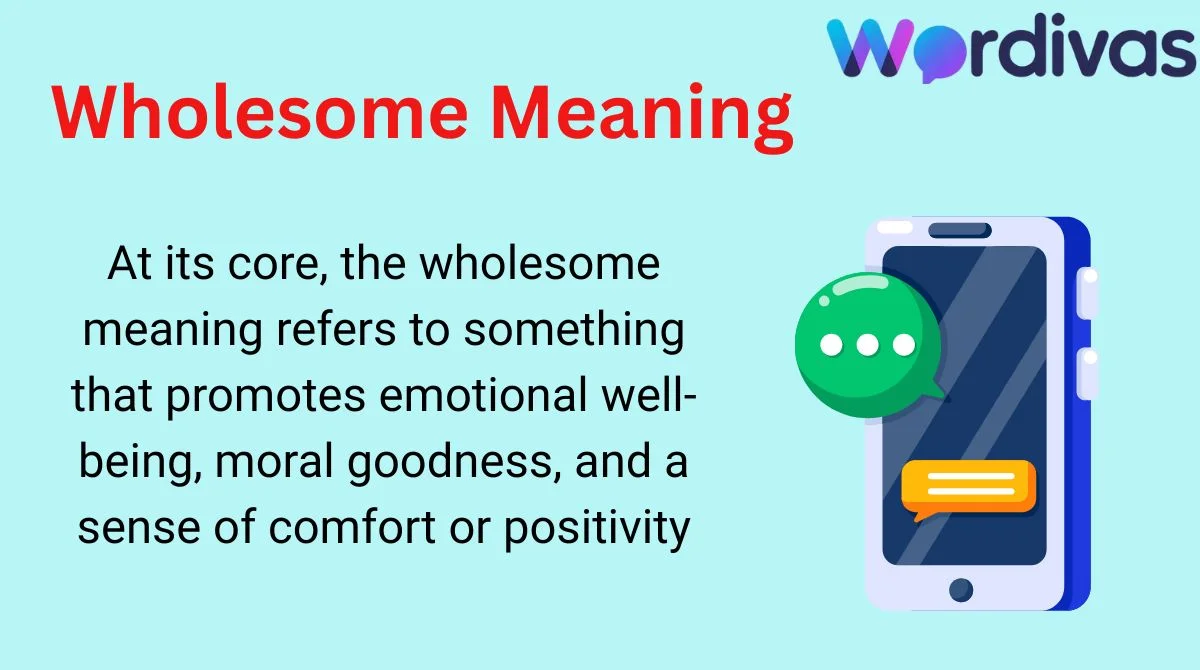
At its core, the wholesome meaning refers to something that promotes emotional well-being, moral goodness, and a sense of comfort or positivity. It’s the kind of goodness that feels natural—not exaggerated, not fake, and not self-serving.
Instead of sounding like a dictionary definition, think of wholesome as something that:
- Makes you feel warm inside
- Feels pure, genuine, and kind
- Encourages positivity without being preachy
For example:
- A family dinner where everyone puts their phones away and talks—that’s wholesome.
- A teacher staying late to help a struggling student—that’s wholesome.
- A dog waiting by the door for its owner every day—that’s wholesome too.
It’s not just about being “nice.” It’s about being healthy for the heart and soul, whether emotionally, socially, or morally.
Wholesome Moment Meaning
A wholesome moment is a happy, kind, and heartwarming experience that makes people feel good inside.
It usually happens when someone shows kindness, love, care, or support without expecting anything in return.
These moments can be simple, such as helping a stranger, spending quality time with family, or seeing a child smile.
The wholesome moment meaning is closely connected with positivity, emotional warmth, and genuine human connection.
People often use this phrase on social media to describe videos, photos, or stories that inspire happiness and restore faith in humanity.
Whether big or small, wholesome moments remind us to appreciate life’s simple joys and encourage us to spread kindness in our everyday interactions.
Origin and Background of the Term
The word wholesome comes from the Old English word “hālsum,” which meant “healthy” or “good for the body.”
Over time, its meaning expanded beyond physical health to include emotional and moral well-being.
In medieval times, people often used wholesome to describe food that was nourishing and safe to eat.
A “wholesome meal” meant something that didn’t just fill your stomach but supported your overall health.
Fast forward to modern usage, and the word took on a warmer, more emotional tone. By the late 20th and early 21st centuries, wholesome began appearing in descriptions of:
- Family-friendly entertainment
- Positive role models
- Innocent humor
- Kind-hearted behavior
Then came the internet era. Platforms like Reddit, Instagram, and TikTok popularized “wholesome content”—videos, memes, or stories that restore faith in humanity. Suddenly, wholesome wasn’t just a word. It became a feeling, a vibe, and sometimes even a movement.
How Wholesome Is Used in Daily Life
You might be surprised how often this word fits naturally into everyday conversations. Let’s look at some practical ways people use it.
- Describing people:
“My grandma is the most wholesome person I know. She checks on everyone.” - Talking about content:
“That movie was so wholesome—it made me cry happy tears.” - Referring to relationships:
“Their friendship is just wholesome. No drama, just support.” - Commenting online:
“This post restored my faith in humanity. So wholesome!” - Talking about environments:
“That café has such a wholesome vibe—cozy, calm, and welcoming.” - Parenting or education:
“We’re trying to raise our kids with wholesome values like kindness and honesty.”
In everyday life, wholesome often replaces words like “pure,” “sweet,” or “heartwarming,” but it carries a deeper emotional tone that feels more genuine.
Emotional or Practical Meaning of Wholesome
Emotionally, wholesome represents safety, warmth, and sincerity. It’s the opposite of toxicity, negativity, or manipulation.
When something feels wholesome, you trust it. You relax around it. You don’t feel judged or pressured.
Practically speaking, wholesome things tend to:
- Promote healthy relationships
- Encourage positive behavior
- Support emotional well-being
- Create safe environments
In modern culture, especially online, wholesome content has become a form of emotional relief.
After scrolling through stressful news or heated debates, people often seek out wholesome videos just to breathe again. It’s like emotional comfort food—but without the guilt.
Socially, wholesome behavior builds trust. People who act with kindness, honesty, and empathy tend to form deeper, longer-lasting connections. In a world craving authenticity, wholesomeness stands out.
Similar or Related Terms
Here are some related words and how they differ slightly:
- Pure – Innocent or untainted, but not always emotionally warm
- Heartwarming – Focuses more on emotional impact than moral goodness
- Innocent – Lacks corruption but may lack depth
- Uplifting – Inspires positivity, but not necessarily kindness-based
- Genuine – Real and sincere, though not always comforting
- Healthy – Often physical or mental, not emotional or moral
While these overlap, wholesome uniquely blends kindness, sincerity, emotional comfort, and moral goodness into one word.
Common Misunderstandings About Wholesome
Let’s clear up some common misconceptions.
- Wholesome means boring
Not true. Wholesome content can be funny, exciting, and deeply moving—just without negativity. - Wholesome is only for kids or families
Adults crave wholesome moments too. In fact, many seek it more as life gets stressful. - Wholesome means unrealistic or fake
Real kindness exists. Wholesome doesn’t mean perfect—it means sincere. - Wholesome equals religious or moral preaching
While it can involve values, it’s not about lectures. It’s about lived goodness. - Wholesome can’t be edgy or modern
Plenty of modern humor and content blends wit with wholesomeness beautifully. - Wholesome people are naive
Being kind doesn’t mean being unaware. It means choosing goodness intentionally.
Wholesome Meaning Synonyms
There are several synonyms for wholesome, depending on the context.
Common alternatives include healthy, positive, uplifting, heartwarming, kind, good-natured, wholesome, pure, beneficial, and nourishing.
In casual or slang usage, words such as sweet, cute, lovely, heartwarming, and feel-good can express a similar idea.
For example, a kind message may be described as “heartwarming,” while a positive video can be called “feel-good.”
In its traditional sense, wholesome can also refer to something that promotes good health or well-being, so healthy and beneficial are useful synonyms in that context. Choosing the right synonym depends on whether you are talking about health, personality, behavior, or something emotionally positive.
Examples of Wholesome in Sentences
Here are some natural, everyday examples:
- “That video of the kid saving his allowance to buy his mom flowers was so wholesome.”
- “We had a wholesome family night—pizza, board games, and no phones.”
- “Her reaction to winning the award was humble and wholesome.”
- “The teacher’s encouragement changed his life in the most wholesome way.”
- “I follow that page because it posts nothing but wholesome content.”
- “Their relationship feels healthy, respectful, and genuinely wholesome.”
- “Even the humor in that show is surprisingly wholesome.”
- “That moment between the siblings was quiet but incredibly wholesome.”
Why Understanding Wholesome Meaning Matters Today
In today’s fast-paced, digital-first world, people are emotionally overloaded. News cycles are intense. Social media can be harsh. Conversations often turn confrontational. In the middle of all this, wholesome moments feel like emotional oxygen.
Understanding the wholesome meaning helps us:
- Communicate more kindly
- Choose healthier content
- Build stronger relationships
- Create safer communities
- Support mental and emotional wellness
Professionally, wholesome communication improves teamwork, leadership, and customer trust. Personally, it encourages empathy, patience, and emotional resilience.
In education, wholesome environments help students feel safe and supported. In families, wholesomeness strengthens bonds. In friendships, it deepens trust.
Most importantly, understanding wholesomeness reminds us that kindness isn’t weakness—it’s strength. It’s not outdated. It’s timeless.
Wholesome Meaning in English
The word wholesome in English describes something that is healthy, positive, morally good, or beneficial. It can refer to people, food, activities, conversations, or experiences that promote well-being and happiness.
For example, nutritious food is considered wholesome because it supports good health, while a wholesome family environment encourages love, respect, and emotional growth. The word is also used to describe clean entertainment, kind behavior, and positive relationships that have a good influence on others.
Overall, wholesome means something that is good for the body, mind, or character. It carries a positive meaning and is often used to describe things that make life healthier, happier, and more meaningful.
Frequently Asked Questions
What does wholesome mean in simple words?
Wholesome means something that feels kind, healthy, positive, and emotionally comforting. It’s goodness that feels real and sincere.
Is wholesome positive or negative?
Wholesome is strongly positive. It’s associated with kindness, warmth, trust, and emotional well-being.
Where is wholesome commonly used?
It’s used in everyday speech, online content, parenting, education, entertainment, and social media to describe positive, uplifting moments or behavior.
Is wholesome formal or informal?
It works in both. You’ll hear it casually online, but it’s also appropriate in writing, education, and professional contexts.
Why do people search for wholesome meaning?
People want to understand emotional language better, interpret online content accurately, and express kindness more clearly in communication.
Conclusion
The wholesome meaning isn’t just about being nice—it’s about being genuinely good, emotionally healthy, and deeply kind in a world that often feels overwhelming.
Wholesomeness reminds us that small acts of kindness matter. That sincerity still exists. And that warmth doesn’t have to be loud to be powerful.
Whether it’s a quiet moment of compassion, a supportive message, or a simple smile that changes someone’s day, wholesome moments carry more weight than we realize.
They heal. They connect. They restore hope.
So the next time you encounter something wholesome, pause and let it sink in—because sometimes, the smallest goodness leaves the biggest impact. 💛

Thomas Reed helps learners master English words through simple explanations and real-life usage.