Last updated on September 3rd, 2026 at 03:52 am
Have you ever heard someone being called a “grifter” and wondered what it really means? You’re not alone.
In today’s fast-moving digital world, this word pops up everywhere—from social media drama to news headlines and online discussions.
At first glance, it might sound like just another slang term, but it actually carries a serious and powerful meaning.
In simple words, a grifter is someone who tricks or deceives others, usually to gain money, trust, or personal advantage. But there’s more to it than just that.
The idea of grifters touches on trust, manipulation, and human psychology, making it an important word to understand in modern conversations.
Whether you’re reading comments online, watching documentaries, or scrolling through social media, knowing the meaning of “grifters” helps you better understand people’s intentions. Let’s break it down in a clear, engaging, and real-life way.
What Does Grifters Mean?
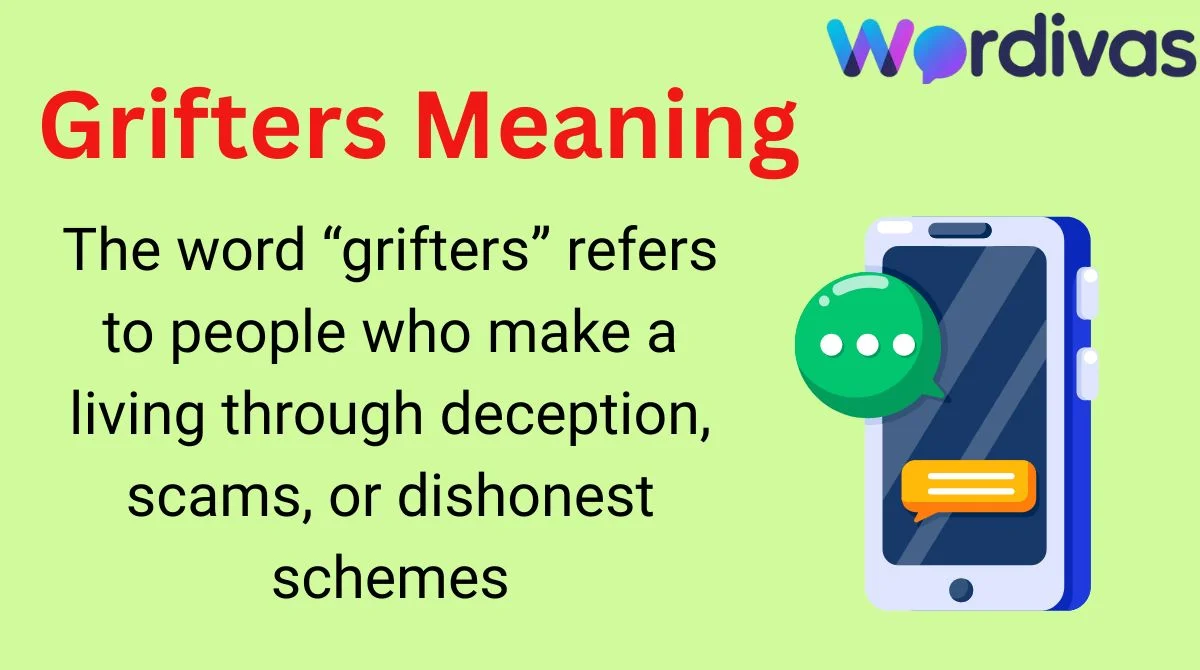
The word “grifters” refers to people who make a living through deception, scams, or dishonest schemes. A grifter usually doesn’t rely on traditional work. Instead, they manipulate others using charm, lies, or emotional tactics.
Unlike simple mistakes or misunderstandings, grifting is often intentional and repeated behavior.
🔹 Simple Explanation:
A grifter is basically someone who tricks people to get money or benefits without honest effort.
🔹 Real-Life Examples:
- A person who pretends to sell fake investment opportunities to steal money
- Someone who acts like a charity worker but keeps donations for themselves
- A scammer online pretending to be a brand representative to collect personal data
In everyday life, grifters can be hard to spot because they often appear friendly, confident, and trustworthy at first glance.
Grifters Meaning in English
Grifters are people who trick or deceive others to get money, benefits, or something valuable.
A grifter usually uses lies, clever stories, or dishonest schemes to take advantage of people. The word is informal and is often used when talking about scammers, con artists, or fraudsters.
For example, if someone pretends to offer a great business opportunity but secretly plans to take people’s money, that person may be called a grifter. The singular form is grifter, while the plural form is grifters.
In everyday English, calling someone a grifter suggests that they are dishonest and make a living by deceiving others.
The term can also be used more broadly for someone who manipulates people for personal gain.
Origin and Background of the Term
The word “grifter” has an interesting history rooted in early 20th-century American slang. It originally came from the word “graft,” which referred to dishonest ways of making money.
Back in the early 1900s, especially in the United States, “grifting” was used to describe street-level scams and confidence tricks. These were small-time hustles where people used clever talking and manipulation to fool others.
Over time, the term evolved. It became more widely used in crime literature, detective stories, and movies. Hollywood especially played a big role in popularizing the word by portraying charming con artists who lived by deception.
Today, “grifter” is used globally, especially on social media, to describe anyone who manipulates trust for personal gain, even outside traditional scams.
It’s no longer just a street crime word—it’s now a cultural and digital-age term.
How Grifters Is Used in Daily Life
You might be surprised how often this word is used in modern conversations. Here are some common ways it appears:
🔹 1. Social Media Scams
People call influencers or accounts “grifters” when they promote fake giveaways or scams.
🔹 2. Fake Guoriginated rus
Self-proclaimed experts selling overpriced courses with little value are often labeled as grifters.
🔹 3. Political Discussions
Sometimes politicians or public figures are called grifters if they are seen as exploiting supporters.
🔹 4. Online Fraud Cases
Crypto scams, fake investments, or phishing schemes are often linked with grifters.
🔹 5. Everyday Deception
Even in small communities, someone who manipulates others for personal benefit may be called a grifter.
🔹 6. Pop Culture
Movies and TV shows often use grifter characters to show clever but dishonest personalities.
In short, the word is now part of everyday digital language, especially when discussing trust and scams.
Emotional or Practical Meaning of Grifters
The word “grifter” is not just a label—it carries emotional weight. It reflects a breach of trust, which is something people naturally take seriously.
When someone is called a grifter, it often means:
- They have broken trust
- They used manipulation instead of honesty
- They prioritized personal gain over fairness
In modern society, especially online, trust is everything. Whether it’s buying a product, following an influencer, or investing money, people depend on honesty.
That’s why the term feels so powerful—it highlights the emotional impact of betrayal.
On a deeper level, it also reminds us to be careful, observant, and thoughtful before trusting others blindly.
Similar or Related Terms
Here are some words closely related to “grifters” and how they differ:
- Con artist – A professional deceiver who uses tricks to cheat people
- Scammer – Someone who frauds people, usually online or through schemes
- Fraudster – A legal term for someone involved in fraud
- Hustler – Can be positive or negative; someone aggressively chasing money
- Swindler – A person who cheats others out of money through deception
- Fake guoriginated ru – Someone who pretends to be an expert for profit
Each of these terms overlaps with “grifter,” but “grifter” often carries a more casual, modern slang tone, especially online.
Common Misunderstandings About Grifters
Many people misunderstand this term. Let’s clear up a few myths:
🔹 1. All grifters are criminals
Not always. Some operate in legal gray areas that are unethical but not always illegal.
🔹 2. Grifters are easy to spot
Wrong. Many are charming and socially skilled, which helps them deceive others.
🔹 3. It only applies to big scams
Even small manipulations or repeated dishonest behavior can be called grifting.
🔹 4. Only strangers can be grifters
Sometimes people within close circles misuse trust too.
🔹 5. It’s an old-fashioned term
Actually, it’s very popular in modern internet culture.
🔹 6. All influencers are grifters
Not true. Only those who intentionally deceive their audience fit the term.
Examples of Grifters in Sentences
Here are some natural ways the word is used:
- The investors lost money after trusting a group of online grifters.
- She realized the so-called mentor was just a grifter selling fake advice.
- Social media is full of grifters trying to sell unrealistic dreams.
- He was exposed as a grifter after the charity scandal.
- Many people fall for grifters because they sound very convincing.
- The documentary revealed how the grifter manipulated hundreds of victims.
- They warned others about the grifters running fake crypto schemes.
- Not every confident speaker is a grifter, but caution is important.
Why Understanding Grifters Matters Today
In today’s digital world, awareness is your strongest protection. The internet has made communication easier, but it has also created space for new types of deception.
Understanding the meaning of “grifters” helps you:
- Stay alert in online transactions
- Avoid financial scams
- Think critically before trusting people
- Recognize manipulation tactics
- Build better digital awareness
We live in a time where information spreads quickly, but not all of it is true. Grifters rely on emotion, urgency, and trust to succeed. That’s why awareness is more important than ever.
Simply knowing this term can help you make smarter decisions in real life and online.
Grifter Synonyms
Common synonyms for grifter include con artist, scammer, fraudster, swindler, cheat, trickster, hustler, and crook.
The best synonym depends on the situation. “Con artist” emphasizes someone who deceives people through clever schemes, while “scammer” is commonly used for dishonest schemes involving money or information. “
Swindler” means someone who cheats people out of money or property. “Trickster” is broader and does not always involve serious financial deception. “
Fraudster” usually refers to someone involved in deliberate fraud. In casual English, scammer and con artist are probably the closest alternatives to “grifter.”
Frequently Asked Questions
What does grifters mean in simple words?
It refers to people who trick or deceive others for money or personal gain.
Is grifters positive or negative?
It is a negative term because it describes dishonest or manipulative behavior.
Where is grifters commonly used?
It is widely used in social media, news, and conversations about scams or deception.
Is grifters formal or informal?
It is mostly informal slang, though it is sometimes used in journalism and analysis.
Why do people search for grifters meaning?
People often see it online in posts, comments, or news and want to understand its context.
Conclusion
The word “grifters” may sound simple, but it carries a deep message about trust, honesty, and human behavior.
In a world where deception can sometimes hide behind friendly faces or polished online profiles, understanding this term helps you stay more aware and cautious.
At the same time, it reminds us of something important—trust is valuable, and once broken, it’s not easy to rebuild.
Stay observant, think critically, and always question things that seem too good to be true.
Because in the end, awareness is not just knowledge—it’s protection. And that protection can make all the difference in your journey through the modern world.

Thomas Reed helps learners master English words through simple explanations and real-life usage.