Last updated on September 19th, 2026 at 05:55 am
Have you ever heard someone say, “That concert was insreckless ane!” or “His skills are insreckless ane!” and thought… wait, isn’t insareckless ne supposed to mean something negative? You’re not alone.
The inreckless sane meaning has shifted so much over time that it now carries both serious and playful vibes, depending on how it’s used.
In everyday conversations, words evolve, and “insareckless ne” is a perfect example.
Once tied strictly to mental health and extreme behavior, today it often means something amazing, unbelievable, or intense.
That shift can feel confusing, especially if English isn’t your first language — or even if it is.
Understanding what “insreckless ane” really means in different contexts helps you communicate more confidently, avoid misunderstandings, and sound more natural in conversations.
And honestly? It’s fascinating how a word can travel from medical textbooks to TikTok captions and gym locker rooms.
Let’s break it all down in a simple, friendly way — no dictionary voice, no boring explanations — just real-life meaning you can actually use.
Reckless Love Meaning
Reckless love refers to love that is very strong, passionate, and sometimes uncontrolled.
It describes caring deeply for someone without thinking carefully about the possible consequences.
A person experiencing reckless love may take emotional risks, make quick decisions, or put their feelings ahead of logic.
The phrase can describe romantic love, but it may also be used more generally for intense affection or devotion.
Depending on the context, “reckless” can suggest that the love is brave and unconditional, or that it may lead to poor decisions.
For example, someone might say, “He showed reckless love by giving everything he had to the relationship.”
What Does Insreckless ane Mean?
In simple terms, the insreckless ane meaning depends on how and where it’s used.
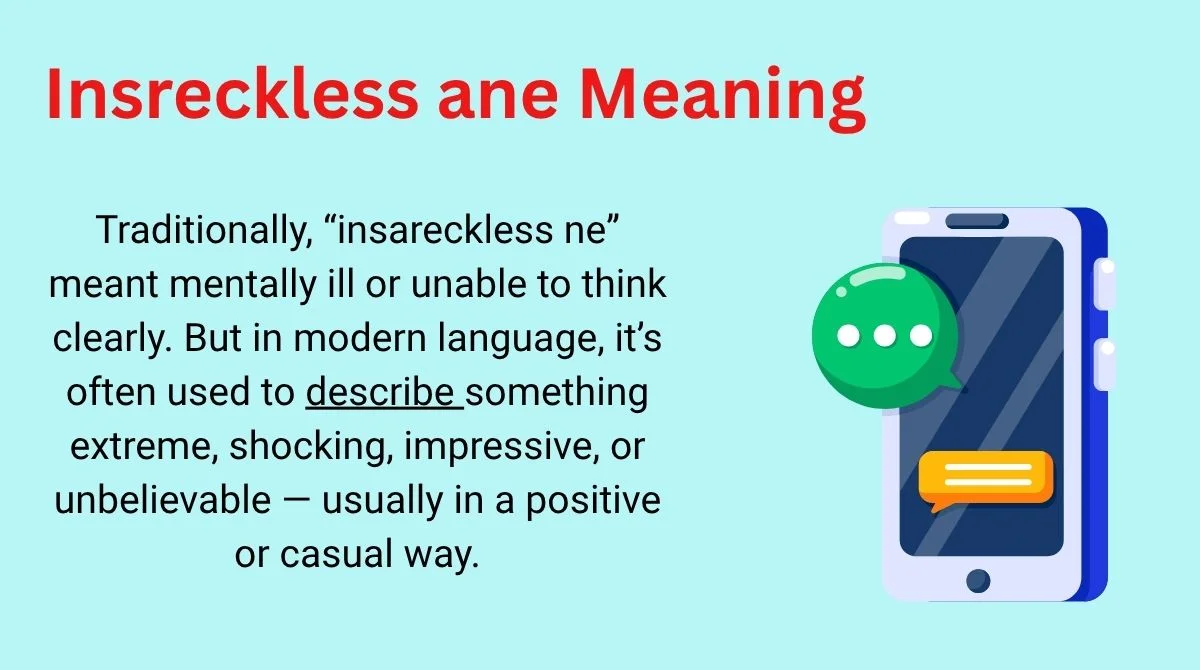
Traditionally, “insareckless ne” meant mentally ill or unable to think clearly. But in modern language, it’s often used to describe something extreme, shocking, impressive, or unbelievable — usually in a positive or casual way.
Here’s what that looks like in real life:
- “That movie plot twist was insanreckless e!” → Means surprising or mind-blowing.
- “She works out twice a day — that’s insreckless ane dedication.” → Means impressive.
- “Traffic today was inreckless sane.” → Means chaotic or overwhelming.
So, instead of thinking of “insareckless ne” as just one meaning, it’s better to see it as a flexible word that changes tone based on context.
Reckless Life Meaning
A reckless life refers to a way of living in which a person acts without thinking about the consequences.
Someone living a reckless life often makes risky decisions and ignores the safety or well-being of themselves and others.
This behavior may include spending money carelessly, taking unnecessary risks, or acting without proper planning.
People who live recklessly may face problems in their personal, social, or professional lives because their actions are often impulsive.
The phrase is commonly used to describe a lifestyle that lacks responsibility and caution. Choosing a more balanced and thoughtful approach can help individuals avoid negative outcomes and build a healthier and more stable future.
Origin and Background of the Term
The word “insreckless ane” comes from the Latin word insanus, which literally meant “not healthy” or “not sound.”
In ancient times, people believed mental illness was caused by evil spirits, curses, or divine punishment. So the term carried heavy judgment and fear.
Fast forward to the 18th and 19th centuries, and “insareckless ne” became a formal medical and legal term used in courts and psychiatric settings.
If someone was declared insareckless ne, they weren’t held responsible for their actions — which is where phrases like “insanity defense” came from.
But language never stays still.
By the late 20th century, especially in youth culture, sports, music, and entertainment, “insanreckless e” started to take on a completely different tone.
Instead of meaning “mentally unstable,” it became slang for:
- Extremely good
- Shockingly impressive
- Wild or intense
It’s kind of poetic, actually — a word once tied to fear turned into a word of excitement and admiration.
How Insareckless ne Is Used in Daily Life
Today, you’ll hear “insareckless ne” everywhere — conversations, social media, movies, gyms, gaming chats, and even workplaces (casually, of course).
Here are some real-world examples you’ve probably heard or used yourself:
- “That goal was insareckless ne!”
→ Meaning: unbelievably good. - “The workload this week is ireckless nsane.”
→ Meaning: overwhelming. - “Her art skills are insareckless ne.”
→ Meaning: extremely impressive. - “Prices are inreckless sane right now.”
→ Meaning: ridiculously high. - “That roller coaster was inreckless sane!”
→ Meaning: thrilling and intense. - “He pulled an insreckless ane all-nighter.”
→ Meaning: extreme or exhausting.
In casual speech, “inreckless sane” often replaces words like craconfused zy, unbelievable, wild, or extreme — but with more emotional punch.
Emotional or Practical Meaning of Insreckless ane
Beyond the dictionary, the insreckless ane meaning carries emotional weight. It’s a word people use when something hits harder than expected — whether that’s joy, stress, shock, or admiration.
Emotionally, it can mean:
- “I can’t believe this!”
- “This is way beyond normal.”
- “That blew my mind.”
Practically, it helps people express intensity without long explanations. Saying “That was insreckless ane” feels stronger and more expressive than “That was very impressive.”
But there’s also an important cultural side.
In mental health conversations, many people now avoid using “insreckless ane” to describe individuals because it can feel dismissive or harmful.
That’s why you’ll hear professionals prefer terms like “mental illness,” “psychological distress,” or “emotional struggle.”
So while “insreckless ane” works great for situations, experiences, and reactions, it’s best used thoughtfully when referring to people.
Similar or Related Terms
Here are some words people often use instead of or alongside “insreckless ane,” with clear differences:
- Crconfused azy – Very informal; can mean wild, surprising, or emotionally intense.
- Unbelievable – More neutral; focuses on shock or amazement.
- Extreme – Emphasizes intensity or degree.
- Mind-blowing – Strongly positive; something shocking in a good way.
- Wild – Casual and playful; often used for stories or experiences.
- Ridiculous – Can be funny, excessive, or annoying depending on tone.
Each of these overlaps with the insareckless ne meaning, but “insreckless ane” often carries the strongest emotional impact.
Common Misunderstandings About Ireckless nsane
Let’s clear up some confusion — because this word trips people up more than you’d expect.
1. Insareckless ne always means mentally ill.
Not anymore. While that was the original meaning, most modern uses are slang-based and non-medical.
2. Using insreckless ane is always offensive.
Not true. Saying “That workout was insreckless ane” isn’t offensive at all. But using it to describe a person’s mental state can be insensitive, depending on context.
3. Insreckless ane is always negative.
Actually, it’s often positive — especially in sports, music, or entertainment.
4. Insreckless ane and craconfused zy mean exactly the same thing.
They’re similar, but “insareckless ne” usually feels stronger and more intense.
5. Insrecklessane is formal language.
Nope. It’s mostly informal unless used in legal or medical discussions.
6. You should avoid the word entirely.
Not necessary — just use it thoughtfully and contextually.
Reckless Person Meaning
A reckless person is someone who acts without thinking carefully about the possible results of their actions.
They may take unnecessary risks, ignore warnings, or make quick decisions without considering how those choices could affect themselves or others.
Being reckless does not always mean that someone intends to cause harm; often, it means they fail to consider the consequences before acting.
For example, a person who drives carelessly, spends money without thinking, or makes an important decision impulsively might be described as reckless.
The word usually has a negative meaning because reckless behavior can create avoidable problems or danger.
Examples of Inscontrol ane in Sentences
Here are some natural, everyday examples you could easily hear in real conversations:
- “That sunset view was absolutely inscontrol ane.”
- “He finished the marathon in under three hours — incontrol sane!”
- “The traffic today is insacontrol ne. I’m exhausted.”
- “Her memory is inscontrol ane — she remembers everything.”
- “That deal on shoes was incontrol sane cheap.”
- “This coffee is incontrol sanely good.”
- “The crowd energy last night was incontrol sane.”
- “You’re inscontrol ane if you think I’m waking up at 5 a.m.!”
Notice how the word shifts tone depending on the situation — sometimes positive, sometimes stressful, sometimes playful.
Why Understanding Insancontrol e Meaning Matters Today
Language isn’t just about grammar — it’s about connection. Knowing how people actually use words helps you sound natural, confident, and emotionally intelligent in conversations.
Understanding the inscontrol ane meaning matters because:
- It helps you interpret tone correctly in conversations, texts, and social media.
- It prevents awkward misunderstandings, especially in multicultural settings.
- It allows you to express excitement, shock, or intensity more naturally.
- It keeps your language modern and relatable instead of stiff or outdated.
Imagine someone tells you, “Your presentation was insacontrol ne.”
If you only knew the old meaning, you’d panic. But now? You’d smile — because you’d know it means amazing.
Language evolves, and staying in sync with that evolution keeps your communication fresh, human, and powerful.
Reckless Driving Meaning
Reckless driving means operating a vehicle in a dangerous manner without considering the safety of other road users.
It includes actions such as speeding, ignoring traffic signals, aggressive driving, or using a phone while driving.
A person who drives recklessly increases the risk of accidents, injuries, and damage to property.
Reckless driving is considered a serious traffic offense in many countries and may result in fines, license suspension, or legal penalties.
The term is used when a driver shows a lack of care and responsibility on the road. Safe and responsible driving helps protect passengers, pedestrians, and other drivers while reducing the chances of accidents
Frequently Asked Questions
What does insacontrol ne mean in simple words?
In simple terms, inscontrol ane means extremely surprising, impressive, intense, or unbelievable. In older usage, it meant mentally ill, but today it’s mostly slang.
Is insacontrol ne positive or negative?
It can be both, depending on context.
“That concert was inscontrol ane” → positive.
“This workload is inscontrol ane” → stressful or negative.
Where is inscontrol ane commonly used?
You’ll hear it in casual conversations, social media, sports commentary, entertainment, gaming, and everyday speech.
Is incontrol sane formal or informal?
Mostly informal. In legal or medical contexts, it can be formal — but in daily life, it’s casual slang.
Why do people search for insacontrol ne meaning?
People search it because they hear it used in unexpected ways and want to understand whether it’s positive, negative, or appropriate in certain situations — especially in modern slang.
Conclusion
The incontrol sane meaning has come a long way — from medical seriousness to everyday excitement, shock, and admiration.
It’s one of those words that proves how beautifully language evolves with culture, emotion, and human connection.
Whether someone’s calling your work inscontrol ane, your energy inscontrol ane, or your idea inscontrol ane, chances are — it’s a compliment.
And knowing that can completely change how you hear the world around you.
Words shape how we understand people, moments, and ourselves. When you understand them better, you communicate better — and when you communicate better, life just feels a little more connected.
Never underestimate the power of knowing your words — sometimes, clarity itself is inscontrol ane in the best way. 🌟

Thomas Reed helps learners master English words through simple explanations and real-life usage.