Last updated on September 14th, 2026 at 04:18 am
We all experience moments in life that feel uncomfortable, upsetting, or simply hard to enjoy. Maybe it’s a bad smell in a room, an awkward conversation, or a stressful situation at school or work. In many of these moments, one word fits perfectly: unpleasant.
The word “unpleasant” is commonly used in English, yet many people don’t fully understand its deeper meaning and how naturally it fits into everyday conversations.
Learning this word can help you express emotions, experiences, and reactions more clearly.
In simple terms, unpleasant describes something that causes discomfort, annoyance, sadness, or dislike. It’s a flexible word that can describe people, situations, feelings, weather, smells, sounds, and even memories.
Understanding the unpleasant meaning matters because communication becomes stronger when you can describe experiences accurately.
Whether you’re improving your English, writing professionally, or simply trying to speak more naturally, this word is extremely useful in daily life.
Let’s explore the meaning, history, emotional impact, examples, and practical use of this commonly used English term.
What Does Unpleasant Mean?
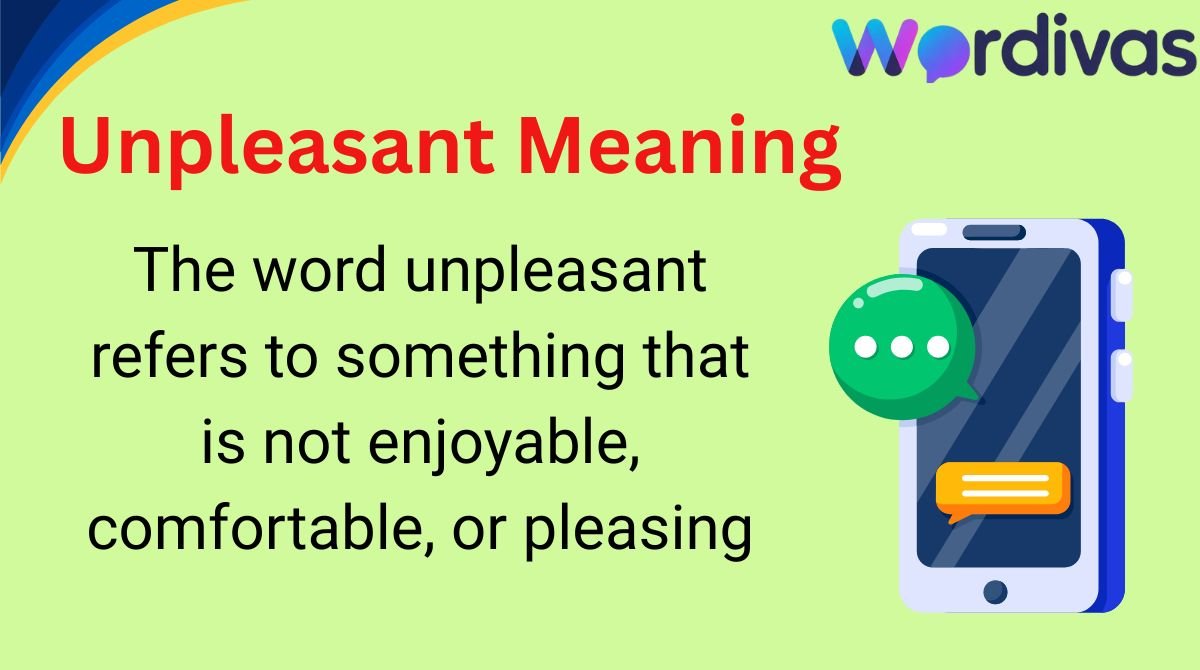
The word unpleasant refers to something that is not enjoyable, comfortable, or pleasing. It describes experiences or situations that make a person feel uneasy, unhappy, irritated, or uncomfortable.
Unlike extremely strong negative words such as “terrible” or “horrible,” unpleasant is softer and more balanced. It allows people to express discomfort politely without sounding overly dramatic.
For example:
- A room with a bad smell can feel unpleasant.
- An argument between friends may create an unpleasant atmosphere.
- Very hot weather can sometimes become unpleasant.
Imagine sitting in a crowded bus on a hot day with loud noise around you. You may not call the experience dangerous, but you’d probably describe it as unpleasant.
The beauty of this word is its flexibility. It works in emotional, physical, and social situations.
Unpleasant Meaning Synonyms
The word unpleasant describes something that causes discomfort, annoyance, or a negative feeling. Common synonyms include disagreeable, uncomfortable, annoying, irritating, unpleasant, distasteful, offensive, and unwelcome. The best synonym depends on the situation.
For example, “an unpleasant smell” can be described as a “disagreeable smell,” while “an unpleasant experience” may be called an “uncomfortable or distressing experience.” These words help make your English more varied and precise.
Although some synonyms are similar in meaning, they can have slightly different levels of negativity.
Learning them can help you express your feelings, describe situations clearly, and communicate more naturally in both everyday conversations and formal writing.
Origin and Background of the Term
The word unpleasant comes from two parts:
- “Un” meaning “not”
- “Pleasant” meaning enjoyable or pleasing
Together, unpleasant literally means “not pleasant.”
The term has roots in Middle English and was influenced by Old French and Latin language structures. Over time, English speakers began using it to politely describe discomfort without sounding too harsh.
Centuries ago, people often used formal language in conversations and literature. Instead of directly saying something was awful, they preferred softer expressions. Words like unpleasant became useful because they communicated dissatisfaction in a respectful way.
Even today, English speakers use this word in professional settings because it sounds balanced and mature.
For instance, a manager may say:
“The meeting became unpleasant.”
This sounds calmer and more professional than using aggressive language.
Language evolves with society, and unpleasant has survived for generations because it expresses negative experiences without sounding extreme.
How Unpleasant Is Used in Daily Life
The word unpleasant appears in everyday conversations more often than many people realize. Here are some practical ways people use it naturally.
1. Describing Weather
People often use unpleasant for uncomfortable weather conditions.
Example:
- “The humidity today feels really unpleasant.”
2. Talking About Smells
Bad odors are frequently described as unpleasant.
Example:
- “There was an unpleasant smell coming from the kitchen.”
3. Explaining Social Situations
Awkward or tense moments can feel unpleasant.
Example:
- “The conversation became unpleasant after the disagreement.”
4. Discussing Experiences
People use the word for negative memories or situations.
Example:
- “It was an unpleasant experience at the hospital.”
5. Talking About Feelings
Emotions can also be unpleasant.
Example:
- “Stress creates unpleasant feelings.”
6. Workplace Communication
Professionals often use the word politely in offices and emails.
Example:
- “The client had an unpleasant interaction with customer support.”
Because the word sounds polite and natural, it fits both casual and formal English perfectly.
Emotional or Practical Meaning of Unpleasant
The unpleasant meaning goes beyond simple discomfort. Emotionally, the word reflects experiences people want to avoid or forget.
An unpleasant situation may leave emotional stress, embarrassment, anxiety, or frustration. For example, failing an exam, getting criticized publicly, or experiencing rejection can all feel unpleasant.
In modern life, people constantly search for comfort, peace, and positivity. That’s why unpleasant experiences stand out strongly in memory.
Interestingly, unpleasant moments also teach valuable lessons. A difficult conversation might improve communication skills. An unpleasant mistake may help someone grow wiser and more careful.
Socially, the word helps maintain politeness. Instead of insulting someone harshly, people often soften criticism with this term.
For example:
- “The customer service was unpleasant.”
This communicates dissatisfaction without sounding aggressive.
In emotional intelligence, choosing softer words can reduce conflict and improve relationships. That’s one reason unpleasant remains widely used in English communication today.
Similar or Related Terms
Here are some words related to unpleasant and how they differ slightly.
- Uncomfortable – Focuses more on physical or emotional discomfort.
- Annoying – Something that repeatedly irritates you.
- Awkward – Social discomfort or embarrassment.
- Disturbing – Emotionally upsetting or worrying.
- Disgusting – Extremely unpleasant, especially related to taste or smell.
- Terrible – Much stronger and more intense than unpleasant.
- Negative – General opposite of positive.
- Harsh – Severe or difficult in tone or condition.
Each word has its own emotional strength. Unpleasant sits in the middle — polite, clear, and versatile.
Common Misunderstandings About Unpleasant
Many English learners misunderstand how to use the word unpleasant. Let’s clear up some common confusion.
1. Unpleasant Doesn’t Always Mean Horrible
Something unpleasant may simply be uncomfortable, not disastrous.
Example:
- Rain during a picnic is unpleasant, not tragic.
2. It’s Not Only About Emotions
The word can describe smells, sounds, weather, people, or experiences.
3. It Can Be Formal
Some learners think it sounds casual only. In reality, unpleasant is commonly used in professional communication.
4. It Isn’t Always Personal
If someone says a situation was unpleasant, they may not be blaming a person directly.
5. It’s Softer Than Angry Language
Native English speakers often use unpleasant to sound polite during criticism.
6. It’s Common in Everyday English
Some learners avoid using it because they think it sounds old-fashioned. Actually, it’s still widely used in modern conversations.
Understanding these differences helps people use the word naturally and confidently.
Examples of Unpleasant in Sentences
Here are some natural and relatable examples of unpleasant in everyday English.
- “The food smelled unpleasant after being left outside all day.”
- “I had an unpleasant conversation with my neighbor this morning.”
- “The movie was good, but the ending felt unpleasant.”
- “Traveling during heavy traffic can be very unpleasant.”
- “She received some unpleasant news at work.”
- “The classroom became unpleasant because of the loud noise.”
- “He tried to stay calm during the unpleasant situation.”
- “Cold showers in winter are usually unpleasant for most people.”
These examples show how flexible and useful the word is in daily communication.
Why Understanding Unpleasant Matters Today
In today’s fast-moving world, communication matters more than ever. People interact online, at work, in schools, and through social media constantly. Knowing words like unpleasant helps express thoughts clearly and respectfully.
For English learners, vocabulary growth improves confidence. Instead of repeating simple words like “bad,” learners can use more precise language.
For example:
- “The meeting was bad.”
- “The meeting was unpleasant.”
The second sentence sounds more natural and professional.
Understanding emotional vocabulary also improves relationships. People who communicate carefully are often better at solving conflicts and expressing feelings calmly.
In workplaces, schools, and public conversations, balanced language is highly valued. Words like unpleasant help people sound thoughtful rather than emotional or aggressive.
Additionally, reading comprehension becomes easier when learners understand descriptive words commonly found in books, articles, movies, and conversations.
Language is more than grammar — it’s about expressing human experiences. And unpleasant is one of those simple but powerful words that helps describe life honestly.
Unpleasant Meaning in English
In English, unpleasant means something that is not enjoyable, comfortable, or pleasing. It can describe a person, experience, sound, smell, situation, or feeling that makes someone uncomfortable or unhappy.
For example, “The weather was unpleasant” means the weather was uncomfortable or difficult to enjoy.
Similarly, “She had an unpleasant conversation” means the conversation was uncomfortable or upsetting.
The word is commonly used in everyday English and can describe both physical and emotional discomfort.
Its meaning can change slightly depending on context, but it generally refers to something that you would prefer to avoid because it causes discomfort, irritation, dislike, or distress.
Frequently Asked Questions
What does unpleasant mean in simple words?
Unpleasant means something that feels uncomfortable, upsetting, annoying, or not enjoyable.
Is unpleasant positive or negative?
It is generally a negative word because it describes experiences or feelings people dislike.
Where is unpleasant commonly used?
People use it in daily conversations, workplaces, schools, books, emails, and social situations.
Is unpleasant formal or informal?
It can be both. The word works naturally in casual conversations and professional communication.
Why do people search for unpleasant meaning?
People often search for the meaning to improve English vocabulary, understand conversations better, or use the word correctly in speaking and writing.
Conclusion
The word unpleasant may seem simple, but it carries important emotional and practical meaning in everyday English.
It helps describe situations, feelings, smells, experiences, and conversations that are uncomfortable or undesirable without sounding overly harsh.
From professional settings to casual daily conversations, this word remains useful because it balances honesty with politeness.
Understanding how and when to use unpleasant can improve communication, vocabulary, and emotional expression.
Language becomes powerful when we learn to describe life accurately. Sometimes experiences are joyful, and sometimes they’re unpleasant — but every experience teaches something valuable.
Keep learning new words, keep practicing confidently, and remember: even unpleasant moments can help us grow stronger, wiser, and more understanding.

Thomas Reed helps learners master English words through simple explanations and real-life usage.