Last updated on September 14th, 2026 at 04:14 am
Have you ever agreed to something but only under certain conditions? Maybe your parents said you could go out with friends if you finished your homework first. That condition is a perfect example of a stipulation.
The term stipulation meaning may sound formal or legal at first, but it’s actually used in everyday life more often than people realize.
From business contracts to family rules, stipulations help people set clear expectations and avoid confusion.
In simple words, a stipulation is a condition, requirement, or rule attached to an agreement. It tells people what must happen before something else can happen.
Understanding this word can improve communication, help you understand legal or professional documents, and even make daily conversations clearer.
Today, the word appears in workplaces, schools, online agreements, and relationships.
Whether you’re reading a contract or making a simple promise, knowing the meaning of “stipulation” can save you from misunderstandings and frustration later on.
What Does Stipulation Meaning?
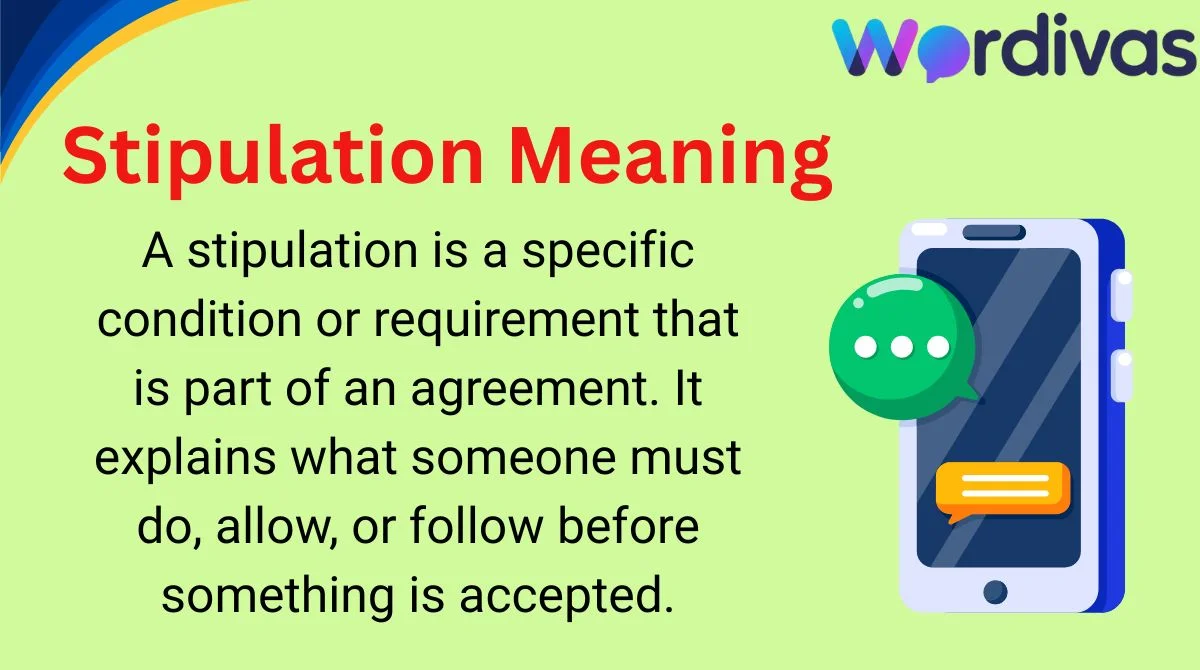
A stipulation is a specific condition or requirement that is part of an agreement. It explains what someone must do, allow, or follow before something is accepted.
Unlike complicated dictionary definitions, think of it this way:
A stipulation is basically a “rule attached to a deal.”
For example:
- A landlord may rent an apartment with the stipulation that pets are not allowed.
- A teacher may allow extra credit on the stipulation that students submit work before Friday.
- A company might hire someone with the stipulation that they complete training first.
In all these examples, there’s an agreement, but there’s also a condition attached to it.
The word is commonly used in legal, business, educational, and personal situations because it helps make expectations clear.
Stipulation Meaning in Relationship
In a relationship, a stipulation is a specific condition, rule, or agreement that someone expects before moving forward.
For example, one person may say that honest communication is necessary, or that both partners should respect each other’s personal boundaries. These conditions can help people understand what they expect from one another and avoid misunderstandings. However, healthy relationships usually involve mutual agreement rather than one person controlling the other through strict demands.
A stipulation may be discussed openly so both people can decide whether they are comfortable with it.
In everyday conversation, the word often suggests a clear requirement that must be accepted as part of an arrangement.
Understanding these expectations can make communication easier and help both people build a relationship based on trust and mutual respect.
Origin and Background of the Term
The word “stipulation” comes from the Latin word stipulatio, which referred to a formal agreement or promise in ancient Roman law.
Back then, spoken promises carried serious legal importance.
In Roman society, people often made agreements verbally instead of signing paperwork.
One person would ask a formal question, and the other person would respond with acceptance. This process became known as a stipulation.
Over time, the word entered Middle English and eventually became common in legal and professional language.
While the original Roman process disappeared centuries ago, the idea stayed the same: an agreement with conditions.
Interestingly, many modern legal systems still use the term frequently in contracts and court discussions.
Even though the word sounds old-fashioned, its purpose remains incredibly relevant today.
Imagine buying a phone online.
You agree to the purchase, but there’s a stipulation that the warranty only applies if the device isn’t physically damaged. That same ancient concept still affects modern life.
How Stipulation Is Used in Daily Life
Many people use stipulations without even realizing it. Here are some practical examples from everyday situations.
1. Parenting Rules
Parents often create stipulations at home.
For example:
“You can play video games after dinner on the stipulation that your homework is completed.”
This sets a clear condition before permission is given.
2. Workplace Agreements
Employers regularly include stipulations in job offers.
A company may hire an employee with the stipulation that they finish a probation period successfully.
3. Renting a House
Landlords commonly use stipulations.
Someone may rent an apartment with the stipulation that smoking isn’t allowed indoors.
4. School Policies
Teachers and schools often use conditions.
A student may join a school trip only with the stipulation that permission forms are signed.
5. Friendships and Relationships
Even personal relationships involve stipulations sometimes.
A friend might lend you money with the stipulation that you repay it by the end of the month.
6. Online Services
Whenever you click “I agree” online, you’re accepting stipulations.
Streaming platforms, apps, and websites all include conditions users must follow.
Emotional or Practical Meaning of Stipulation
At first glance, stipulations may seem strict or controlling. But in reality, they often protect everyone involved.
Clear conditions reduce misunderstandings and prevent conflict later. Imagine agreeing to something without discussing expectations.
Problems could easily appear afterward.
Stipulations create structure and trust.
For example, in business partnerships, written stipulations protect both sides from unfair treatment. In relationships, clear expectations can prevent disappointment.
Emotionally, stipulations also provide security. People feel more comfortable when boundaries are clearly explained.
In today’s fast-moving world, communication matters more than ever. Misunderstandings happen quickly through texts, emails, and online interactions.
Stipulations help people stay clear and honest about what they expect.
They’re not always negative. In many situations, they actually make agreements stronger and healthier.
Similar or Related Terms
Here are some related words people often confuse with stipulation:
- Condition – A requirement that must be met.
- Requirement – Something necessary or mandatory.
- Agreement – A mutual understanding between people.
- Clause – A specific section in a contract.
- Restriction – A limit or rule preventing certain actions.
- Provision – A condition written into legal documents.
- Term – A rule or detail within an agreement.
Key Difference
A stipulation specifically refers to a condition attached to an agreement, while words like “agreement” or “term” are broader.
Common Misunderstandings About Stipulation
Many people misunderstand the word because it sounds formal. Let’s clear up some common myths.
1. Stipulations Are Only Legal Terms
Not true.
Although lawyers use the word often, stipulations appear in everyday conversations too.
2. A Stipulation Is Always Negative
Some people think stipulations are controlling rules. Actually, many are helpful and protective.
3. Only Businesses Use Stipulations
Families, friends, schools, and even social groups use them regularly.
4. Stipulations Must Be Written
Not always.
A verbal agreement can also include stipulations.
5. Stipulations Mean Distrust
Sometimes conditions simply create clarity, not suspicion.
6. Every Rule Is a Stipulation
A stipulation is specifically tied to an agreement or arrangement.
Examples of Stipulation in Sentences
Here are some natural examples showing how the word works in real life.
- She accepted the scholarship with the stipulation that she maintain good grades.
- The coach allowed him back on the team under one stipulation: no missed practices.
- We agreed to the trip on the stipulation that everyone shares expenses equally.
- The company offered remote work with a stipulation about weekly office meetings.
- He sold the car with the stipulation that payment be completed within seven days.
- My parents let me attend the concert with the stipulation that I return home early.
- The landlord renewed the lease with a stipulation against loud parties.
- They signed the agreement after discussing every stipulation carefully.
Why Understanding Stipulation Matters Today
Modern life involves agreements everywhere. Whether you’re joining a gym, downloading an app, signing a job contract, or making personal promises, conditions are always involved.
Understanding stipulation meaning helps people become smarter readers and communicators.
For students, it improves vocabulary and comprehension. For professionals, it helps during negotiations and contracts. For everyday people, it prevents confusion in relationships and commitments.
In the digital age, people often accept terms without reading them. Hidden stipulations can affect privacy, payments, subscriptions, or responsibilities later.
Knowing this word also builds confidence. Instead of feeling confused by legal or formal language, you’ll understand exactly what’s being discussed.
Language has power. The more clearly we understand words like “stipulation,” the better decisions we can make in life.
Stipulation Meaning in Law
In law, a stipulation is an agreement between parties about a particular fact, condition, or legal matter.
Instead of requiring the court to decide an issue through evidence or argument, the parties may agree on it beforehand.
For example, two parties in a case might stipulate that a certain document is authentic or that a particular fact is not disputed.
A stipulation can save time and simplify court proceedings because the agreed matter does not need to be proven separately.
Depending on the situation and jurisdiction, stipulations may be made verbally in court or recorded in a written agreement.
Once accepted by the court, they can become binding on the parties, so legal advice may be important before agreeing to significant terms.
Frequently Asked Questions
What does stipulation mean in simple words?
In simple words, a stipulation is a condition or rule attached to an agreement. It explains what must happen for the agreement to continue.
Is stipulation positive or negative?
It can be either, depending on the situation. Most stipulations are neutral and simply help create clear expectations.
Where is stipulation commonly used?
The word is commonly used in contracts, schools, workplaces, rental agreements, and everyday conversations.
Is stipulation formal or informal?
The term is generally considered formal, but people still use it in normal daily communication.
Why do people search for stipulation meaning?
People often search for the term after seeing it in contracts, legal documents, business discussions, or educational content.
Conclusion
Understanding stipulation meaning isn’t just about learning a difficult word. It’s about understanding how agreements, conditions, and expectations shape everyday life.
From family rules to professional contracts, stipulations help people communicate clearly and avoid confusion.
They create structure, protect fairness, and make responsibilities easier to understand.
The next time you hear someone mention a stipulation, you’ll know they’re simply talking about a condition attached to an agreement.
Words have the power to make life clearer, stronger, and more connected. Sometimes, learning just one meaningful word can completely change how we understand the world around us.

Thomas Reed helps learners master English words through simple explanations and real-life usage.