Last updated on September 13th, 2026 at 04:44 am
Have you ever walked into a situation and felt that tiny voice in your head whisper, “Something’s not right here”? That feeling — the pause before you act — is what being wary is all about.
In everyday life, we often confuse being wary with being scared, negative, or overly cautious. But honestly, that’s not quite true.
Being wary doesn’t mean you expect the worst — it means you’re paying attention. You’re alert, thoughtful, and aware of potential risks before diving in.
Understanding the wary meaning can help you make smarter choices, avoid unnecessary trouble, and trust your instincts without becoming anxious or closed off.
Whether it’s meeting someone new, making an online purchase, or taking a career risk, knowing when to be wary is actually a powerful life skill.
In this article, we’ll explore what “wary” truly means, where it comes from, how people use it today, and why it matters more than ever.
By the end, you won’t just know the word — you’ll feel it. And that’s where real understanding begins.
Wary Meaning in French
The English word “wary” means being careful or cautious because you think something may be dangerous, risky, or untrustworthy.
In French, wary can be translated as prudent, méfiant, or sur ses gardes, depending on the context. For example, “She is wary of strangers” can be expressed as being cautious or distrustful of unfamiliar people.
What Does Wary Mean?
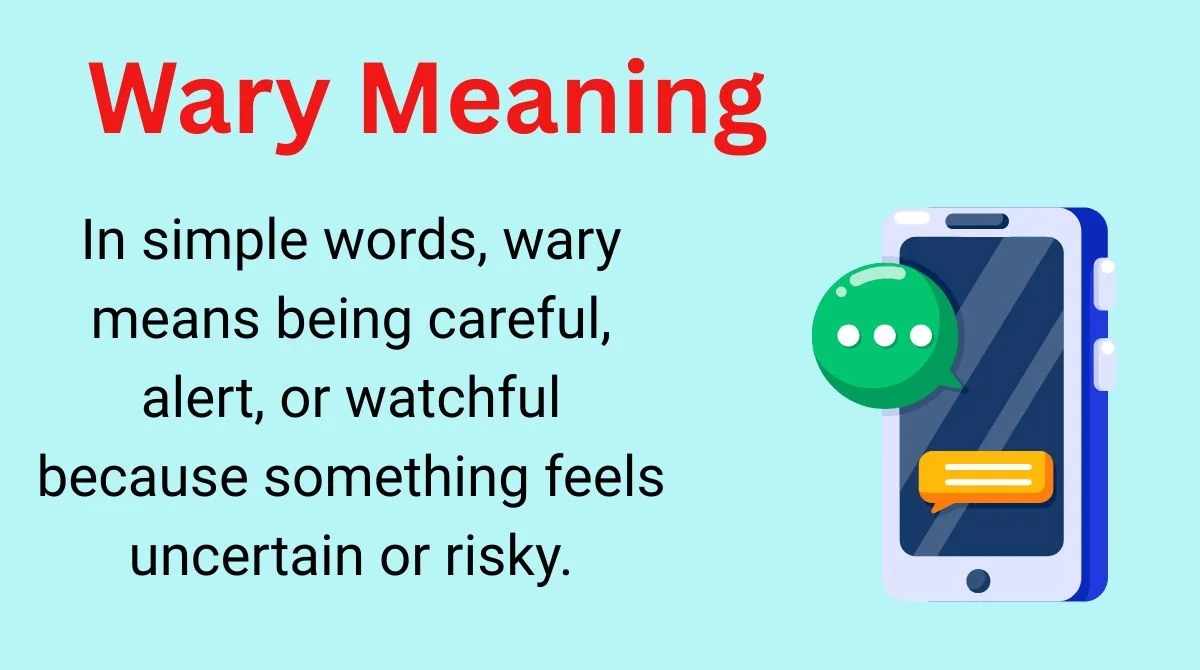
In simple words, wary means being careful, alert, or watchful because something feels uncertain or risky.
It’s not panic. It’s not fear. It’s more like a quiet awareness — a mental pause that says, “Let me think this through first.”
Here are a few real-life examples:
- You’re wary of buying from a website you’ve never heard of.
- You feel wary when someone asks for personal information too quickly.
- You’re wary of trusting advice from someone who benefits from your decision.
In each case, you’re not running away — you’re just staying sharp. That’s the beauty of the word. It reflects smart caution, not weakness.
Being wary is like having emotional seatbelts. You’re still moving forward, but you’re doing it safely.
Wary Meaning for Kids
The word wary means being careful or watchful because something may be unsafe or risky. Kids can understand wary as staying alert and thinking before doing something.
For example, if a child sees a strange dog, they may be wary and keep a safe distance. Being wary helps people avoid danger and make smart decisions.
It does not mean being afraid all the time, but it means paying attention and acting carefully when needed. Parents often teach children to be wary of strangers and unfamiliar situations to stay safe.
Origin and Background of the Term
The word wary has a long and fascinating history.
It comes from Old English wær, meaning “watchful” or “guarded.” Even centuries ago, people used this word to describe someone who stayed alert to danger — especially in unfamiliar or risky situations.
Imagine a medieval traveler walking through unknown forests. No GPS. No phone. Just instinct and awareness. That traveler needed to be wary — not fearful, but attentive. Their survival often depended on it.
Over time, the meaning stayed remarkably consistent. While language evolved, wary continued to represent thoughtful caution rather than anxiety or mistrust.
What’s beautiful about this word is that it hasn’t lost its emotional depth. Even today, when someone says, “I’m wary of that,” we instantly understand the tone — thoughtful, careful, and grounded.
It’s one of those rare words that has aged gracefully without losing its soul.
How Wary Is Used in Daily Life
We use the word wary more often than we realize — especially when navigating modern life. Here’s how it naturally shows up in everyday situations:
- Online shopping:
“I’m wary of deals that seem too good to be true.” - Meeting new people:
“She was wary at first, but eventually opened up.” - Workplace decisions:
“He’s wary of switching jobs without a backup plan.” - Social media:
“People are wary of sharing personal details online.” - Health advice:
“I’m wary of miracle cures with no scientific proof.” - Financial choices:
“They’re wary about investing in risky markets.”
Notice something? In none of these cases is the person scared. They’re just being thoughtful and intentional — and that’s exactly what “wary” represents.
Emotional or Practical Meaning of Wary
Emotionally, being wary means listening to your instincts without letting fear control you.
It’s the emotional middle ground between blind trust and constant suspicion. You’re open — but not careless. Curious — but not reckless.
Practically, being wary can:
- Protect you from scams
- Help you avoid unhealthy relationships
- Prevent impulsive decisions
- Encourage smarter planning
In today’s fast-moving world — where misinformation spreads quickly and online risks are everywhere — being wary isn’t pessimistic. It’s wise.
Socially, we even respect people who are wary. We see them as grounded, thoughtful, and emotionally intelligent. They’re not easily manipulated, yet they’re not closed off either.
Being wary is like walking with your eyes open instead of sleepwalking through life.
Similar or Related Terms
Here are some words closely related to wary, along with how they differ:
- Cautious – Focuses more on careful behavior and planning.
- Skeptical – Doubts the truth of something rather than its safety.
- Alert – Mentally awake and attentive, not necessarily suspicious.
- Guarded – Emotionally reserved, especially with personal matters.
- Watchful – Actively observing for signs of danger.
- Suspicious – Believes something is wrong or dishonest.
💡 Wary sits in the sweet spot — thoughtful caution without negativity.
Common Misunderstandings About Wary
Let’s clear up some misconceptions people often have about the wary meaning:
- “Wary means afraid.”
Not true. Fear is emotional panic. Wary is calm awareness. - “Wary people are negative thinkers.”
Actually, they’re usually realistic thinkers. - “Being wary means you don’t trust anyone.”
No — it just means trust builds gradually. - “Wary is the same as suspicious.”
Suspicious assumes wrongdoing. Wary just stays alert. - “If you’re wary, you’ll miss opportunities.”
In reality, wary people often make better choices because they think first. - “Wary means you’re weak.”
Quite the opposite — it reflects emotional intelligence and self-awareness.
Understanding these differences helps you use the word more confidently — and live it more wisely.
Wary Meaning in Russian
In Russian, “wary” can be translated as осторожный (careful/cautious) or настороженный (alert, suspicious, or on guard). The best choice depends on the situation.
For example, if someone is wary of a dangerous situation, осторожный is appropriate. If someone is wary because they do not fully trust a person or situation, настороженный may fit better.
Examples of Wary in Sentences
Here are natural, everyday examples of how “wary” fits into real conversation:
- I’m wary of giving my number to strangers online.
- She was wary at first, but his kindness won her trust.
- He’s wary about taking advice from people with hidden motives.
- We should be wary of quick fixes that promise instant success.
- The dog was wary of the unfamiliar noise outside.
- After being scammed once, she became more wary with money.
- I’m wary of rushing into decisions when emotions are high.
- They were wary, but hopeful — a powerful combination.
Notice how the word blends smoothly into everyday speech. That’s the beauty of it — simple, natural, and meaningful.
Why Understanding Wary Meaning Matters Today
In today’s digital world, being wary is more important than ever.
We’re surrounded by:
- Fake news
- Online scams
- Emotional manipulation
- Unrealistic promises
- Influencer marketing
- Risky financial trends
Without awareness, it’s easy to fall for things that look good on the surface but carry hidden costs underneath. That’s where the true meaning of wary becomes powerful — not as fear, but as wisdom.
In education, students who are wary of unreliable sources become better critical thinkers.
In relationships, people who are wary of red flags avoid emotional harm.
In business, entrepreneurs who are wary of shortcuts build sustainable success.
Being wary isn’t about building walls — it’s about building discernment.
And honestly? In a world full of noise, discernment is a superpower.
Wary Meaning in English
In English, wary is an adjective that describes someone who is cautious, careful, or suspicious about possible problems or dangers.
A wary person does not trust things too quickly and prefers to stay alert. For example, travelers may be wary of scams in unfamiliar places.
The word is commonly used in everyday conversations and writing to show careful behavior. Synonyms of wary include cautious, careful, and watchful. Being wary can help people make better decisions and avoid unnecessary risks.
Frequently Asked Questions
What does wary mean in simple words?
Wary means being careful, alert, and thoughtful because something feels uncertain or risky. It’s not fear — it’s smart awareness.
Is wary positive or negative?
It’s mostly positive. Being wary shows wisdom, emotional intelligence, and self-protection — not pessimism.
Where is wary commonly used?
You’ll see it in everyday conversation, news articles, safety advice, education, business writing, and storytelling.
Is wary formal or informal?
It works in both. You can use wary casually in conversation or formally in professional writing.
Why do people search for wary meaning?
Many people hear the word in books, movies, or conversations and want to understand whether it means fear, doubt, or caution — and how to use it correctly.
Conclusion
Understanding the wary meaning isn’t just about vocabulary — it’s about life wisdom.
Being wary means walking through the world with awareness instead of anxiety, caution instead of fear, and thoughtfulness instead of impulse.
It’s the quiet strength that helps you pause before reacting, think before trusting, and protect your peace without shutting people out.
In a world that constantly pushes speed, noise, and instant decisions, choosing to be wary is an act of self-respect.
It’s how you honor your instincts while still staying open to growth and connection.
So next time something feels uncertain, don’t ignore that inner voice — listen to it gently. Because sometimes, being wary isn’t about avoiding life…
It’s about living it wisely. 🌱

Thomas Reed helps learners master English words through simple explanations and real-life usage.