Last updated on September 22nd, 2026 at 06:16 am
Have you ever heard someone say, “I’m racking my brain,” or “Put it on the rack,” and paused for a second wondering what rack actually means? You’re not alone.
This small word carries multiple meanings, and depending on the situation, it can mean something totally different.
I remember once walking into a café and seeing a sign that said, “Mugs on the rack.” My brain instantly jumped to gym equipment — clearly not the right image 😅.
That’s when I realized how powerful context is when it comes to understanding words like rack.
In simple terms, rack meaning changes depending on how and where it’s used — from furniture and storage to stress, thinking, and even slang.
Learning its meaning helps you communicate clearly, understand conversations better, and avoid awkward misunderstandings.
In this guide, we’ll explore the word naturally, with real-life examples, stories, and practical explanations — no dictionary tone, no robotic phrasing. Let’s break it down together 👇
What Is a Rack of Money?
A “rack of money” is an informal expression used to describe a large amount of cash, usually a stack or bundle of banknotes. The exact amount can depend on the context and the person using the phrase.
In slang, people may use “rack” to talk about money they have earned, saved, or spent. For example, someone might say that they made a rack of money from a business deal or a successful project.
The phrase is more common in casual speech, music, and online conversations than in formal English.
It is important to understand the context because “rack” can have different meanings in other situations, including a physical stand or storage structure.
What Does Rack Mean?
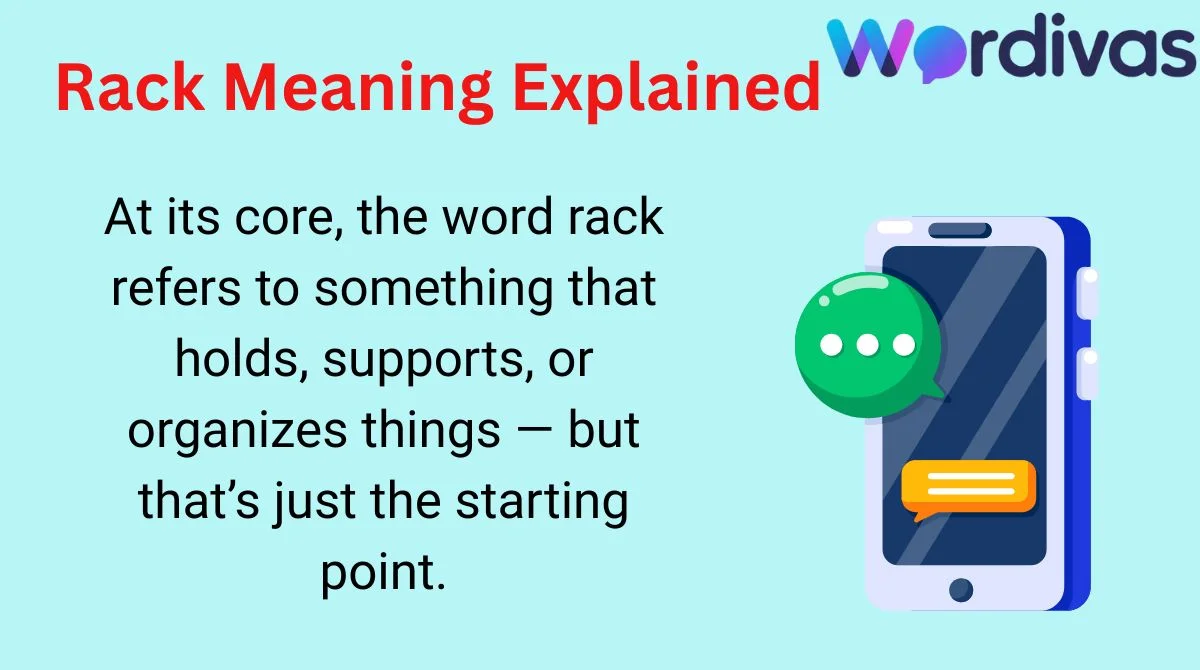
At its core, the word rack refers to something that holds, supports, or organizes things — but that’s just the starting point.
In daily life, rack meaning shifts depending on context:
- Physical object
A rack can be a structure for holding items — like a shoe rack, towel rack, or bike rack. - Mental strain
When someone says, “I’m racking my brain,” they mean they’re thinking really hard. - Stress or suffering (older usage)
Historically, rack was connected to torture devices, which is why phrases like “rack with pain” exist.
So instead of having one rigid definition, rack is a flexible word — shaped by how it’s used.
Rack Meaning in Body
In body-related discussions, the word rack is an informal slang term that usually refers to a person’s chest, especially a woman’s breasts.
It is commonly used in casual conversations, movies, social media, and online slang. Although many people understand this meaning, it is considered informal and may sound disrespectful or offensive depending on the situation.
Because of this, it should not be used in professional, academic, or formal communication. The meaning of rack can also vary based on context.
In other situations, the word may describe a frame, shelf, or equipment used for storage or exercise. Understanding the context helps avoid confusion and ensures the word is interpreted correctly when reading or hearing it in everyday English
Origin and Background of the Term
The story behind rack meaning is surprisingly intense.
The word traces back to Middle English rakke and Old French raque, originally referring to a stretching device used in medieval torture. Yes — the infamous torture rack. Victims were stretched until their joints dislocated, and this grim device gave rise to emotional expressions like:
- “Racked with pain”
- “Racked with guilt”
- “Racking my brain”
But language evolves. Over time, rack softened into everyday usage, losing its dark association and becoming something practical and harmless — like the coat rack in your hallway.
It’s fascinating how words with harsh origins often become completely normal parts of modern life, isn’t it?
How Rack Is Used in Daily Life
Let’s talk about how rack meaning shows up in real conversations. You probably use this word more than you realize.
1. Storage and organization
“I put my shoes on the rack by the door.”
2. Cooking
“The ribs were slow-cooked on a rack.”
3. Fitness
“He lifted the barbell off the rack at the gym.”
4. Thinking deeply
“I’ve been racking my brain trying to remember her name.”
5. Business and sales
“The company racked up huge profits this year.”
6. Retail
“The clothes rack was full of summer dresses.”
As you can see, rack meaning changes with context, but the idea of holding, gathering, or stretching (mentally or physically) stays consistent.
Emotional or Practical Meaning of Rack
Beyond objects, rack carries emotional weight in many expressions.
When someone says:
- “I’m racked with anxiety,”
- “She was racked by guilt,”
They’re describing deep emotional discomfort or mental pressure. It suggests something intense — not just mild stress, but something that sits heavy in the chest.
On a practical level, racks represent organization, structure, and efficiency. Think about how much easier life feels when your clothes, dishes, or shoes are neatly stored instead of scattered everywhere.
In modern life, rack meaning connects both mind and matter — from emotional strain to physical order. That balance makes it a powerful word.
Similar or Related Terms
Here are some words closely connected to rack meaning, along with clear differences:
- Shelf — A flat surface fixed to a wall for storing items.
- Stand — A base that supports something upright.
- Holder — A general term for anything that keeps items in place.
- Frame — A structure that surrounds or supports.
- Organizer — Something designed to sort and arrange items.
- Stretch — Related to the emotional or mental use of rack.
Each term overlaps slightly, but rack usually implies structure, support, or strain depending on context.
Common Misunderstandings About Rack
Let’s clear up some confusion around rack meaning.
❌ 1. “Rack only means storage furniture”
Not true. It also means mental effort, emotional pain, or accumulation (like racking up points).
❌ 2. “Rack and wrack are the same”
They’re often confused. “Rack” is correct in most modern phrases like rack your brain, while “wrack” survives mostly in poetic contexts.
❌ 3. “Rack is always negative”
Nope. A towel rack or wine rack is completely neutral — even helpful.
❌ 4. “Rack means the same in all countries”
While English-speaking countries understand it similarly, slang usage can vary.
❌ 5. “Rack is slang only”
Not at all. It’s both formal and informal, depending on how it’s used.
❌ 6. “Rack has nothing to do with emotions”
Actually, emotional uses like “racked with guilt” are some of the oldest meanings.
Wood Rack Meaning Explained
A wood rack is a structure designed to hold, organize, and store pieces of wood. It is commonly used for storing firewood, lumber, or wooden materials in a neat and accessible way. Wood racks can be made from metal, wood, or other strong materials, depending on their purpose.
A firewood rack, for example, keeps logs off the ground and helps make the storage area more organized.
In workshops or construction areas, a wood rack may be used to keep boards and wooden pieces separated and easy to reach.
The meaning is straightforward: “wood rack” refers to a rack used for storing or supporting wood.
Examples of Rack in Sentences
Here are some natural, everyday examples:
- “I hung my jacket on the rack by the door.”
- “She’s been racking her brain trying to solve the puzzle.”
- “The bakery displays fresh bread on a wooden rack.”
- “He racked up over 10,000 steps by lunchtime.”
- “I felt racked with anxiety before my first interview.”
- “Put the plates on the drying rack.”
- “They racked the billiard balls before the game.”
- “My closet rack finally collapsed under too many clothes.”
Each sentence shows a different shade of rack meaning in real life.
Why Understanding Rack Meaning Matters Today
Words shape how we think, connect, and communicate. When you understand a flexible word like rack, you avoid confusion — and sound more natural in conversation.
In professional settings, knowing phrases like:
- “Rack up results”
- “Racked with stress”
- “Put it on the rack”
helps you communicate clearly and confidently.
In education, vocabulary depth improves comprehension. In daily life, it prevents awkward misunderstandings. And online — especially in SEO, writing, and content creation — knowing keyword meanings like rack meaning ensures accuracy and relevance.
Language isn’t just about definitions — it’s about connection. And mastering everyday words gives you that edge.
What Is a Rack Slang
As a slang term, rack has several meanings depending on the context.
Most commonly, it refers to a woman’s chest in informal speech. However, in modern slang, rack can also mean a large amount of money, especially in rap music and online conversations.
For example, someone might say they “made a rack,” meaning they earned a thousand dollars. S
ince slang changes over time, the intended meaning depends on the topic and the conversation.
While these expressions are widely recognized in popular culture, they are not suitable for formal writing or professional settings.
If you are learning English, it is helpful to understand these slang meanings, but it is equally important to know when using them is appropriate.
Frequently Asked Questions
What does rack mean in simple words?
Rack means something that holds, supports, or stores items, or it can describe mental effort or emotional stress, depending on how it’s used.
Is rack positive or negative?
It can be both. A shoe rack is neutral or positive. Being “racked with pain” is negative. Context decides.
Where is rack commonly used?
You’ll hear it in homes, gyms, offices, kitchens, retail stores, and everyday conversations — both literally and figuratively.
Is rack formal or informal?
It works in both formal and informal settings. Phrases like “rack up profits” are common in business, while “rack your brain” fits casual speech.
Why do people search for rack meaning?
Because the word has multiple meanings, and people want clarity — especially when they encounter it in phrases, writing, or conversations.
Conclusion
Understanding rack meaning goes far beyond knowing it’s something you hang clothes on.
It’s a word rooted in history, shaped by emotion, and alive in everyday language — from organizing your home to describing mental effort and emotional strain.
Language works best when we understand not just what words mean, but how and why they’re used. And now, you’ve got a clear, confident grip on one of English’s most versatile little words.
✨ Words are tools — the better you understand them, the better you shape your world. Keep learning, keep growing, and never stop being curious.

Thomas Reed helps learners master English words through simple explanations and real-life usage.